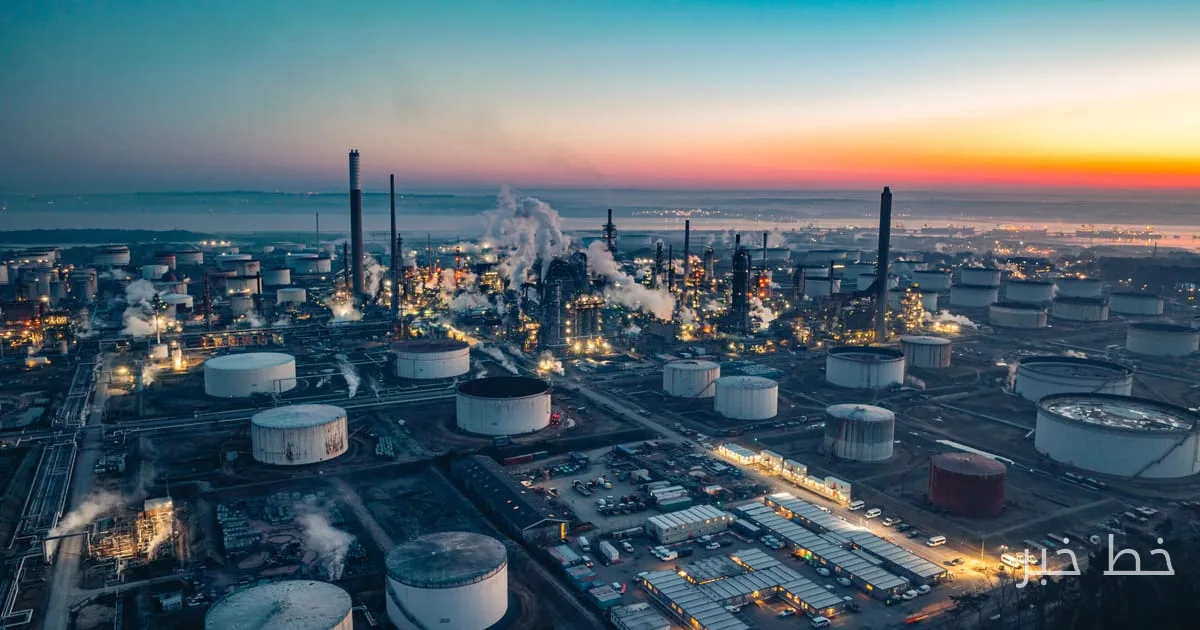
The European Commission launched its first strategic dialogue on refining at the end of October, pointing out a reality that is often overlooked: refining is not just an old industry but has a strategic role in Europe's economy, energy security, and self-sufficiency.
The Importance of the Refining Industry
This meeting, chaired by Dan Jørgensen and Andrius Kubilius, included representatives from the industry, the EU Military Committee, NATO, and other stakeholders. Andrius Kubilius clearly articulated aspects of security: "Defense cannot exist without fuels." The defense community also emphasized the need for domestic production as the military demand for fuels increases.
Read more: High investment costs in Europe hinder industry growth
A new analysis provided by Oxford Economics shows statistics. By 2025, the fuel production and refining industry in Europe will support the EU's GDP by 200 billion euros, equivalent to about 1.1 percent of the Union's economy. This industry has created 1.8 million jobs and generates over 83 billion euros in tax revenue.
Challenges and Opportunities
Europe cannot strengthen its resilience while losing its industrial base capacity. Currently, refining capacity is decreasing. Across the EU, Norway, Switzerland, and the UK, traditional refining capacity has decreased by 19 percent from 2009 to 2025, and the number of traditional refineries has dropped from 117 to 83.
At the same time, Europe's dependence on imports is increasing day by day. Refined fuel imports have risen by 39 percent from 1990 to 2025, and for jet fuel and heating oil, imports now account for 61 percent of the EU's consumption, compared to just 36 percent in 1990.
The issue is not just defending the status quo. Decarbonization will transform Europe's demand for fuels. The challenge for our industry is to adapt its production and infrastructure to meet the increasing demand for renewable and low-carbon fuels. The key question is whether the renewable and low-carbon fuels that Europe needs will be produced increasingly in Europe or imported from elsewhere.
Changing this situation is crucial because today's refineries are seen as the best industrial platform for tomorrow's fuels. Their assets, logistics, hydrogen infrastructure, and industrial clusters can support the production of biofuels, renewable hydrogen, and electronic fuels. Transforming these sites could reduce capital investment costs by 30 to 50 percent compared to new green projects.
If these sites disappear, many transformation potentials will vanish with them. A study conducted by Oxford Economics indicates that if the EU's refining capacity decreases by 30 percent by 2035, the Union's GDP will be nearly 25 billion euros lower than the baseline estimate, and about 120,000 jobs will be lost.
The European refining strategy must combine two goals that are sometimes mistakenly seen as contradictory: maintaining a competitive industrial base in Europe and accelerating its low-carbon transformation. In this regard, creating a competitive investment environment in Europe is essential.
In recent years, the European Commission has learned the hard way about the value of resilience, strategic self-sufficiency, and domestic industrial capacity. The strategic dialogue shows that these principles are closely related to the refining industry. Now our task is to turn this recognition into action.
Read more: Startup groups call for review of EU Inc law proposal