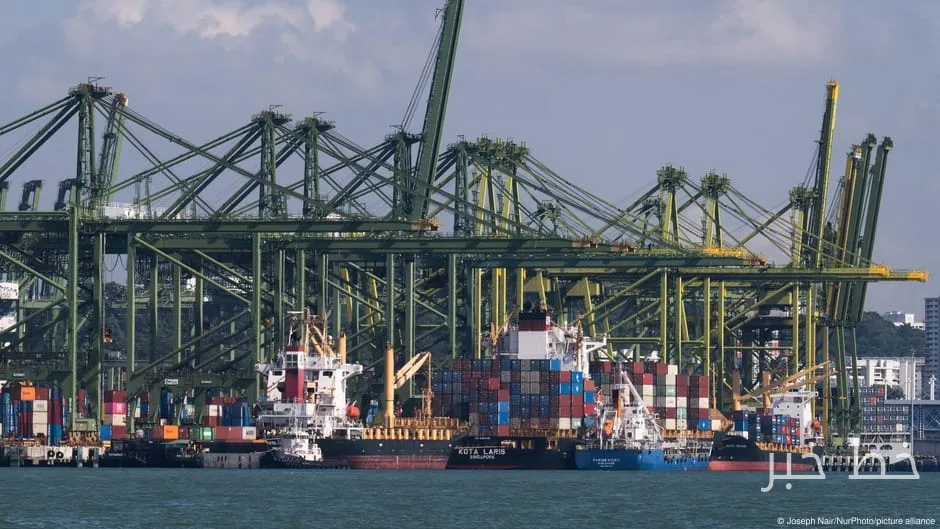
The European Union and the Association of Southeast Asian Nations (ASEAN) may be heading towards a year of significant trade progress in 2027, when the two sides celebrate 50 years of diplomatic relations.
A long-awaited trade agreement with Indonesia is expected to be implemented soon, while an agreement with the Philippines is nearing completion, and negotiations with Thailand and Malaysia are also progressing. By the end of next year, the European Union may have trade agreements with six Southeast Asian countries, an increase from the current two agreements.
Challenges and Opportunities in Trade Relations
This anniversary could rekindle the long-held desire for a broader trade agreement between the European Union and ASEAN. On November 17, the European Commission held a meeting in Brussels to discuss trade relations with Southeast Asia and progress on free trade agreements.
However, attention has turned to what lies ahead. Chris Humphrey, Executive Director of the EU-ASEAN Business Council, emphasized that finalizing free trade agreements is just the beginning, not the end. These agreements can reduce tariffs and eliminate trade barriers, but if businesses do not know how to take advantage of them, these measures will be futile.
Invisible Barriers and the Need for Support
Humphrey added that Brussels' priority should be to address less visible trade barriers. Reducing customs delays, simplifying regulations, and assisting small European businesses in entering unfamiliar Southeast Asian markets will be crucial for the success of a free trade agreement.
Alfred Greszl, a professor at Palacky University in the Czech Republic, pointed out that European companies with little or no experience in Southeast Asia would benefit from more on-the-ground support, especially practical guidance on informal business practices and unwritten local rules.
One option could be to expand the assistance provided by European chambers of commerce, trade delegations, and EU offices in Southeast Asia. This could include helping companies find distributors and explaining local licensing requirements and how to qualify for preferential tariffs.
For example, in Vietnam, Brussels' ongoing pressure to improve market access for European pharmaceutical companies has been beneficial. In Indonesia, the EU has worked to facilitate trade while emphasizing import restrictions and halal certification requirements.
Regular consultations with businesses on both sides could help Brussels identify issues before they escalate into trade disputes.
Trade policy has also found a geopolitical objective in Brussels. Nestle emphasized that if trade policy is expected to reduce strategic dependencies, we have asked it to achieve goals that are poorly defined, let alone demonstrate how to achieve them.
The European Union wants to reduce its dependence on a few suppliers for minerals needed for batteries and other clean technologies, while Southeast Asian producers, especially Indonesia, want foreign investors to help develop domestic processing industries rather than just purchase raw materials.
In this context, it remains to be seen whether the EU should pursue bilateral agreements with Southeast Asian countries or revive its initial aspiration for a regional agreement with ASEAN. Negotiations for a regional free trade agreement began in 2007 but were halted two years later due to disagreements over significant economic disparities among ASEAN members and political concerns.



