The EU's 'Made in Europe' program has been introduced to save the automotive industry from China's unfair trade practices. The EU Industrial Acceleration Act (IAA), proposed in March, aims to upgrade car factories in Europe and only support vehicles produced on this continent.
Concerns of Partner Countries
However, this program has raised deep concerns among other countries involved in Europe's supply chains, including Turkey, Morocco, Japan, and South Korea. These countries have long been recognized as key suppliers for the automotive industry in Europe.
Read more: 40 percent of Americans report worsening personal financial situation
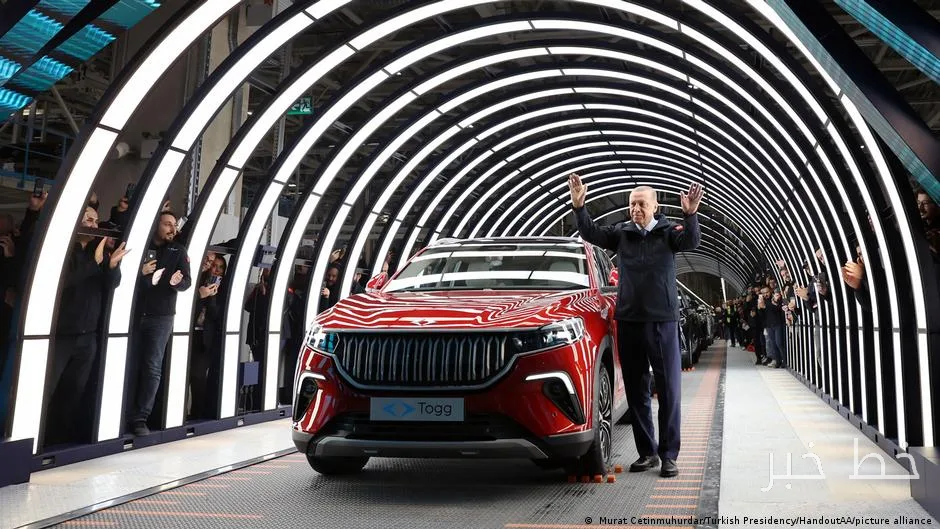
After months of deadlock regarding the potential impact of the IAA on car production in these countries, Germany and France reached an important agreement earlier this month that allows suppliers from non-EU countries like the UK and Norway to qualify for 'European origin' status. However, Turkey, which has had uninterrupted access to the EU market since the 1990s, will be excluded from these supports.
Economic Consequences for Turkey
Ayhan Zeytinoğlu, head of the Economic Development Foundation (IKV), believes that the German-French framework could be devastating for Turkey's automotive sector. He stated, "73 percent of Turkey's total automotive exports go to the EU. If we face the 'Made in Europe' barrier in the EU market, it will significantly harm our trade with the Union and our exports."
Zeytinoğlu also added that Turkey's exclusion will harm the European automotive industry instead of strengthening competition against China. Turkey's automotive exports to the EU reached $30.1 billion (equivalent to €26.8 billion) last year.
The IAA requires that 70 percent of the total value of a car's components — excluding the battery — be produced in Europe. However, the initial proposal only pertains to battery electric vehicles, dual hybrids, and fuel cell models, which accounted for just 27 percent of all new car registrations in the EU last year.
While the proposals still face major legal hurdles in Brussels, key players in the automotive sector continue to lobby for a reduction in the severity of the IAA to protect their high profit margins. They warn that higher component costs will put them in a weaker position compared to Chinese competitors.
Read more: Luiz Inácio Lula da Silva's re-election in Brazil affected financial markets · Andy Burnham announced the possibility of restoring free movement between the UK and the EU