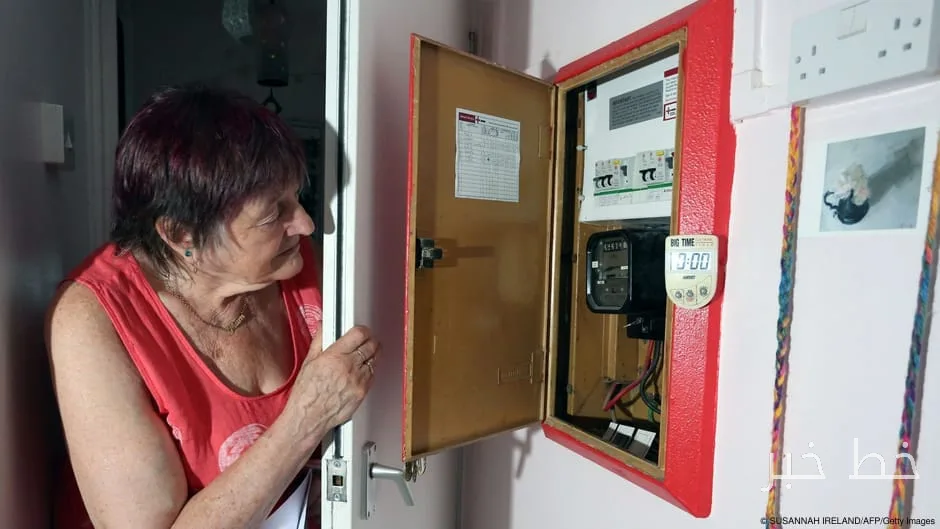
The German government, led by Friedrich Merz, has decided to reduce the electricity tax for households and businesses. This tax reduction will result in a decrease in the electricity tax rate to the European minimum level by 2027. The agreement between the Christian Democratic Union (CDU/CSU) and its younger ally, the Social Democratic Party (SPD), has been reached after several unsuccessful attempts.
Details of the Tax Agreement
The reduction in electricity tax is only financed for the year 2027, but the coalition has emphasized that its goal is to achieve a "permanent reduction." The extension of this tax reduction depends on finding a way to finance it in 2028. The coalition has also announced that the tax reduction will be financed through additional costs arising from subsidies under the Renewable Energy Law, as the government expects demand for renewable energy subsidies to decrease next year.
Read more: Alexandria Ocasio-Cortez rejects $50 billion request for air traffic control
Economic and Social Progress
This agreement will also extend specifically to households and businesses that were not included in the initial tax reduction. The German government, which has one of the highest electricity prices in Europe, is facing challenges stemming from the shocks caused by Russia's invasion of Ukraine in 2022 and the U.S. and Israel's war with Iran. This agreement still needs to be added to the 2027 budget and must be approved by the parliamentary budget committee. The House of Representatives is expected to give final approval on November 27.
The proposed federal budget for 2027 represents a major shift in Germany's fiscal policy, as Berlin is increasing debts to finance repairs of the country's crumbling infrastructure, undertake energy transition, and expand and modernize the military.
Impact on Politics and Upcoming Elections
Additionally, the German Constitutional Court has rejected the request of the People's Party Union for Social Justice and Economic Reason (BSW) to review the results of the federal election in February 2025. This party, previously known as the Alliance of Sahra Wagenknecht, was closely trying to reach the 5 percent threshold for entering the House of Representatives. With 4.981 percent of the votes, this party needed only 9,529 more votes to gain entry. The founder of this party, Sahra Wagenknecht, stated before the court's ruling that "everything points to the conclusion that Merz is an illegal chancellor."
However, as the current coalition led by Friedrich Merz faces serious challenges, tax agreements and efforts to reduce energy prices could impact the popularity of this coalition and, consequently, the outcomes of future elections.



