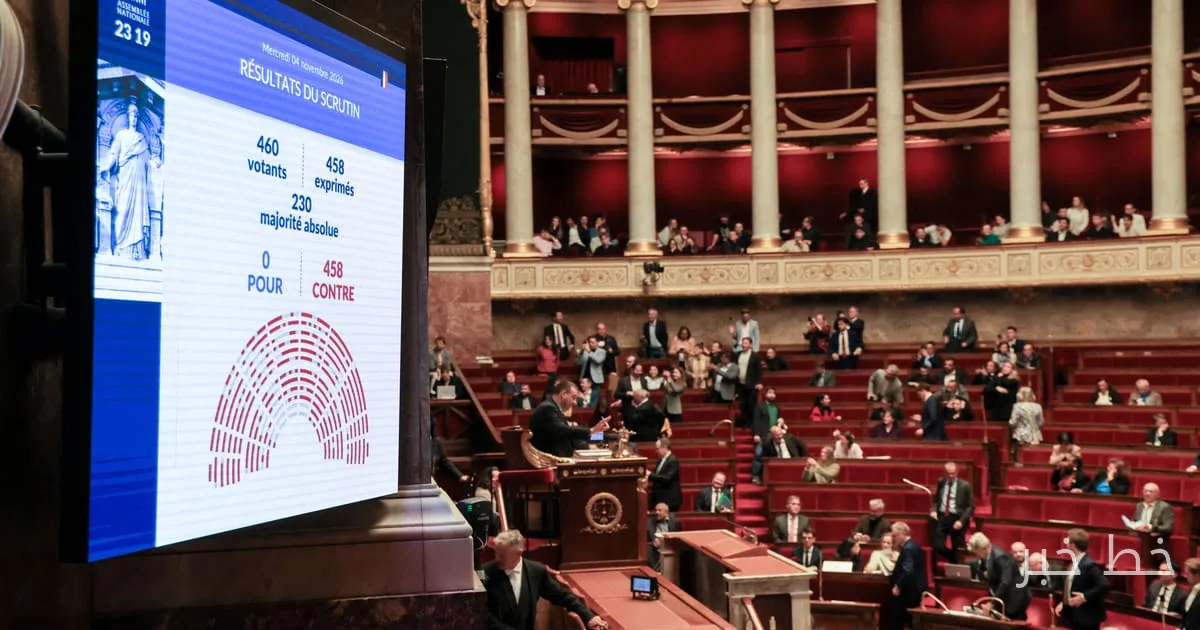
The National Assembly of France unanimously rejected the 2027 budget bill on Wednesday night. This action reflects the significant challenges faced by the government of Sébastien Lecornu in achieving €43 billion in budget savings.
Details of the Bill Rejection
458 representatives from both Emmanuel Macron's camp and the opposition voted against the first part of the bill related to tax revenues. This section had been extensively modified by various groups, resulting in a proposal that no one was satisfied with. The second part of the text, which pertains to expenditures, was also rejected for the same reason. Now, the proposed bill will be sent directly to the Senate and will be discussed there starting November 20.
Economic Situation and Pressure on the Government
The lower house had previously rejected another part of the 2027 budget related to government pensions and the healthcare system. This section will also be discussed in the Senate. Given France's economic recession, rising debts, and the looming threat of a financial crisis, Lecornu's government is under pressure to stabilize France's finances. The government has committed to reducing the budget deficit to 5% of GDP next year.
David Emile, the budget minister, warned on Wednesday that the version of the budget rejected that night would result in a budget deficit of 5.9% after reforms. Considering that Lecornu does not have a majority in the lower house, the rejection of this bill was widely anticipated and increases the likelihood of the government attempting to impose the text.
Challenges Facing the Government
As the presidential elections in April 2027 approach, the government has repeatedly emphasized that its goal is to pass the budget by the end of this year, a goal that was not achieved in the previous two budgets. The government may again use Article 49.3 of the Constitution, a provision that allows it to act without parliamentary voting but exposes it to confidence motions. There is also the possibility that the budget could be approved through executive orders, an option that is unprecedented in recent French history.