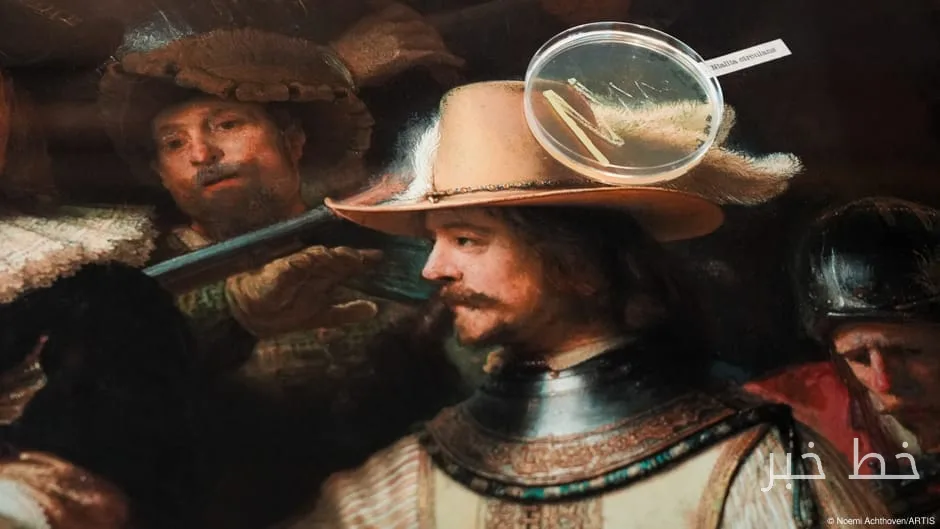
The painting 'Night Watch' by Rembrandt van Rijn is one of the most famous works of the Dutch Golden Age. This piece, displayed at the Rijksmuseum in Amsterdam, is recognized as a milestone in Rembrandt's artistic career and a prominent example of his creative genius.
A Painting with Movement and Life
In this painting, Rembrandt skillfully uses light and shadow to draw the viewer's eye toward the key characters. Unlike the static group portraits that were common at the time, this artist depicts the guards of Amsterdam in motion, preparing for a parade.
In addition to the sense of movement in 'Night Watch', the painting itself is interestingly alive, as various microorganisms inhabit its canvas. The 'Night Watch' research project explores what types of living organisms exist on this famous painting.
A Collaborative Scientific and Artistic Project
This research is a collaborative scientific and exhibition project between the Rijksmuseum and ARTIS-Micropia, a museum in Amsterdam dedicated to the world of microorganisms. This project is part of the broader 'Night Operations' initiative, described as the largest and most extensive study and restoration of Rembrandt's famous painting, which began in 2019.
Researchers and conservators in this project are examining all aspects of this artwork using advanced technologies, seeking new information about the materials, condition, and history of this painting, and now they are also investigating its microbiome.
Elin van Bloois, who leads this research, states that the goal of 'Night Watch' is to place microbes in a positive light. As a microbiologist, she believes these organisms deserve more attention.
Over the next six months, van Bloois will collect samples from the famous painting from the museum each month. These samples will be taken using small sterile discs from specific areas of the painting and will collect microscopic materials.
Potential Results and Implications
These samples will be cultivated in laboratories, turning previously invisible microbes into visible colonies that can be studied and identified. In the 'Night Watch' exhibition, visitors will be able to see petri dishes containing these microbial colonies.
The exhibition opened on November 11 and includes findings from two of van Bloois's sampling sessions. Four more sessions will be added to this exhibition in the coming months, allowing visitors to stay informed about the results of this research.
Research has shown that some microbes are commonly found on human skin and are a healthy part of the human microbiome. However, a specific bacterium named Microbacterium saccharophilum has been found in the samples, which was first identified in a sugar factory in Japan. How this microorganism entered the 'Night Watch' painting remains a mystery.
The 'Night Watch' project excellently illustrates the connection between science and art, contributing to a better understanding of the aging process of paintings and how environmental conditions affect cultural heritage. This exhibition will continue at ARTIS-Micropia in Amsterdam until the end of May 2027.