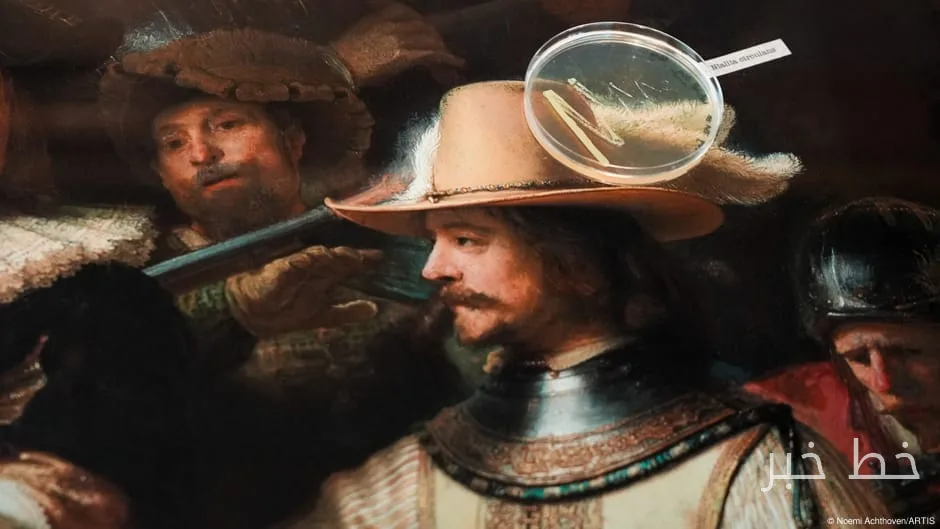
The painting "Night Watch" by Rembrandt van Rijn is considered one of the most famous works of the Dutch Golden Age. The Rijksmuseum Amsterdam, where this piece is displayed, describes this masterpiece from 1642 as "a milestone in his career and an excellent example of his creative genius."
Research on Microorganisms
This painting, with its dramatic use of light and shadow, directs the viewer's gaze towards key characters. Unlike the static group portraits that were common at the time, Rembrandt depicted the Amsterdam city guards in motion. But beyond the sense of movement in "Night Watch", the painting is also unusually home to live microorganisms that inhabit its canvas.
Read more: Ella Langley Wins Six Awards at the Country Music Association Awards
The "Night Watch" research project investigates what types of living organisms exist on the surface of this famous painting. This study is a collaborative scientific and exhibition project between the Rijksmuseum and the ARTIS-Micropia museum, which is dedicated to the world of microorganisms.
Night Operations and Painting Restoration
This research is part of the larger "Night Operations" project, described as "the largest and most comprehensive study and restoration of Rembrandt's famous painting", which began in 2019. Curators and scientists in this project are using advanced technologies to examine all aspects of Rembrandt's masterpiece and are seeking new discoveries about its materials, condition, and history, and now they are investigating its microbiome.
Elin van Blokhuis, who leads this research, says: "Our goal is to put microbes in a positive spotlight. As a microbiologist, I believe they truly deserve more attention."
Over six months, van Blokhuis will collect samples directly from the painting at the Rijksmuseum each month, in collaboration with those working on the restoration of "Night Watch". Using small sterile discs that are gently pressed onto specific areas of the painting, the samples collect microscopic materials from both varnished and unvarnished sections.
These samples are then cultured in laboratories, and previously invisible microbes become visible as studyable and identifiable colonies.
Exhibition and Research Results
In the "Night Watch" exhibition, visitors can see petri dishes containing cultured microbial colonies. A full-scale replica of Rembrandt's masterpiece also shows where the samples were taken and what microorganisms were found there. At the opening of this exhibition on November 11, findings from two sampling sessions by van Blokhuis were displayed, with four more sessions to be added in the coming months.
This means that "exhibition visitors will discover what I have found as the study progresses," van Blokhuis explains. "We really take them along on this journey." These microorganisms can help understand how paintings age and the impact of environmental conditions on cultural heritage.
Although the likelihood of these microorganisms dating back to Rembrandt's time is low, understanding these organisms can still aid in better preservation of artworks. Ultimately, this project represents a partnership between science and art, beautifully illustrating the concept that "nature is the teacher of art and science."
The "Night Watch" exhibition will be held at ARTIS-Micropia in Amsterdam until the end of May 2027.