The year 2026 has been a difficult year for the Kurds in the Middle East. In Syria, the Kurdish self-administration system that had emerged during the Syrian civil war since 2012 has come to an end. In Iraq, internal conflicts among Kurdish parties and increasing pressures from the central government in Baghdad have escalated the situation.
Crises in Syria
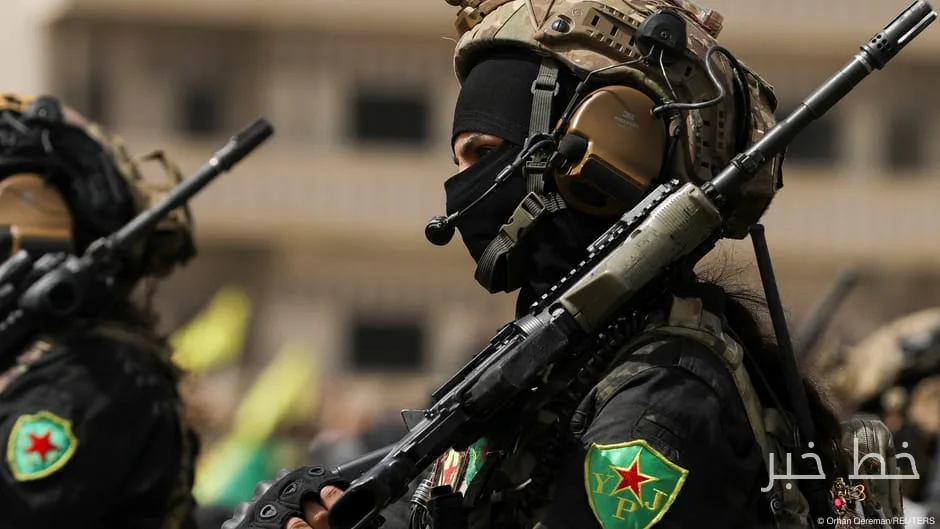
In Syria, with the arrival of new leadership in Damascus, large parts of the northeast of the country have come under the control of the central government. An agreement was signed on January 18, under which the Syrian Democratic Forces (SDF) were required to hand over key areas and infrastructure to the central government and integrate their forces into the Syrian armed forces. This marked the end of self-administration as an independent political and military project.
Read more: Iran's Military Industry Faces Challenges from U.S. Sanctions
The United States, which had supported the SDF for years as an ally in the fight against the so-called ISIS, has now shifted towards the central government in Damascus. Jassim Dasan from the Global and Regional Studies Institute in Germany (GIGA) describes this situation as an example of the limitations of Kurdish coalition policies, stating: "The bitter reality is that Western alliances with the Kurds have always been temporary and rarely have political consequences."
Challenges in Iraq and Turkey
In Iraqi Kurdistan, which has legal independence, the situation is also extremely unstable. Increasing pressures from the central government in Baghdad and historical rivalries between the two main parties — the Kurdistan Democratic Party (KDP) and the Patriotic Union of Kurdistan (PUK) — have weakened self-administration institutions. Two years after the regional elections, there is still no established regional government, and these parties are more focused on securing their influence and attracting regional supporters.
Jassim Dasan states: "The situation is very unstable," and while self-administration is guaranteed in the constitution, there are no effective institutions to implement decisions. Thomas Schmidinger, a political scientist from the University of Vienna, believes that Kurdish self-administration in Syria may still be influential due to experiences and learnings in educational fields and women's organizations.
Meanwhile, a recent analysis by a British think tank indicates that the ongoing deadlock between the KDP and PUK could lead to the deterioration of the structures that have enabled Kurdish self-administration over the past two decades. On Tuesday, November 24, the central government of Iraq ordered that the borders of the autonomous Kurdish region and several oil fields under Kurdish control be transferred to the control of the central government, which will exacerbate tensions between Baghdad and Kurdistan.
In Turkey, efforts to end the long-standing conflicts with the Kurdistan Workers' Party (PKK) are underway, but the disarmament process has not yet been completed, and this group is still recognized as a terrorist organization. While the PKK has announced that it will end armed shooting in May 2025, the political and legal issues facing this minority remain unresolved.
Overall, for a generation that has grown up in an autonomous region, the end of Kurdish self-administration as a quasi-state with its armed forces represents a significant gap and immense disappointment, as many viewed this situation as the starting point for a future Kurdish state.
Read more: Thirteen Years of the DACA Program is a Sign of Congressional Failure · Stephen Walt Considers the U.S.-Israel War Against Iran the End of Foreign Powers' Intervention