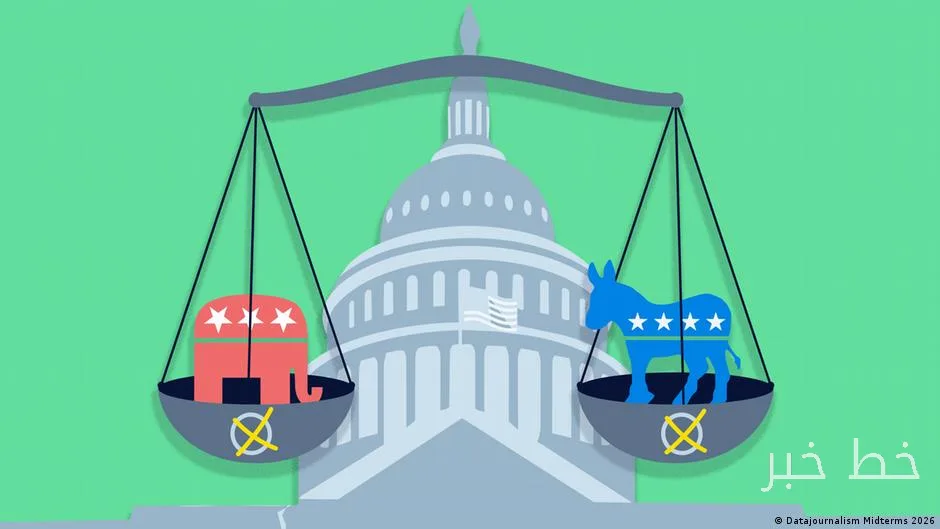
The 2026 U.S. midterm elections were held on Tuesday, where Americans voted to elect all 435 members of the House of Representatives and 35 senators. In this election, voters in 36 states also chose new governors. Prior to the elections, Republicans held the majority in both chambers of Congress.
Impact of the Results on Future Policies
Midterm elections are held every four years in the middle of the presidential term, and their results can have profound effects on U.S. policies in the coming years. If Democrats gain a majority in either or both chambers of Congress, this could affect the executive power of President Donald Trump and present challenges for him in pursuing his policies.
Voter Statistics
According to data obtained from polls, over 75,000 confirmed voters expressed their votes in this election. This polling included early voters, mail-in voters, and exit polls on election day. The results of these polls indicate that many voters see the midterm elections as an opportunity to express dissatisfaction with the President. Nearly half of the voters viewed this election as a chance to criticize Trump's performance.
Public dissatisfaction in Democratic-leaning states such as California and Massachusetts was very high, while even in Republican states, a majority of voters were dissatisfied with the status quo. Before the elections, Republicans held 53 seats out of 100 in the Senate and 220 seats out of 435 in the House of Representatives, which was only two seats more than the 218 needed for a majority.
The results of this election reflect deep voter dissatisfaction with the way the country is being run and could have significant implications for Congress and the future government. As the election results are gradually announced in various states, the counting process is expected to continue in the coming hours.