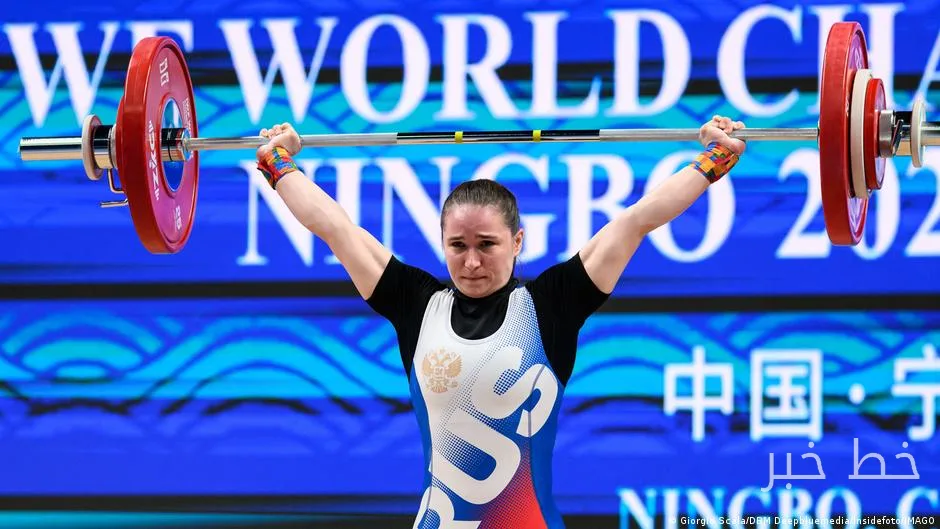
The return of Russian athletes to international competitions has raised fresh questions about doping tests. Reports indicate that only four out of 16 Russian weightlifters participating in this year's world championships have been subjected to out-of-competition testing by the International Testing Agency (ITA).
Insufficient Testing for Russian Weightlifters
Anastasia Romanova, a two-time European champion who had previously been banned for two years due to doping, is among the weightlifters who have not been tested in the first nine months of 2026. In comparison, all 13 members of the North Korean team have been tested by the ITA at least once. North Korea, like Russia, has a history of doping violations in weightlifting.
The International Testing Agency stated that all 16 Russian weightlifters were tested prior to participating in this event, and these tests were conducted in Ningbo, China, where the competitions are held. Given the nature of the sport of weightlifting, performance-enhancing drugs typically have the most impact during training periods before competitions, and it may be difficult to detect them during the events.
Criticism of Lack of Out-of-Competition Testing
Rob Koehler, head of the Global Athlete Movement, described the lack of out-of-competition testing as "strange" and stated, "Out-of-competition tests are the foundation of anti-doping. Everyone knows that testing occurs during events, but no one knows when they will be tested outside of events throughout the 365 days of the year."
Marta Navrka, spokesperson for the ITA, mentioned that Russian athletes were among the ten nationalities that were tested the most and defended the fact that only two Russian weightlifters are on the priority testing list. She noted that Russia's history of doping in weightlifting is a significant factor in assessing risk and testing priorities for the ITA.
Navrka emphasized, "Russian weightlifters remain under significant monitoring and testing." In this regard, Koehler stated that Russia should be under more scrutiny and added, "If this is not done, you undermine athletes' trust in the system."
Consequences of the Doping Scandal and the Status of RUSADA
Weightlifting has been one of the sports most affected by the Russian state-sponsored doping scandal during the 2014 Sochi Winter Olympics. This scandal has led to numerous bans for Russian athletes, including in other sports. The Russian Anti-Doping Agency (RUSADA) has been suspended for over a decade, and the Moscow laboratory is unable to analyze urine and blood samples.
WADA has stated that it continues to monitor RUSADA, but due to the current geographical situation, it has been unable to access Russia. The organization added that RUSADA has collected thousands of samples this year, including hundreds from weightlifters.
While RUSADA still has the authority to investigate and prosecute doping cases, some critics find this concerning. Koehler stated, "This is a double problem that WADA continues to grant them permission while there is no oversight of their activities."
The International Olympic Committee (IOC) has also pointed to a lack of trust in RUSADA, and Navrka announced that the IOC has recently entrusted ITA with an expanded role in Russia ahead of the 2028 Los Angeles Olympics.
Read more: Maryam Basharat becomes two-time world karate champion