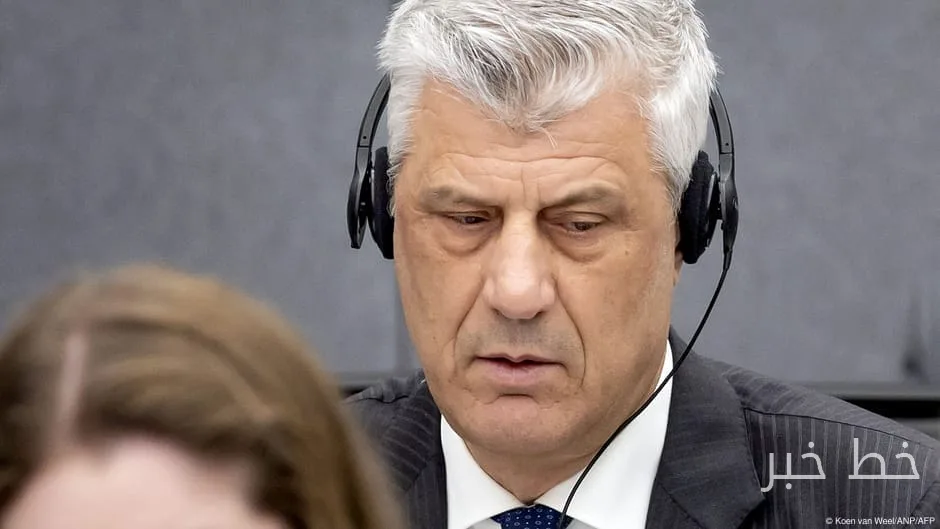
Hashim Thaci, the former President of Kosovo, was sentenced to 17 months in prison on Tuesday by a court in The Hague for obstruction of justice and attempting to influence witness testimony in his war crimes trial. This sentence will be added to his previous 25-year prison term issued on September 16.
Details of the New Sentence
According to the indictment from the Special Prosecutor's Office, Thaci provided confidential information about witnesses in his war crimes trial to visitors at the detention center in The Hague and guided them on how to influence their testimony. Three other men have also been convicted on similar charges: Blerim Shala, former head of the Kosovo Intelligence Service, Hajredin Kuci, former Minister of Justice, and Fadil Fazliu.
Thaci, who was the political leader of the Kosovo Liberation Army (KLA) during the Kosovo War from 1998-1999, is regarded as a hero in his country. His conviction for war crimes in September faced reactions of anger and despair in Kosovo.
Response from the Kosovo Government
The Kosovo government quickly reacted to this ruling. In a statement issued on Tuesday, the government said: "Trust in justice is built not only on the decisions made but also on how they are reached. Therefore, our commitment to the rule of law and insistence on full respect for rights and procedural guarantees is part of the same principled position: justice must not only be done but must be seen to be done, fairly, transparently, and reliably."
The Special Court for Kosovo was established in 2015 at the request of the European Union and the United States by the Kosovo Parliament to investigate serious crimes potentially committed by KLA members during and after the Kosovo War. Due to security issues, including concerns about threats to witnesses, this court is based in The Hague, Netherlands.
Legal and Political Challenges
Following the conviction of Thaci and three others in the initial phase in September, Kosovo government officials formed a working group to develop a strategy regarding appeals in the Special Court for Kosovo. This group is chaired by Foreign Minister Glauk Konjufca and includes members of the Kosovo Parliament.
Prime Minister Albin Kurti stated that this group still believes that "the initial ruling of the Special Court is unjust, both legally and morally" and for this reason, "the government is seeking a remedy at the appellate level before the Special Court." In this regard, the Kosovo Parliament is reviewing legal reforms concerning the Special Court for Kosovo.
International Concerns
Political analysts and legal experts have noted the reactions to the Parliament's efforts to amend the law governing the Special Court for Kosovo. Artan Murtezaj, a political analyst and university professor, stated that "this initiative could be interpreted as an attempt to interfere with the judicial process." He also emphasized that it is essential for the political spectrum of Kosovo and legal experts to clearly demonstrate that this action does not interfere with Kosovo's international commitments to the European Union.
Ehati Miftaraj, executive director of the Kosovo Law Institute, also pointed out that "the way the judicial process has unfolded has created the impression that judges, prosecutors, and some international actors have treated not only the defendants but also Kosovo itself with distrust and bias." In a democratic society, every citizen has the right to criticize judicial decisions, but a distinction must be made between legal criticism and attempts to discredit the courts.