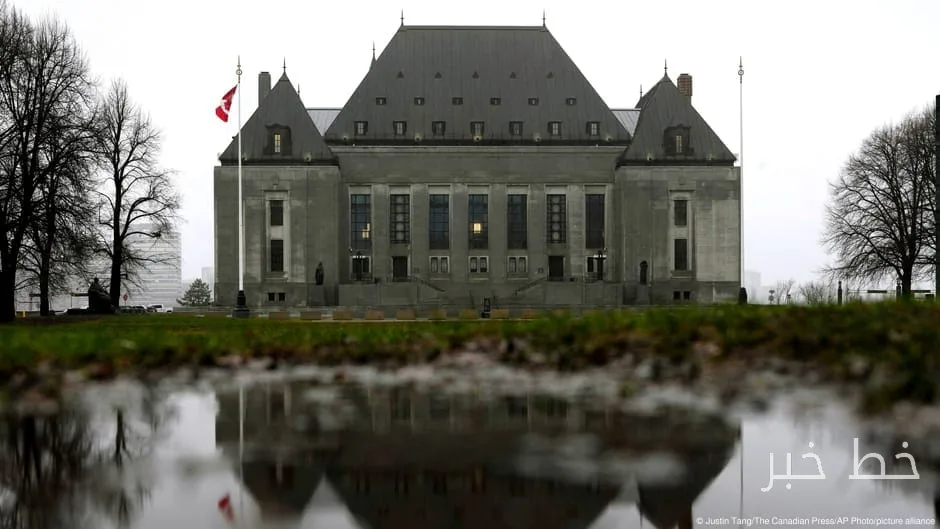
The Supreme Court of Canada took a significant step towards the separation of religion from the state on Friday by upholding the law banning religious symbols for government employees in Quebec. This law, known as Bill 21, was passed by the Quebec government in 2019 and aims to maintain a declared secular society.
Contents of the Law and Its Implications
According to this law, individuals providing public services, including teachers and police officers, have the right to receive services without facing overt religious symbols. Symbols such as hijabs, turbans, and kippahs are restricted under this law. Richard Wagner, Chief Justice of the Supreme Court, emphasized that this law "is rooted in Quebec's historical and legitimate commitment to ensuring the secularism of the state in a free and democratic society."
Reactions to the Supreme Court's Decision
Mathieu Lacoste, interim representative of the Coalition Avenir Québec (CAQ), which passed this bill, called the decision a "victory" for the French-speaking province of Quebec, stating: "This is a victory for the people of Quebec and the CAQ, whose actions have been fully validated today." This party was in power from 2018 to 2026, but after that, it did not gain seats in the legislature, and the left-leaning Quebec sovereignty party (PQ), which also supported Bill 21, formed the government.
This case is seen as a major test of the extent of provincial powers to disregard provisions of Canada's federal constitution by invoking the "notwithstanding clause." Quebec invoked this clause when passing the bill, anticipating that the law would be challenged.
Critics believe that this law unfairly targets Muslim women and undermines legal protections for fundamental rights. Stephen Brown, CEO of the National Council of Canadian Muslims, described the decision as "an unlimited license for governments in this country to enact laws that violate the fundamental freedoms and legal rights of every Canadian."
He also added that this law has forced many Muslim women to leave teaching jobs or even prevented them from working in schools. Emmet Macfarlane, a political science professor at the University of Waterloo, described this law as "Islamophobia as government policy."
Read more: Modi's government holds a special session in the Indian Parliament · Trump's government has asked the Supreme Court to stop temporary support for Venezuelans