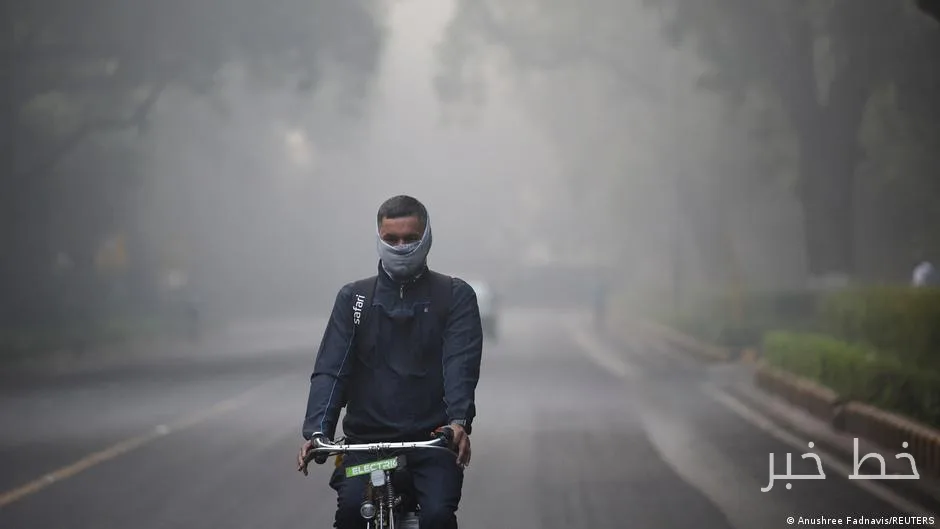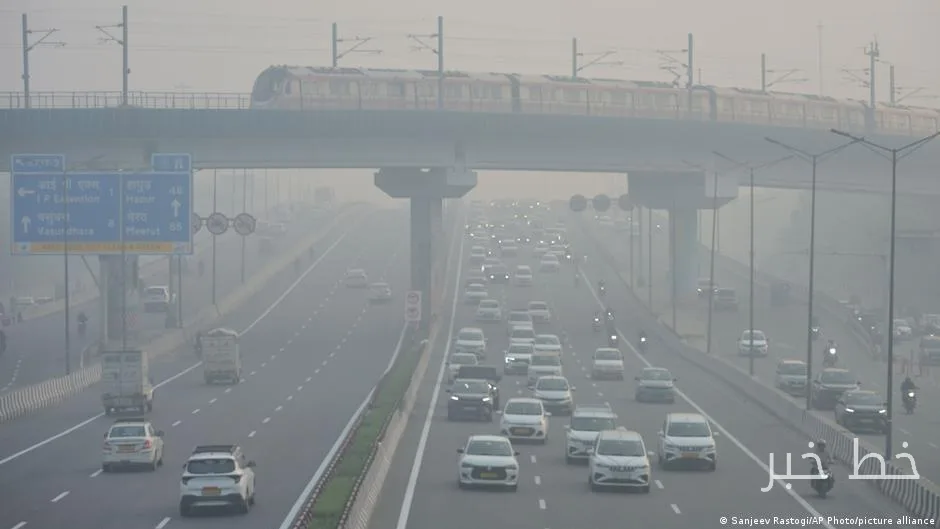
The Supreme Court of India announced on Friday that vehicle emissions are one of the main factors contributing to the decline in air quality in Delhi, casting doubt on the effectiveness of government measures to control this issue.
Air Quality Status in Delhi
The air quality in Delhi has consistently remained above the 300 mark this week, indicating a "hazardous" status. With the onset of winter, atmospheric conditions trap pollutants in the air, leading to a decline in the capital's air quality.
Read more: Capybara Seen Again After Escaping from Zoo in Britain
Supreme Court's Comments on Vehicle Emissions
The Chief Justice of India, Suryakant, during the hearing on this matter, pointed to the heavy traffic on the streets of Delhi and the connecting roads to the National Capital Region (NCR), stating: "A major reason for pollution is vehicle emissions. Just look at the traffic in Delhi… this traffic is actually the main factor." The Supreme Court also reviewed the government's actions to control the rising levels of air pollution and expressed concern over the lack of success of these measures in recent years.
This judicial body added: "Thinking that we can achieve air quality below 100 AQI in Delhi during winters is unrealistic, while the status of 'very bad' and 'severe' has become a new norm."
Supreme Court's Suggestions to Address Pollution Issues
Regarding the burning of straw, the Supreme Court stated that farmers should receive economic incentives and practical options to prevent this practice. The Supreme Court also referred to responsibility during celebrations, especially during Diwali, and added that the use of fireworks during these celebrations contributes to air pollution. The Chief Justice asked: "Why don't we return to our original customs?" and emphasized that celebrations should be conducted responsibly towards the environment.
While the festive spirit of Diwali prevails in India, concerns about the air quality in Delhi are also on the rise. As this festival approaches, air pollution in Delhi is steadily increasing.
The Role of Social Media in Pollution
Meanwhile, the social network X has informed the Supreme Court of India that police orders to block online accounts of two prominent free speech advocacy groups in India were fake. This highlights the new challenges the Indian government faces in dealing with social and environmental issues.
As the government and judicial bodies strive to find solutions to combat air pollution in Delhi, the need for cooperation and public awareness in this regard is increasingly felt. The rising air pollution not only threatens public health but also exacerbates environmental and social challenges.
Read more: Closure of East Potomac Golf Course on November 15