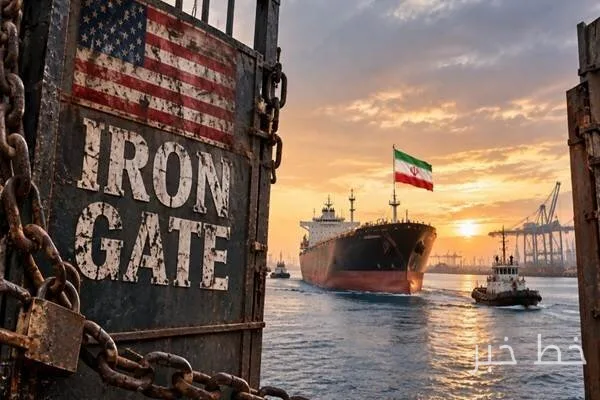
The Donald Trump administration announced the formation of the 'Iron Gate' task force on November 7 (Aban 16) as part of its expanded economic pressure against Iran. This new force, consisting of about 20 military and civilian personnel stationed in Tampa, Florida, is tasked with monitoring land and maritime routes in the Caspian Sea in collaboration with various U.S. government agencies to disrupt Iran's foreign trade.
Change in U.S. Strategy on Sanctions
This new approach aims to extend pressures beyond conventional sanctions and target the networks and trade routes that enable the continuation of Iran's foreign trade. The maritime blockade of Iranian ports and targeting intermediaries for sales and currency revenue transfers are parts of this strategy. The 'Iron Gate' task force seeks to increase the costs of countries cooperating with Iran as a mechanism for information coordination and oversight.
Read more: 70% of Americans Support Targeted Tariffs on Steel
Pressure on Iran's Trade Partners
In this endeavor, the U.S. leverages its power in the international financial system. Secondary sanctions serve as the primary tool of pressure, exposing foreign financial institutions and companies to penalties for cooperating with the sanctioned sectors of Iran's economy. Warnings from the U.S. Treasury Department to foreign banks are an example of this approach, aiming to create deterrence in the international banking network.
However, these pressures face challenges. Countries like China, Russia, Turkey, and the UAE each have different economic and political relations with Iran, and their levels of compliance with Washington's pressure vary. Thus, the main goal of the U.S. is to instill fear and uncertainty among Iran's trade partners to compel them to limit cooperation with Tehran.
Continuing Trade through Alternative Routes
Decades of ineffective sanctions have shown that U.S. pressure, while increasing the costs of Iran's foreign trade, does not sever the country's economic ties with the world. Iran has gradually established a range of alternative trade, financial, and transportation routes. Cooperation with China and Russia, developing border trade, and utilizing the capacities of neighboring countries are among these mechanisms.
In the financial sphere, transactions using national currencies and barter have helped reduce the dependence of some dealings on the U.S. banking system. For example, Iran and China's cooperation in converting oil revenues into purchasing credit reduces the need for direct money transfers through international banks.
Ultimately, the U.S. strategy relies on creating fear and uncertainty among Iran's trade partners. This approach seeks to compel various countries to limit their economic relations with Iran by threatening them with exclusion from the dollar and the U.S. market.
Read more: Congress Must Prevent Another Government Shutdown · Britain's Position on Freedom of Movement in the European Market Clarified



