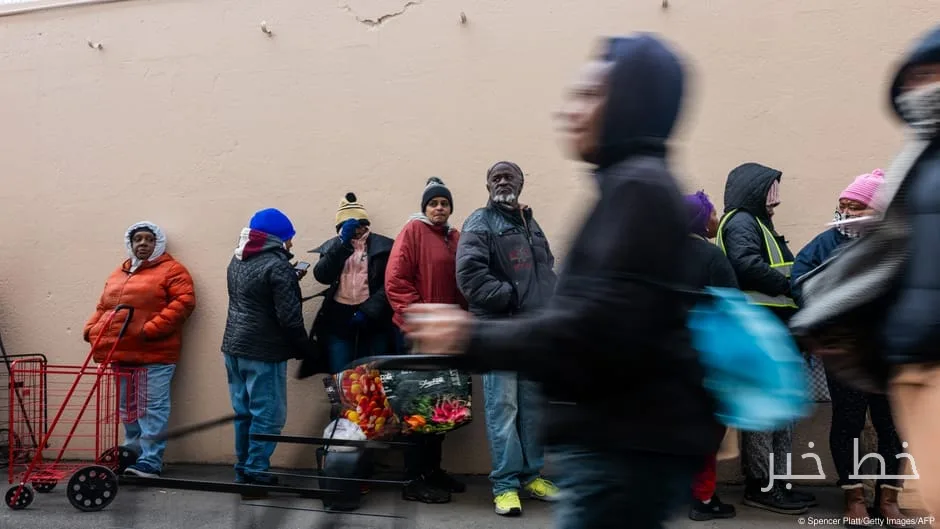
The United States government has announced that the poverty rate has decreased to 10.2 percent in 2025, marking the lowest historical level since records began in 1959. Additionally, the child poverty rate has reached 13.4 percent. However, Senator Bernie Sanders has questioned these statistics, pointing to the high child poverty rate in the United States.
Different Definitions of Poverty
The poverty rate in the United States is calculated based on the official criteria of the Census Bureau, which compares pre-tax family income with the poverty threshold. This threshold dates back to the 1960s and has only been adjusted for inflation. For 2025, this threshold is set at $16,749 for an individual under 65 years old and $32,649 for a family of four with two children. Based on this criterion, the government has correctly stated that the poverty rate has reached its lowest level.
Read more: Power Outages for Thousands of Homes in the United States After Thanksgiving Storms
Supplementary Metrics and a Broader Picture
However, there is a newer metric called the Supplemental Poverty Measure (SPM) that provides a broader picture of family resources. This measure takes into account not only income but also taxes and non-cash benefits such as housing assistance and living expenses like childcare and medical costs. According to this measure, 13.1 percent of Americans will live in poverty in 2025. This measure reached its lowest level of 7.7 percent in 2021, primarily due to temporary pandemic assistance.
Additionally, Senator Sanders refers to relative statistics that are calculated based on national median income and compare it with household incomes. This approach focuses not only on fixed income but also on wealth distribution in society. For example, the Organization for Economic Cooperation and Development (OECD) defines the relative poverty threshold as 50 percent of national median income. This measure helps identify individuals who are unable to fully participate in the economy and shows that large segments of the population in wealthy countries also live in poverty.
Global Poverty and Its Challenges
Globally, the United Nations relies on the international poverty line to track progress towards its first sustainable development goal, which is to "end poverty in all its forms by 2030." In 2025, this line was updated to $3 per day. Individuals living on less than this amount are classified as "extremely poor." This measure helps understand the severity of poverty in different parts of the world and indicates that about 10 percent of the global population lives in extreme poverty.
Read more: Steinmeier Calls on German Companies to Invest During His Last Trip to Africa · Modi's Government Holds Special Meeting in Indian Parliament



