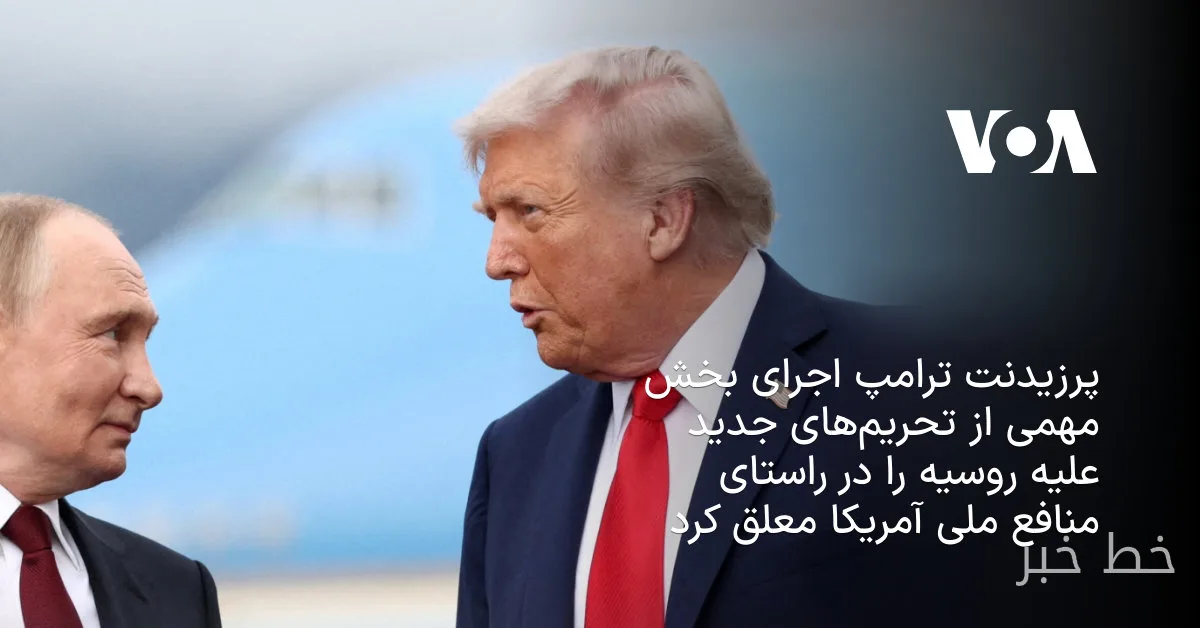
The Donald Trump administration, led by the President of the United States, issued an executive order suspending a significant portion of new sanctions and tariffs against Russia and countries purchasing oil and gas from this country before they were implemented. This decision has been announced as being in the national interest of the United States.
Details of the Executive Order
The executive order from President Trump was released on Friday and includes exemptions from enforcing certain restrictions outlined in a law that the President of the United States signed the previous month. This law, titled "Lindsey Graham's Russia and Iran Sanctions Act of 2026," was enacted to increase economic pressure on Russia to end the war in Ukraine.
Read more: California to Vote on Billionaire Wealth Tax in November
Under this law, the United States could impose tariffs of up to 100 percent on imported goods from five major countries buying oil and gas from Russia. These restrictions also included countries that continued to knowingly purchase energy from Russia.
Reasons for Suspending the Sanctions
President Trump stated in his order: "I have provided Congress with confirmation that issuing such an exemption at this time is in the national interest of the United States." According to this order, the exemptions will continue until the President of the United States or senior officials in his administration determine that further actions are necessary.
This decision comes at a time when rising oil and fuel prices have become one of America's economic concerns. Analysts believe that implementing broad tariffs against major energy buyers from Russia could exert more pressure on the global oil market and increase costs for American consumers.
China and India, two major buyers of Russian oil, had previously expressed concerns about the consequences of these sanctions. China opposed the extraterritorial sanctions imposed by the United States, and India had warned that the new tariffs could affect trade relations between the two countries.
In response to this decision, Kirill Dmitriev, special representative of Vladimir Putin for investment, described the move as a "truly historic moment" and stated that the aforementioned law could effectively halt economic cooperation between Russia and the United States. This decision was made following a recent agreement between the United States and Russia to resume Russian diesel exports to global markets.
Despite the suspension of the new restrictions, the recent order does not mean the cancellation of all previous U.S. sanctions against Russia, and the Trump administration retains the authority to review the exemptions and implement new measures.
Read more: Paraguay Government Agrees to 5% Salary Increase with Teachers' Union · European Leaders Supported Volodymyr Zelensky