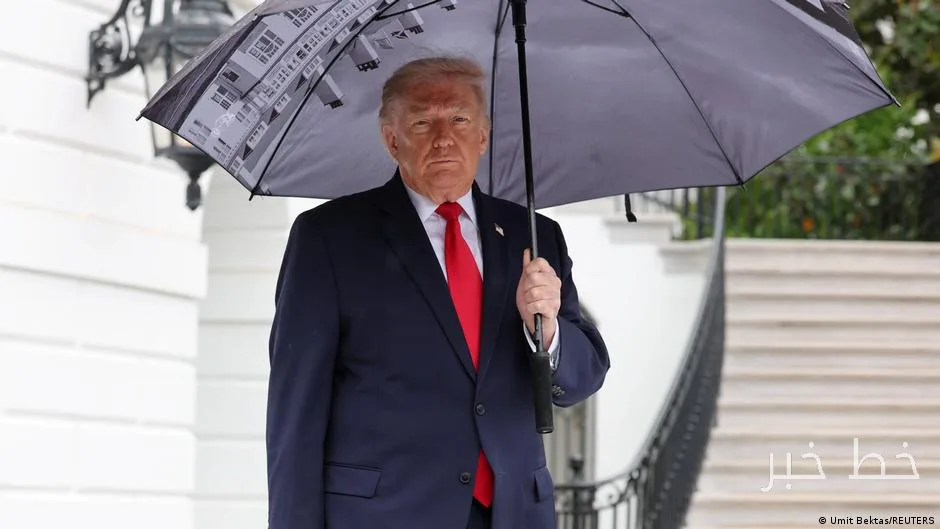
The Donald Trump administration, the President of the United States, has increased its diplomatic efforts this fall to revive stalled negotiations aimed at ending the war in Ukraine. Washington is seeking to bring Moscow back to the negotiating table through a number of concessions, including an agreement on Russian diesel exports to the United States and a temporary easing of some sanctions, by pressuring Kyiv and its European partners.
Moscow's Willingness for Negotiations
However, the Kremlin does not seem to be in a hurry to resume meaningful peace talks. Moscow has stated that it is ready to negotiate with Ukraine at a technical level next month. This announcement came after a meeting between Steven Vitkoff, the U.S. special envoy, and Vladimir Putin, the President of Russia, in St. Petersburg on November 21. Putin agreed to resume peace talks under Washington's mediation after November 10, and according to his assistant, Yuri Ushakov, the next round of negotiations could take place in Abu Dhabi and will focus on "the security structure for Russia and Ukraine after the war ends."
Read more: Prince Alois of Liechtenstein vetoed the abortion law proposal
Moscow's Proposed Trilateral Meeting
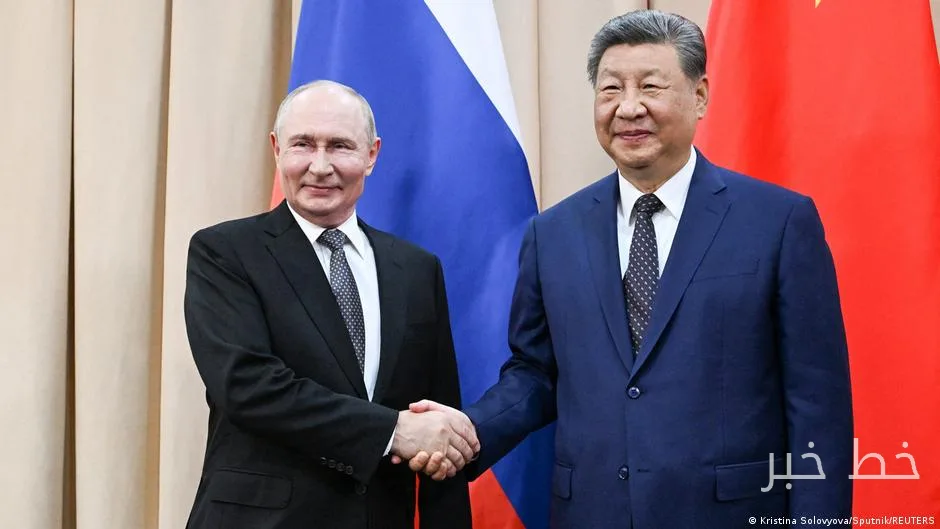
According to Ushakov, Putin has also shared some thoughts with Vitkoff about a possible trilateral meeting with Donald Trump and Xi Jinping, the President of China. Ushakov emphasized that Beijing is preparing for this meeting. Moscow has suggested that this trilateral meeting be held on the sidelines of the Asia-Pacific Economic Cooperation (APEC) summit scheduled for November 18-19 in Shenzhen, China. According to sources, Putin hopes to reach an agreement with Trump and Xi on ending the war in Ukraine in favor of Russia.
Moscow's proposal to hold this trilateral meeting, which includes Russia, the United States, and China but excludes Ukraine and the European Union, reflects the negotiation format that the Kremlin prefers. Russia believes that Ukraine should be prepared to accept territorial concessions before negotiations can advance. Putin has also repeatedly emphasized that he is only ready to negotiate if Russia's interests are taken into account.
According to sources, Putin views holding this gathering in Shenzhen as a new Yalta conference, referring to the 1945 meeting of the leaders of the United States, Britain, and the Soviet Union to discuss the defeat of Nazi Germany and the post-war order in Europe. Reports indicate that Chinese officials have communicated through diplomatic channels that Beijing has no objections to this trilateral format, provided that Trump agrees to participate in the meeting.
Volodymyr Zelensky, the President of Ukraine, mentioned during his visit to Oslo on October 20 that negotiations about his country's future would only be acceptable if Ukraine has a presence at the negotiating table.
Temur Omarov, a researcher at the Carnegie Moscow Center in Berlin specializing in China-Russia relations, was not surprised by the Kremlin's proposal. He stated that Moscow wants to feel respected by Washington and to be regarded as a major international power. According to him, the previous U.S. administration was unwilling to discuss issues related to Ukraine's sovereignty with Russia without Kyiv's presence. Now, according to Omarov, the Kremlin believes such negotiations may be possible.
Clearly, Moscow hopes that any agreement reached at the proposed meeting will encourage the White House to pressure Ukraine and the European Union to accept its terms. But what will China's role be in this?
Omarov believes that Beijing will primarily participate as a symbolic partner, rather than as an active mediator responsible for the outcome. He said, "Beijing has no intention of taking responsibility for Ukraine's future."
Participation in this meeting will not impose any additional commitments on China. Omarov explained: "It is not surprising that the Kremlin emphasizes this format. Russia wants to show that it is on the same level in these relations not only with the United States but also with China. However, objectively, Moscow is not the senior partner in this relationship.
However, Yuri Poita, a senior researcher at the Mercator Institute for China Studies, offers a different assessment. He believes that China and Russia have shared strategic interests, particularly in their efforts to promote an alternative security architecture across Eurasia.
Both countries, according to him, would benefit from a reduced Western military presence in Europe and Asia and a weakening of NATO's influence. Poita told DW: "If Russia and China succeed in convincing the United States to reduce its military presence in Europe and military aid to Ukraine, Russia will have greater advantages on the battlefield."
He added that such a development would further undermine the European Union's trust in the United States as a NATO ally. Poita believes that Moscow and Beijing are precisely seeking these outcomes in any negotiations with Washington.
Michael Kimmage, director of the Kennan Institute in the United States, is also skeptical that Beijing is preparing to play a more active diplomatic role in ending the war. He told DW that China may see this conflict as destabilizing and would prefer to maintain its trade relations with Ukraine and other countries in the region. However, he believes that another priority outweighs these concerns: "For China, the political survival of Vladimir Putin is more important."
According to Kimmage, Russia offers China several geopolitical advantages, including low-cost energy and a foreign policy partner that rarely opposes Beijing. He believes that China will continue to provide indirect support for Russia's military efforts to prevent Russia's defeat. A decisive victory for Russia may not be Beijing's goal, but ensuring Putin's survival and power is important for China.
Read more: Greg Stanton was arrested in the West Bank by the Israeli army · The U.S. Supreme Court rejected Trump's case regarding transgender inmate care