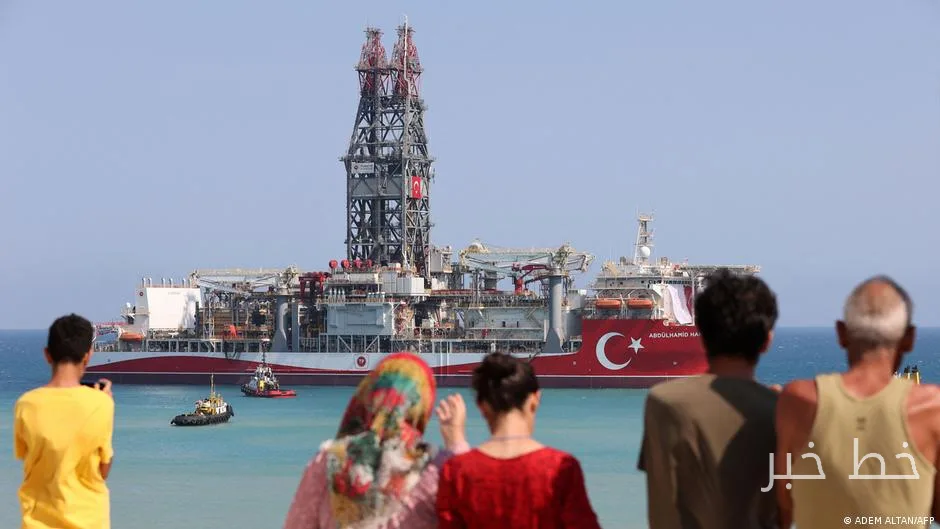
The Libyan parliament unanimously approved a maritime agreement with Turkey aimed at creating a direct maritime economic corridor between the two countries. This agreement, which was signed in 2019 with the Government of National Accord in western Libya, had faced opposition from the rival government in eastern Libya, but the eastern parliament has now changed its stance.
Impacts of the Agreement on Tensions in the Eastern Mediterranean
This decision, welcomed by the Turkish Foreign Ministry, is likely to escalate tensions with other countries in the Eastern Mediterranean, particularly Greece. The planned maritime corridor ignores Greek islands such as Crete, Karpatos, and Rhodes. The Greek government emphasizes that it has a complete exclusive economic zone (EEZ) around these islands and has previously expressed its opposition to this agreement.
Read more: Niha Bora Refused to Sign the Peace Document and Referenced the Right to Democratic Protest
International Responses and Greece's Positions
The Greek Foreign Ministry stated in a statement that the country strongly opposes this agreement and has the support of the European Union in this regard. The Union has described the memorandum of understanding between Turkey and Libya as null and contrary to the sovereign rights of third countries. EU officials have also referred to this issue and emphasized that this agreement undermines the sovereign rights of third countries.
The main point of contention in the Eastern Mediterranean is the legitimate claims in the region. Greece primarily cites the United Nations Convention on the Law of the Sea (UNCLOS), which grants islands with "independent economic life" similar EEZ rights as the mainland. This includes the islands of Crete, Rhodes, and Lesbos.
Turkey also argues that the geography of the Mediterranean plays a special role, and if every small Greek island off the coasts of Turkey and Cyprus has full EEZ rights, Turkey would be significantly deprived of access to open seas. The country has also not signed the UNCLOS and thus does not consent to resolving this dispute in a United Nations arbitration court.
This agreement may also impact major projects such as the East Mediterranean pipeline, which aims to transfer natural gas from Israel and Cyprus through Greece to Europe. The maritime corridor between Turkey and Libya cuts across the planned route of this pipeline, and Turkey has also claimed that projects related to cables or pipelines located on its continental shelf require its approval.
In the long term, this situation may lead to the division of the Eastern Mediterranean into two competing energy and defense blocs: the Turkey-Libya axis may face a coalition supported by the European Union consisting of Greece, Cyprus, Egypt, and Israel.
Read more: U.S. Secret Service Closed a Road Near the White House Due to a Suspicious Object · Macron and the Border Get Closer to an Agreement