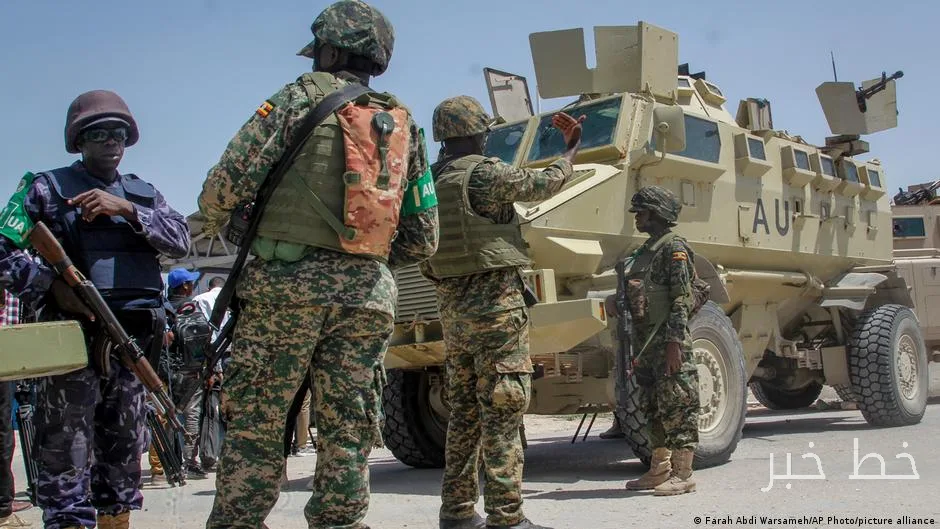
Uganda began withdrawing its military forces from Somalia on Monday, where it has played a key role in efforts to combat insurgents for nearly two decades. This withdrawal has been announced as part of a gradual troop withdrawal operation, and the first group of Ugandan soldiers will soon return to their homeland.
Details of the Troop Withdrawal Plan
According to a statement from the Ugandan army, the first group of military personnel involved in the gradual withdrawal operation has recently returned to Uganda. Uganda was the first country to deploy troops to Somalia in 2007 as part of the African Union peacekeeping force to support the Somali government in its fight against the Islamist group Al-Shabaab.
Read more: End of Six-Day Ceasefire in Oleshki, Ukraine
The plan for the withdrawal of Ugandan forces is structured so that all troops will return to their country by the end of 2027. Currently, about 4,500 Ugandan forces are stationed in Somalia as part of the AUSSOM mission, along with approximately 2,000 other forces operating under bilateral agreements in the country.
End of Peace Operations and Future Challenges
The Ugandan army's statement indicated that this withdrawal marks the end of 20 years of Uganda's support and stabilization operations in Somalia, allowing the Somali armed forces to take full responsibility for the country's security. This comes at a time when the security situation in Somalia is highly unstable, and Al-Shabaab still controls parts of the country.
Reports indicate that the first group of 109 Ugandan forces left the capital of Somalia, Mogadishu, on Friday. Additionally, the future of the AUSSOM mission is shrouded in uncertainty due to the recent decision by the United States to cut funding for the United Nations logistics office that this military coalition depends on.
The United States, as the largest financial supporter of this coalition, has expressed dissatisfaction with the lack of progress in the fight against Al-Shabaab and has also accused the Somali government of failing to unify the country and implement political reforms.
The announcement of Uganda's withdrawal coincides with the end of the United Nations political mission in Somalia. This mission concluded its activities on Saturday after more than three decades of peacebuilding efforts in the country, transferring responsibility to the Somali government and various United Nations agencies.
Somalia is set to hold elections next May, but insecurity and disputes among opposition parties may disrupt this process. For over two decades, Somalia has been affected by the deadly insurgency of Al-Shabaab, and while Ugandan forces have played a key role in driving this group out of the capital and several major cities, the group has recently regained control of territories in central and southern Somalia.
Read more: Over 290 People Arrested in France Due to Protests · Africa CDC Holds Emergency Meeting on Ebola Spread