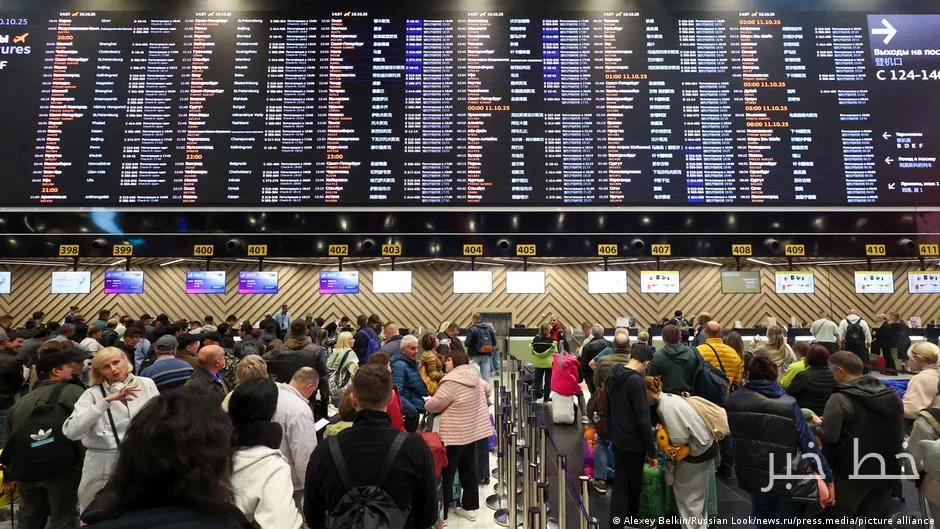
Ukrainian drone attacks in recent months have caused flights to and from Russian airports to stop. Domodedovo, Sheremetyevo, Zhukovsky, and Vnukovo airports in Moscow have nearly daily suspended operations in October 2023, with some days seeing closures lasting up to nine hours.
Cutting Off Airspace and Security Threats
In early September, Vladimir Zelensky, the President of Ukraine, announced that the country is seeking to cut off airspace around Moscow and other destinations in Russia. Zelensky warned: "Today we want to warn every airline using Russian airspace, every insurer, and anyone still using major Russian airports: Russian airspace will become completely unsafe."
The next day, Ukraine sent a similar warning to the International Civil Aviation Organization. Ukrainian airspace has been closed since the start of Russia's full-scale invasion in February 2022.
Russia's Response to Threats
The Russian aviation authority, Rosaviatsiya, has issued an emergency protocol called the "Carpet Protocol," which immediately blocks the airspace of a specific area or around affected airports in case of violations of Russian air sovereignty, use of weapons, or the appearance of unidentified objects in the sky. Following the announcement of this protocol, severe restrictions are imposed on all flights.
Oleksandr Laneky, CEO of Friendly Aviaport Consulting, said: "If there is a military threat, a specific section of airspace will be blocked, and this protocol will be announced. Essentially, every drone is considered a military threat." He also noted that Ukraine's military capabilities are far greater than those of the Houthis in Yemen, who have managed to cause significant disruptions in Saudi airspace.
Military analyst Jan Matfeyik also stated that Ukraine could easily disrupt air traffic in the Moscow area significantly. Although Ukraine has not yet been able to completely close Russian airspace, its armed forces are committed to this idea. He said: "To close the airspace and implement the 'Carpet' plan, only simple drones are needed, which do not require equipping with warheads or even long ranges."
Apparently, Ukraine may have the necessary resources to close Moscow airports. Matfeyik emphasized that Russian air defense systems have not been very effective in preventing Ukrainian drones from entering Moscow's airspace.
Potential Consequences and Risks for Civilian Flights
Laneky stated that there are three determining factors as to whether international airlines will stop their flights to Russia: military threat, demand level, and insurance costs. He added that if insurers assess the flight security risk to Russia as very high, they may significantly increase their rates, which would raise ticket prices.
Competition in the Russian aviation market has decreased due to the closure of many companies, which has increased demand for tickets from the remaining foreign airlines. Laneky emphasized that the future of flights to Russia depends on the price companies must pay for existing risks.