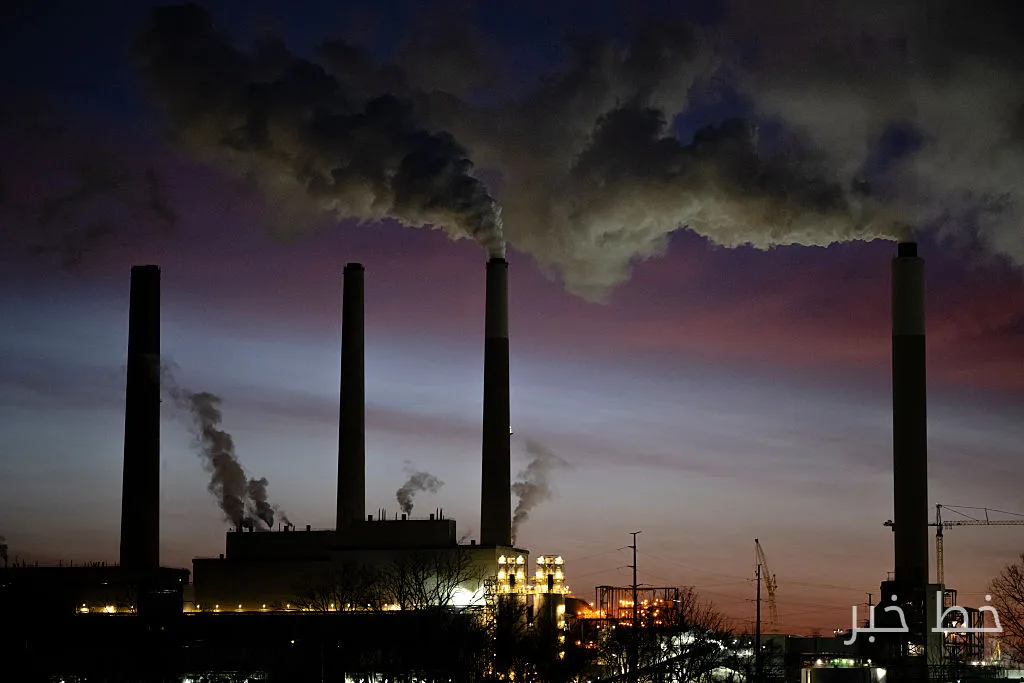
The UN Environment Programme (UNEP) has released a new report on the greenhouse gas emission gap, indicating that the goal of limiting global warming to below 1.5 degrees Celsius is at risk. This report, published on Wednesday, is considered a comprehensive and final assessment of global actions regarding climate change.
Consequences of Delaying Emission Reductions
Jan Olhoff, director of the UNEP Copenhagen Climate Centre and one of the report's authors, said: "We have wasted decades in reducing emissions, and now we are facing the consequences." He added that the world can still achieve the goals of the Paris Agreement, but it requires serious and swift efforts to avert the dangers of rising temperatures.
Challenges Ahead and the Need for Immediate Action
According to the Paris Agreement in 2015, countries committed to limiting temperature increases to 2 degrees Celsius and striving to reduce this increase to 1.5 degrees Celsius. However, the UNEP report shows that the window for preventing a temperature rise to 1.5 degrees Celsius has closed. Nonetheless, it is still possible to limit the temperature increase and bring it back below 1.5 degrees by the end of the century.
The report emphasizes that various countries need to provide new updates for reducing greenhouse gases. Based on current policies presented by over 150 countries, the world is on track to reach a temperature increase of 2.8 degrees Celsius by the end of the century. If countries achieve their new targets by 2035, the temperature increase is projected to reach 2.6 degrees Celsius.
These scenarios carry devastating consequences, including severe changes in sea levels and ecosystems and an increased risk of natural disasters such as heatwaves and wildfires.
The report notes that it is still possible to limit the temperature increase to 1.7 or 1.8 degrees Celsius, but this requires an 18% reduction in greenhouse gases by 2030 and a 69% reduction by 2040. These reductions must be accompanied by the removal of carbon dioxide.