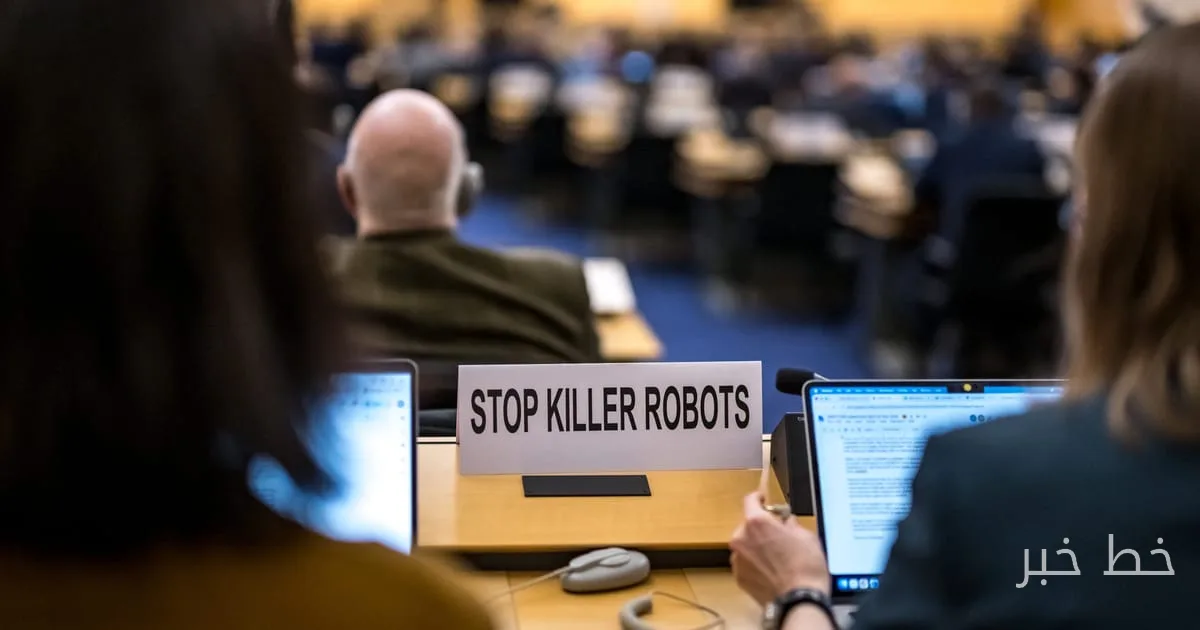
The UN negotiations on regulating lethal artificial intelligence (AI) robots in Geneva ended without reaching a formal agreement. Countries decided to continue discussions until 2028.
Failed Attempts at Agreement
Member countries of the UN Convention on Conventional Weapons attempted for five days in Geneva to reach an agreement on drafting binding regulations for autonomous weapons that can select and attack targets without human approval. However, the resistance of several countries, particularly Russia, brought these efforts to a standstill.
Read more: White House Changes Cybersecurity Chief After Technology Outages
Global Concerns About Autonomous Weapons
Julien Toni, the Swiss diplomat who chaired the negotiations, announced that 128 countries agreed to begin drafting an international instrument on lethal autonomous weapon systems in the next two years. This issue has become increasingly relevant given advancements in artificial intelligence and the growing capabilities of automated systems. Countries like Ukraine, Russia, Israel, and others are using drones and robots in warfare, yet emphasize that final control over firing remains in human hands.
However, the coalition Stop Killer Robots, which includes over 300 organizations, has stated that these systems are already being tested or deployed, including in Ukraine and Gaza. Nicole van Ruygen, the executive director of this coalition, stated that "autonomous weapon technology, including AI in the targeting cycle, is being used on the battlefield, and delays in creating a binding instrument pose risks to civilians and humanity."
Political Challenges and Informal Negotiations
Since consensus is required for any decision-making, Russia was able to block formal negotiations throughout the week and prevent observers, including the European Union, from entering the discussions. As a result, negotiations were held informally to avoid a Russian veto.
A Brazilian diplomat noted that Russia is not the only one obstructing these efforts. He said, "You can blame Russia, but they are not alone. Some people are hiding behind Russia."
Two EU diplomats identified the United States, the United Kingdom, South Korea, Japan, Turkey, and Israel as other countries resisting an agreement on a binding law. Ultimately, supporting countries for regulation, such as Ireland, Brazil, Belgium, and Austria, softened their positions due to fears of a "conference being left empty" and agreed to further discussions.
The final outcome of the negotiations indicates that the countries are willing to address the "drafting" of an instrument regarding lethal autonomous weapon systems within the framework of international humanitarian law, and a group of intergovernmental experts must report their findings to a meeting in 2028.
Read more: Trump Ignored Musk's Comments About His Distance from MAGA · European Commission Reports Cyber Attack Using Artificial Intelligence Tools