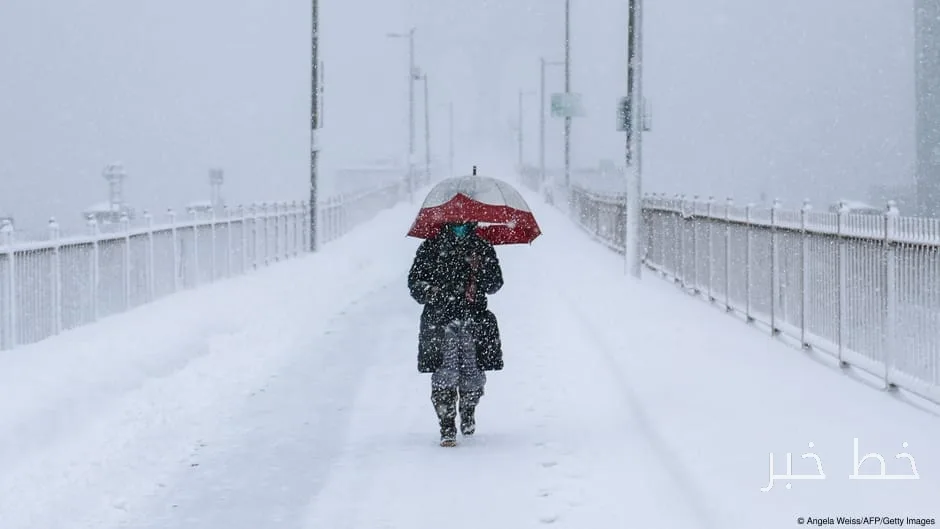
The polar vortex is a ring of cold air that is circulating at high altitudes in the atmosphere and can change shape in various ways throughout different seasons. If this phenomenon is disturbed, it can affect weather conditions and increase the risk of cold in the Northern Hemisphere.
Current Status of the Polar Vortex
Current observations indicate that the polar vortex has weakened unusually early this year, and even its winds are changing direction. It is still unclear how this disturbance will affect winter in the Northern Hemisphere, but scientists believe this is a historic event.
Scientists' Analysis and Possible Consequences
Tim Stockdale and Frédéric Vitart, two leading scientists from the European Centre for Medium-Range Weather Forecasts, stated: "As far as we know, this is the first time a disturbance in the stratospheric vortex has been observed at this time of year." Meanwhile, the French meteorological agency has described this event as "an unprecedented occurrence."
Juda Cohen, a climatologist from the Massachusetts Institute of Technology, told the media: "The early failure of the polar vortex really increases the likelihood of cold weather in latitudes where most of the densely populated areas in the Northern Hemisphere, the United States, Europe, and East Asia are located."
The polar vortex is recognized as a large band of cold, low-pressure air that rotates counterclockwise around the North Pole and is located at an altitude of about 10 to 50 kilometers (approximately 6 to 30 miles) above the Earth's surface. This phenomenon is heavily dependent on the jet stream, another band of strong winds located beneath the vortex.
How the Vortex Affects Weather
As the shape and strength of the vortex change, the underlying atmospheric conditions are also affected, and the position of the jet stream changes, impacting surface weather. If the jet stream becomes more "wavy" and shifts southward, it may allow polar cold air to flow southward.
One of the biggest factors that can cause such a disturbance is known as "sudden stratospheric warming." In this case, temperatures in the polar stratosphere suddenly rise over a few days, weakening the strong westerly winds of the vortex.
The recent disturbance in the vortex is reminiscent of how a similar disturbance in February 2021 led to severe freezing in Texas, which brought frozen temperatures for over a week, causing power outages and the deaths of hundreds.
However, severe cold will not necessarily result. The Met Office, which is the UK’s national weather service, emphasizes that what is happening in the polar vortex may increase the chances of cold, but it is not a switch to turn cold weather on and off.
Other weather patterns can also influence the outcome. For example, the El Niño phenomenon, which is associated with milder winters, may be able to "dampen or moderate" the effects, but this remains uncertain.
Currently, the El Niño phenomenon is strengthening and is expected to peak by the end of the year. This event has been classified as a very strong phenomenon and has disrupted global weather.
Some research has also linked the rapid warming of the Arctic due to climate change with an increase in polar vortex disturbances. This means that even as the planet warms, some regions may still face periods of extreme cold. However, this connection has not yet been definitively established and is a topic of discussion among scientists.
Read more: The UK Government Faces Serious Challenges at the COP Conference



