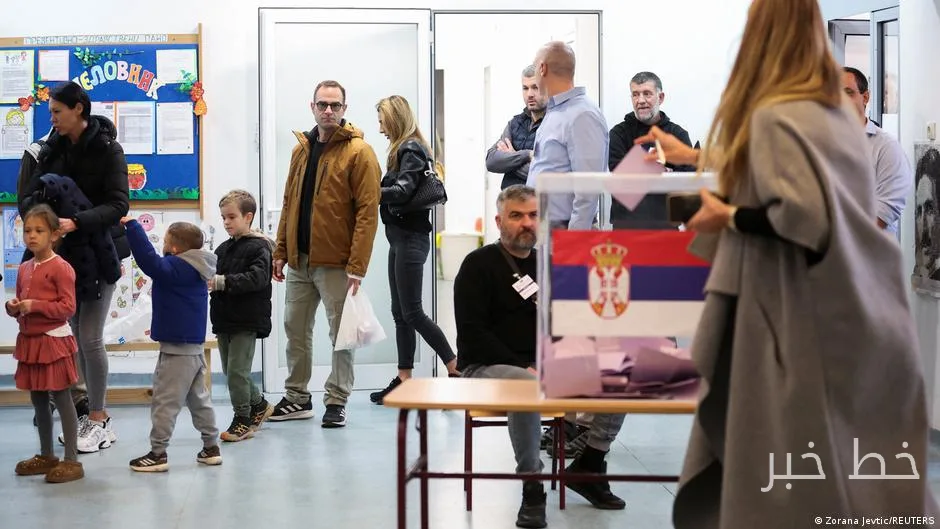
The elections in Serbia began on Sunday, with a close competition between the Serbian Progressive Party (SNS) led by Aleksandar Vučić and the Student List. These elections could lead to the end of Vučić's reign, which has lasted for over a decade.
Background of Social Protests
Polls indicate that the competition between the SNS and the Student List, which has emerged from a major student protest movement, is very close. This movement began following the deadly collapse of a train station canopy in the city of Novi Sad in 2024, which resulted in the deaths of 16 people and sparked widespread outrage.
The protests highlighted issues of administrative corruption, low construction standards, and lack of accountability in public infrastructure projects. Protesters accused the government of allowing corruption and political patronage that jeopardized public safety. Officials have denied these allegations.
Political and Electoral Developments
These protests have become the largest social movement in Serbia since the fall of Slobodan Milošević in 2000. The student movement has sought to transform the energy of street protests into an electoral challenge, positioning itself as an alternative option to the ruling party and established opposition.
The SNS won the parliamentary elections in 2012 and has since maintained a dominant position in Serbian politics. Aleksandar Vučić came to power as Prime Minister in 2014 and became President in 2017. After announcing early elections last month, he stepped down from the presidency to run for Prime Minister.
His second presidential term continues until May 2027, and the Serbian constitution does not allow him to run for a third term. Critics have accused him of consolidating power, undermining independent media, and weakening democratic institutions, which he and his party have denied.
The elections in Serbia are also under careful scrutiny in Europe. Serbia is a candidate for EU membership, but its accession process has faced obstacles due to concerns about democratic standards and the rule of law. These elections come six months after the victory of Peter Márki-Zay in Hungary, where he won an election that defeated Vučić's ally, Viktor Orbán.
Polling stations are open until 8 PM local time (1900 GMT).