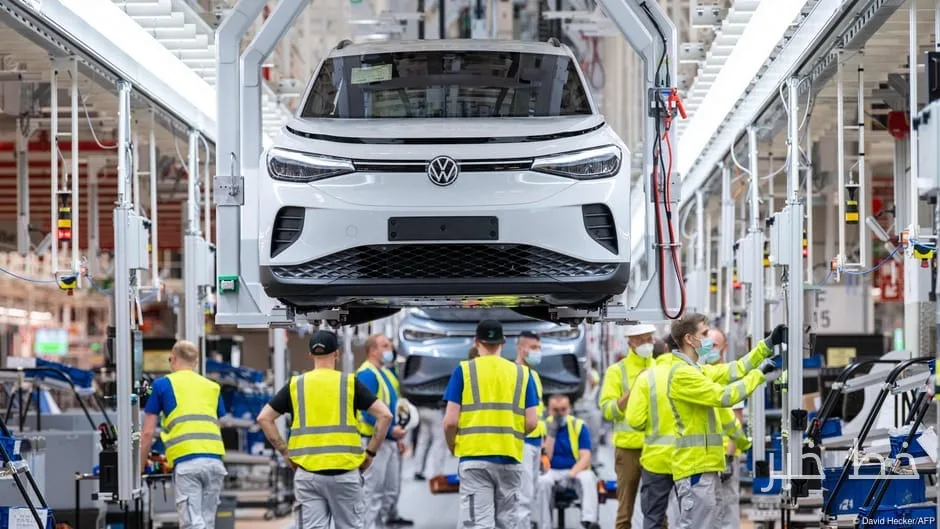
The automotive industry in Germany is facing new challenges that have weakened workers' power. While negotiations between union representatives and Germany's largest automaker, Volkswagen, have begun, the balance of power has clearly shifted in favor of management.
Wage Freeze and Increased Working Hours
Volkswagen intends to freeze wages for two years and reduce several benefits and bonuses. The company, along with Mercedes-Benz, has called for an increase in working hours while maintaining the same wages and has threatened to withdraw investments in German factories.
In response, unions have reacted with warning strikes and threats of broader strikes. However, workers are aware of the alarming situation; according to a report by the Ifo Institute, the German automotive industry has lost over 123,000 jobs between 2019 and 2025.
Structural Changes and Historical Crises
Thomas Heipter, a labor researcher at the University of Duisburg-Essen, says: "Labor representatives are in a very difficult position. They have to make concessions to preserve jobs, while there are no aggressive strategies to retain lost jobs." Historically, workers in German automotive companies have played a significant role, and historical agreements between them and management have strengthened labor rights.
However, in recent years, companies have sought to cut costs and hire cheaper workers abroad. These changes have put more pressure on workers and forced them to focus on maintaining production lines.
After Volkswagen's sudden cancellation of several labor agreements in 2024 and threats to close factories, workers were forced to accept significant cuts. In return, they secured job security for current employees until 2030.
Now, Volkswagen is asking workers to work more while receiving less pay, which is a highly sensitive issue for unions. Workers and unions are currently in a difficult situation, and any changes to labor laws could have serious consequences for the future of this industry.
Read more: Iran may face new US sanctions · Explosion at Izmir steel factory kills 10 workers



