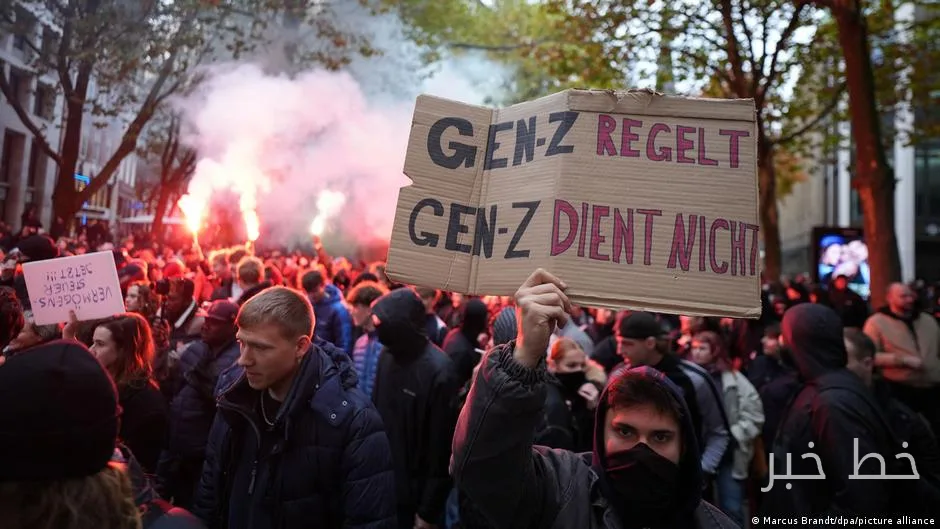
Generation Z in Germany, by holding nationwide protests on October 31, 2026, has demanded improvements in educational conditions and future opportunities. These movements, led by the group 'Gen Z regelt', are taking place in over 30 cities including Berlin, Cologne, Frankfurt, and Munich.
Demands of the Protesters
The spokesperson for this group, Veronika Dinter, stated that the media is creating fear of violence and instead of focusing on the main demands of the protesters, emphasizes this issue. She said, 'We want peaceful protests, and anyone who agrees with our principles is welcome.' Dinter also criticized the decision of representatives of German students who distanced themselves from these protests due to concerns about unclear organizational structures.
Rules and Restrictions
In Germany, the right to public assembly is legally guaranteed, but some states have their own specific laws that may include restrictions such as prohibiting protests on highways. Organizers of protests are required to inform local authorities at least 48 hours before holding gatherings to ensure necessary security measures are taken. However, spontaneous gatherings are allowed in cases where urgent and important issues are raised.
Meanwhile, some conservative politicians, particularly from the Christian Democratic Union (CDU) led by Chancellor Friedrich Merz, have warned of the possibility of violent scenes repeating. In response to these criticisms, Dinter emphasized that the protesters are seeking recognition of their demands, not violence.
Support for the Protests
Despite the warnings, some members of parliament, including Katrin Göring-Eckardt, the leader of the Greens, supported the protests, stating that young people are rightly concerned as the federal government does not pay enough attention to their demands. Luigi Pantisano, the leader of the Left Party, also deemed this time suitable for protests and criticized the government's plans for reforms in social care and pension systems.
Generation Z generally refers to those born between 1997 and 2012, and in this context, young people in Germany are seeking to follow their French counterparts who are calling for their voices to be heard amid multiple social and economic challenges.
These protests reflect the youth's need for attention to important issues and their demands from the government, and they can be seen as a turning point in Germany's social developments.