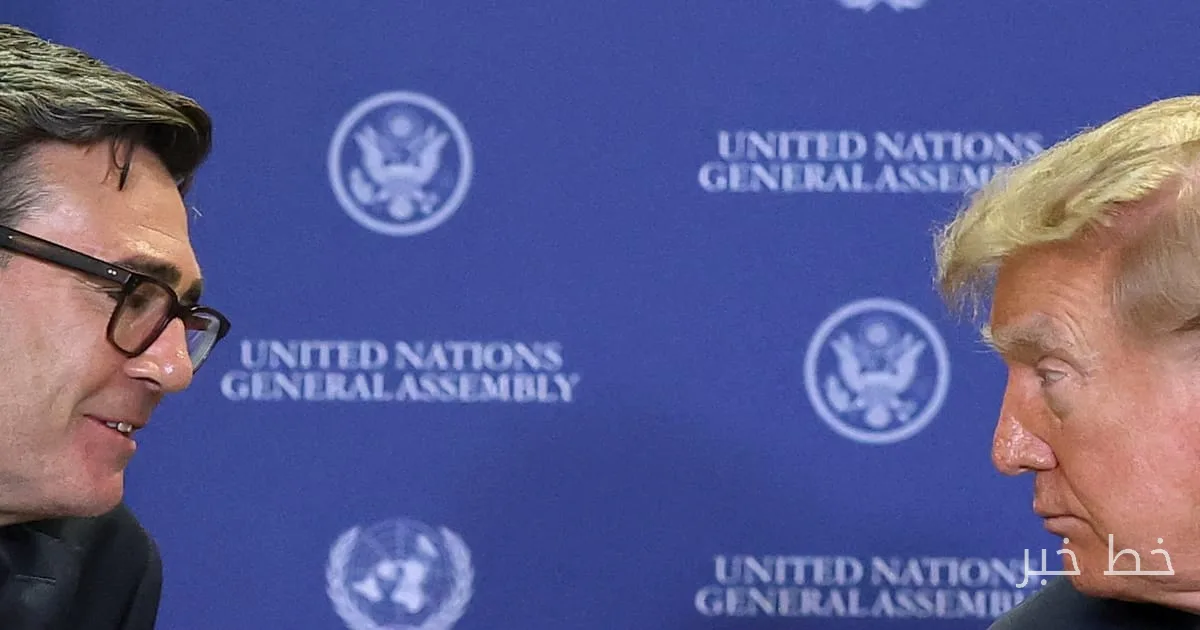
Andy Burnham, the new Prime Minister of the UK, traveled to New York this week to announce his goal of making the country a global leader in AI security. However, he did not expect Donald Trump to quickly question this plan.
Challenges Facing the UK
The Prime Minister stated that his country, through its presidency of the G20, seeks to establish international principles regarding AI and intends to use the Artificial Intelligence Security Institute (AISI) to test new AI models to solidify its role as a global power in this field.
However, within a week, Trump dashed any hopes for US participation in global AI agreements. Reports indicate that AISI's access to new AI models has been delayed due to a White House directive to major companies like OpenAI and Anthropic, which have been barred from sharing their models with the UK until it is assured that these models do not pose a threat to American systems.
Need for International Cooperation
To achieve his goal of making the UK a center for international cooperation in AI, Burnham must find a way to engage the US or continue without its closest ally. A spokesperson for the UK government stated that the country, as a leader in AI security, will continue to work closely with the US government and other international partners.
The UK has a good track record of hosting global meetings on AI security, but it has typically relied on the US for major decision-making. For example, in 2023, the UK hosted the Bletchley Park meeting on AI security, which resulted in an agreement on the opportunities and risks of AI signed by 28 countries, including the US and China.
However, at the Paris meeting in 2025, the UK refrained from signing a new declaration on the ethical development of AI alongside the US. This week, Finland and Norway presented a declaration on AI security at the United Nations General Assembly that guarantees human oversight and proposes a global regulatory regime. This declaration was approved by 22 countries on the sidelines of the UN General Assembly, but neither the US nor the UK signed it.
The effort to engage the US in any international agreement has become a delicate dance. According to a source familiar with the UK government's thinking, Burnham is seeking international cooperation but is concerned that signing formal agreements at this stage may dissuade the White House.
Growing political frustration regarding the UK's position in AI has led to concerns that countries like France, Canada, and the European Union may sideline the UK in decision-making processes. One of the countries that joined the 22-nation agreement this week was Australia, whose Prime Minister, Anthony Albanese, revealed in his speech at the UN that the country's health services website had been hacked by OpenAI agents and medical records stolen.
Burnham and his Foreign Secretary, Edward Miliband, emphasized at the UN General Assembly that AISI gives the UK an advantage in AI security; however, reports of delays in AISI's access to models by the US do not lend credibility to this claim.
AI companies voluntarily provide their models to AISI, but continuing this trend under conditions where major AI companies are no longer cooperating will be difficult. One expert in the field states that if AISI is weakened, the UK's efforts to lead in ensuring security and reliability in AI will also be undermined.
A spokesperson for the UK government stated that the country will continue to work closely with the US and other international partners in testing advanced AI while also focusing on enhancing its scientific understanding of these systems and ensuring that its approach is evidence-based.
China has shown more willingness than the US regarding global AI agreements. In a recent meeting between Xi Jinping and Trump, AI technology was on the agenda. If the US does not join the negotiating table on AI, the UK may turn to China as the second-largest global power.
The UK and China have closer relations in AI, and these relations could help the UK bring the US to the negotiating table. Burnham has good diplomatic tools to provide the Americans with a way to assess safety and coordinate with allied countries to ensure that their systems are safe and secure.