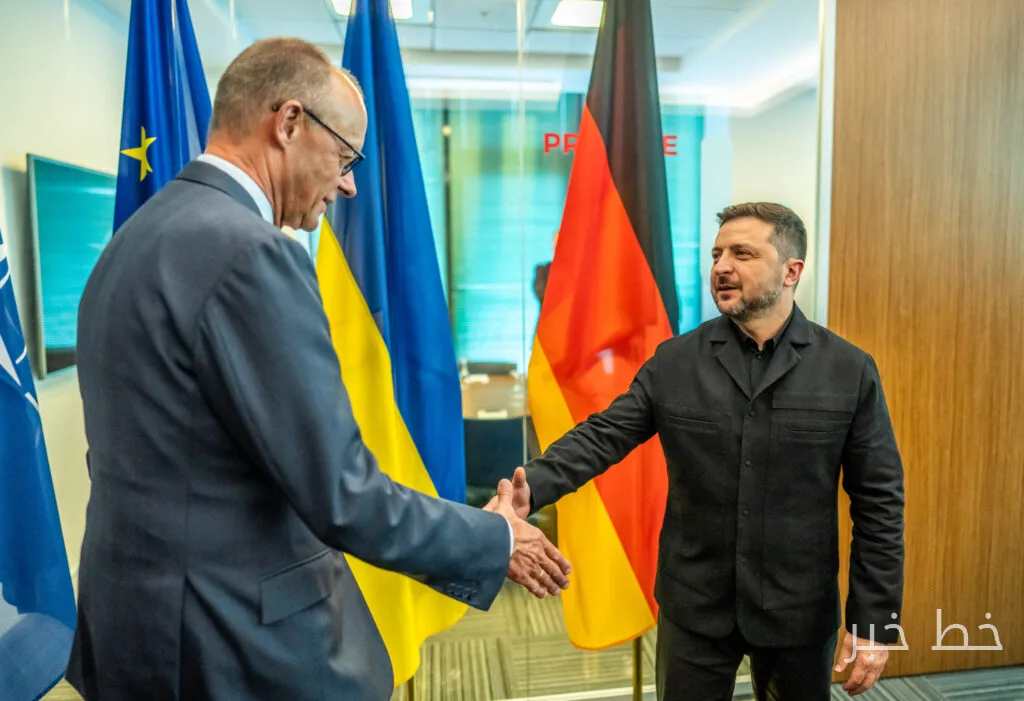
Merz has traveled to Kyiv to discuss support against the escalating war with Ukrainian President Volodymyr Zelensky. Topics under discussion include strengthening air defense and long-range offensive weapons, as well as peace initiatives. Ukraine is currently facing severe drone and missile attacks from Russia targeting infrastructure, power plants, and other civilian sites, which are likely to intensify in the upcoming winter.
Ukraine's Financial Situation and EU Response
Kyiv warned this week that it is running out of budget for purchasing necessary weapons for self-defense, which includes a €24 billion gap in defense financing. For this reason, the European Union has begun accelerating the disbursement of a €45 billion loan. Germany is the largest financial and military supporter of Ukraine.
This trip marks Merz's first bilateral visit since taking office in Kyiv and is considered his second trip as Chancellor, having previously visited Ukraine in May 2025 alongside leaders from France, the UK, and Poland.
Germany's Support for Ukraine
This visit comes just days after Merz announced his government's strong support for Ukraine despite the rising influence of the far-right and the Alternative for Germany (AfD) party. In a speech in Münster, Germany, he stated: "If we cannot stop Moscow, sooner or later the Russian war machine will be against us and NATO." Merz also warned that "in the coming weeks, the fifth winter of war will begin," which is likely to be "the hardest winter."
Ukrainians are preparing for severe missile attacks, destruction of power plants and schools, and damage to buildings and churches. Merz emphasized: "Ukraine must survive this winter, and I am confident it will. Ukraine can count on our help." He referred to German assistance, including new drone countermeasure systems and repairs to bombed power plants.
Merz and Zelensky had a phone call on Wednesday focused on persuading European and international allies, such as Japan, to provide more Patriot air defense missiles to Ukraine and to supply new ammunition for Ukraine's F-16 fighters.
Weapon Development and Economic Cooperation
Last month, Boris Pistorius, Germany's Defense Minister, announced that Germany would transfer PAC-2 Patriot missiles from its reserves to Ukraine and urged other countries to follow suit. Following an unsuccessful drone attack on a Ukrainian cargo plane in Leipzig in August, Berlin announced it would provide its intelligence services to assist Ukraine in obtaining targeting data for long-range attacks against Russian military forces and its industrial infrastructure.
Merz has rejected requests to send German Taurus cruise missiles to Ukraine, but the government has offered financial and technical assistance for the development of Ukraine's long-range weapons. On Thursday, Zelensky announced the successful test of Ukraine's FP-7 tactical ballistic missile.
The two sides are also planning to hold a German-Ukrainian economic meeting in Kyiv on Sunday to discuss investments and business cooperation. Merz has also expressed doubt that Ukraine's accession to the European Union could be possible in the coming years and instead proposed a related membership that would allow Ukraine access to the EU single market and observer status in the EU Council, European Commission, and European Parliament, but without voting rights.
However, Zelensky rejected this proposal, emphasizing that Ukraine needs "full and equal" membership.
Merz's trip comes amid renewed efforts to reach a peace agreement between Russia and Ukraine. German Foreign Minister Johan Wadfoul, who met with his Russian counterpart Sergey Lavrov in New York last week, welcomed the United States' invitation to Vladimir Putin to attend the G20 summit in Miami in December, stating that it could be an opportunity for serious negotiations. However, so far, "the Russian leadership shows no real interest in ending its inhumane fantasies and occupation" and intends to continue the war against Ukraine.