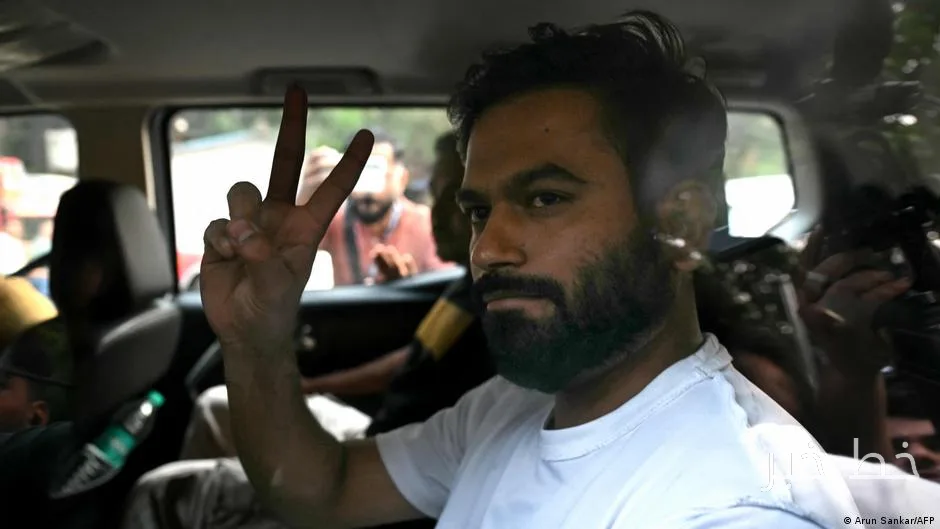
Abhijit Deepak, founder of the Janata Kakaroch Party (CJP), was released by an Indian court on Saturday. This release came one day after his arrest for attempting to lead a protest in New Delhi.
Details of Deepak's Release
The Janata Kakaroch Party posted a photo of Deepak on the social media platform X, calling him "a free man." Ratna Singh, the party's legal affairs officer, announced that Deepak was released after agreeing to specific conditions, but did not provide details regarding these conditions.
Nah Bora, a prominent student activist and key figure in the protests, was also arrested on Friday while trying to reach the center of Delhi with several of her supporters and was released on Saturday before Deepak. Deepak described Friday's protest as a show of support for two other leaders of the Janata Kakaroch Party who had been imprisoned for five days for being at an unauthorized protest site.
Protests and Reactions
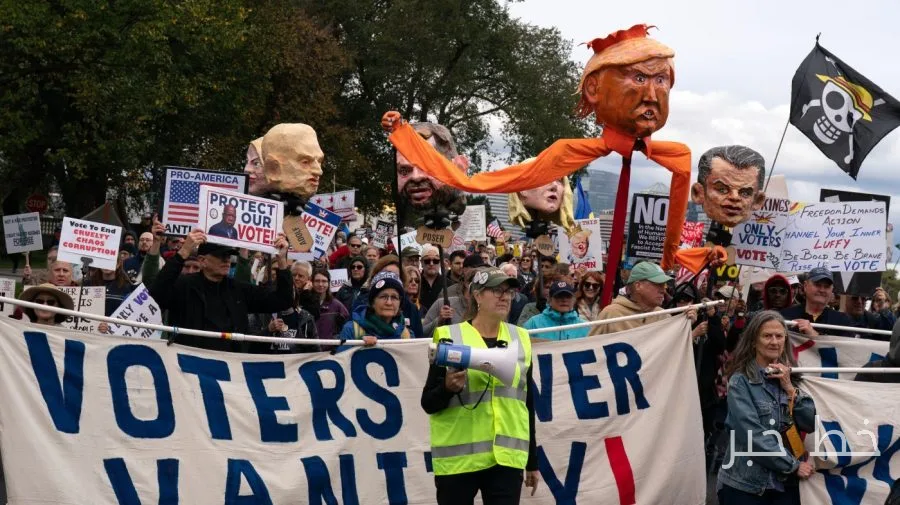
Despite a security crackdown, the Janata Kakaroch Party and opposition parties continued to protest demanding the resignation of the Chief Election Commissioner of India. These parties accuse the Election Commission of altering the voter list in favor of Prime Minister Narendra Modi's party.
The youth-led Janata Kakaroch Party is challenging the Election Commission of India over alleged electoral irregularities. In this context, the Supreme Court of India stated that access to the internet and its use is a fundamental right of every individual, including children, and there should be no restrictions on this right.
The Supreme Court has also issued orders to strengthen processes for identifying and removing content related to the abuse and exploitation of children from social media and other online platforms. The court referred to the value of the internet as a "market of ideas, creative expression, and information" and emphasized that this tool can assist children in remote areas and those with special needs.
In light of these developments, six lawmakers from the Democratic Party of the United States have urged Marco Rubio, the Secretary of State, to raise the issue of how India is handling youth protests during his visit to India. These representatives include Pramila Jayapal, Ilhan Omar, Jim McGovern, Rashida Tlaib, Eleanor Holmes Norton, and José Garcia.
In a letter sent to Rubio, patterns of repression, wrongful arrests, and excessive use of force by security forces during student protests in Delhi and other parts of the country were criticized. These representatives also referenced incidents of "apparent surveillance" and claimed that Indian diplomatic agents in the United States "have hired photographers to monitor protesters on U.S. soil."
These incidents raise particular concerns given India's documented pattern of cross-border repression, including the weaponization of consular services, harassment, intimidation, and physical violence.
The Secretary of State of the United States is scheduled to visit India early next week and will meet with Jaishankar, the Indian Foreign Minister. The itinerary also includes a planned visit to Jamnagar in the state of Gujarat.
Read more: Zelensky Predicted 20 Million Ukrainians May Seek Refuge in Europe