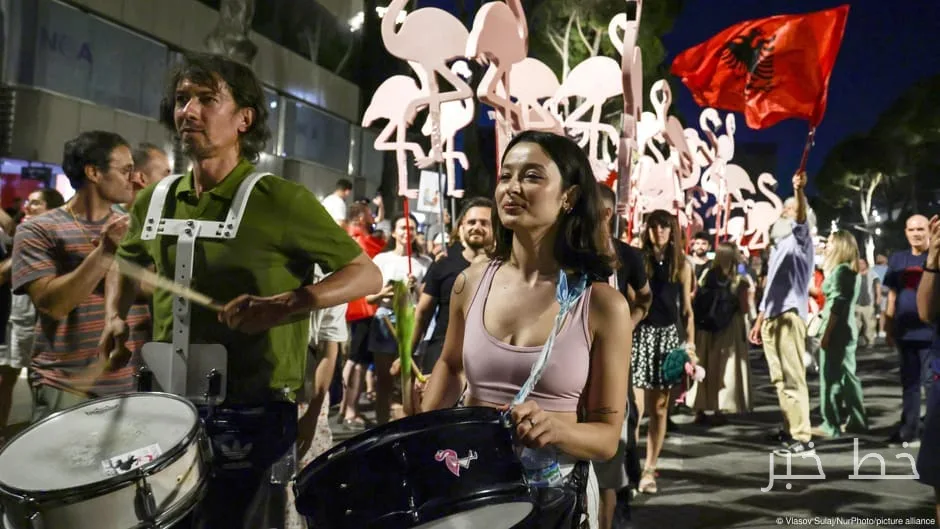
Albanian youth have taken to the streets in the Flapping Revolution to demand fundamental changes in their country's political and economic system. These protests have emerged in response to the country's declining population and the increasing emigration of young people abroad. According to the 2023 census, Albania's population has decreased by about 420,000 since 2011, which is approximately 15 percent. This decline is primarily due to the emigration of young people who have been unable to make their voices heard in the current system.
History of the Flapping Revolution
The Flapping Revolution began in May of this year with protests against a luxury recreational project in a coastal area involving Ivanka Trump and her husband Jared Kushner. These protests quickly evolved into broader criticisms of corruption, the government of Edi Rama, and the ruling Socialist Party. Thousands participated in these largely peaceful protests almost every night for four months, but on October 13, a student protest turned violent, leading to clashes with the police. Since then, unrest has continued, and the police have resorted to using tear gas, water cannons, and rubber bullets.
Read more: Ban on Treatment of Women by Male Doctors in Afghanistan
Demands of the Protesters
Protesters are calling for Rama's resignation, the establishment of a transitional government, electoral reforms, and new elections. This movement lacks a specific leader and has broad support from all political sectors of society. While the Prime Minister claims that "foreign hands" are involved in this movement, there is little evidence to suggest that foreign actors are directing these protests. Protesters feel that Albania's democracy does not represent them, and domestic issues such as corruption, high living costs, and low wages have driven them to the streets.
Although Rama has refused to accept the protesters' demands and has invited them to dialogue, the protesters have not responded positively to this invitation so far. They are calling for the prosecution of Rama and former President Sali Berisha, believing that changes should occur through voting in elections rather than through street protests.
In 2008, Rama and Berisha worked on constitutional reforms in Albania that were approved by parliament. However, since then, party leaders have determined who enters parliament, weakening the connection between lawmakers and constituents. Additionally, competition for new parties has become significantly more difficult.
As a result, protesters have concluded that they must continue fighting for real change in Albania. They want to strive not only for better living conditions but also for a more effective political system in the country. While it remains unclear whether the number of young people leaving the country has decreased, for many protesters, staying in Albania has become a political statement.
Read more: Big Profits for a Group of Traders in the Midterm Congressional Elections · Thousands Protest in the Czech Republic Against Media Reforms