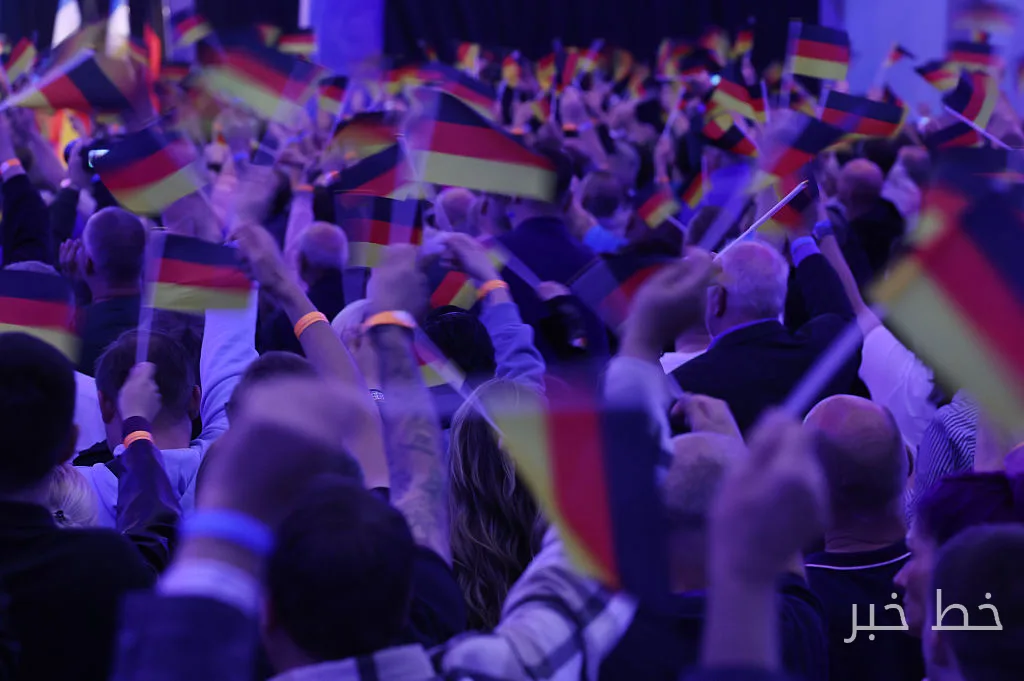
The Alternative for Germany Party (AfD) secured 38.2% of the votes in the state of Mecklenburg-Vorpommern, marking its second victory in state elections this year. This success has made AfD one of the most powerful right-wing parties in German history and indicates the increasing influence of this party in the eastern regions of the country.
Election Results and Consequences
According to preliminary official statistics, the Social Democratic Party (SPD) came in second with 35.5% of the votes. This result adds to AfD's previous victory in the state of Saxony-Anhalt and demonstrates the party's closeness to gaining power in various regions of Germany. Alice Weidel, one of the national leaders of AfD, regarded these results as a sign of the party's strength and influence among the people.
The election results on Sunday also dealt a heavy blow to the Christian Democratic Union (CDU), which garnered only 4.9% of the votes. This is the lowest result in the party's history in state elections and reflects widespread dissatisfaction with the current management led by Friedrich Merz, the Chancellor of Germany. Merz described this situation as a "disaster" after the preliminary results were announced.
Challenges and Future Path of AfD
Despite recent successes, AfD faces challenges in forming a government. The party needs support from lawmakers outside its ranks to achieve an absolute majority, and the main political parties in Germany, particularly SPD, the Greens, and the Left, have strongly refrained from cooperating with AfD.
Merz has also emphasized the continuation of his reform agenda and responded negatively to rumors about a possible resignation. In the state of Mecklenburg-Vorpommern, Leif-Eric Halm and Enrico Schult, along with Dario Seifert, led the AfD campaign and focused on anti-immigration issues.
The party has also made promises to halt the development of wind power plants, reduce property transfer taxes, and decrease the size of the state government. Halm announced his goal of forming a state government exclusively made up of AfD, but at the end of the campaign, he showed a willingness to negotiate coalition talks with any other party as well.
Merz and CDU now face serious challenges in maintaining public support, as CDU's popularity has dropped from 30% in July 2025 to 21%. The party also came in second in the Berlin elections with 18.8% of the votes, further indicating public dissatisfaction with its performance.