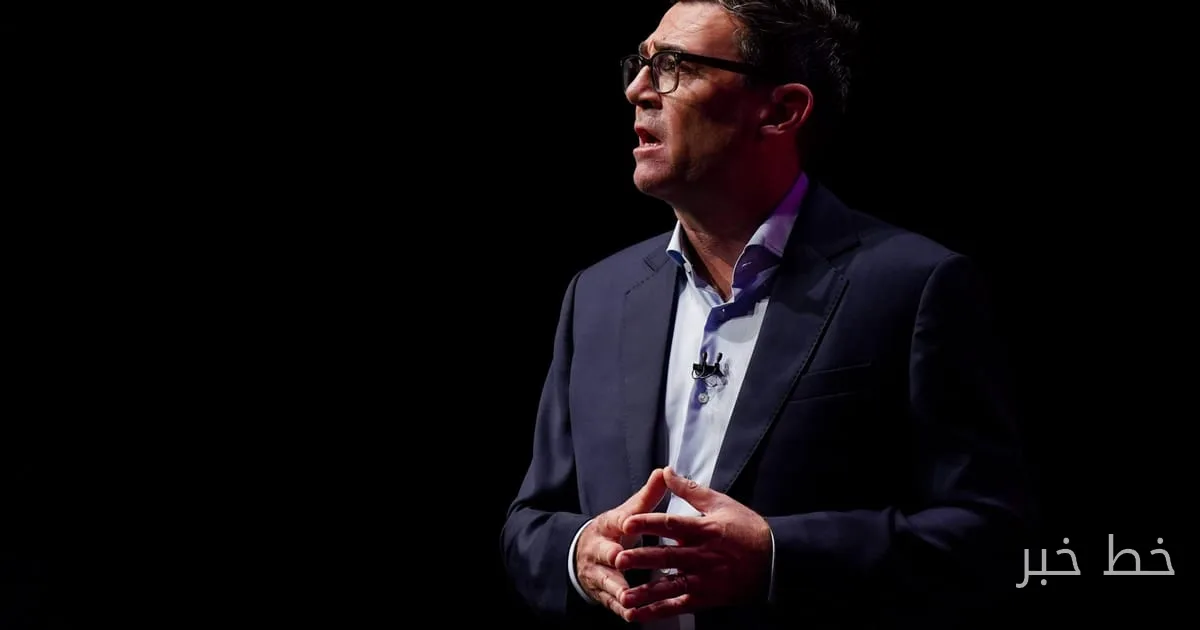
Andy Burnham, the new Prime Minister of Britain, attempted to chart the course of the country's politics for the next seven years in his first speech at the party conference in Liverpool. This speech came as Burnham had previously emphasized that he would remain in office until 2029 and had no plans to hold a general election.
Burnham's Forward-Looking Plans
In this speech, Burnham addressed four significant and impactful issues concerning British politics but emphasized that these topics would be reviewed after the general election. He referred to his promises in a serious tone without a smile and stressed the importance of re-evaluating Britain's future relationship with the European Union.
Read more: Georgia Peanut Commission Chair Supports Ossoff for Senate
He also promised to change the parliamentary electoral system and move towards policies similar to those in Europe. Burnham proposed the creation of a "National Care Service" for vulnerable adults, which is intended to replace the current system of private services and local support. He announced that this plan would be financed by reducing the "triple lock" on state pensions, which has remained unchanged for the past 15 years.
Challenges and Future Expectations
Burnham, who recently lost his father in a care home, referred deeply to Britain's future, stating, "Britain will rise again" and emphasized that a more serious vision for the country's future must be presented. This speech allowed party members to experience what had been lacking in the previous era under Keir Starmer's leadership, namely a long-term and ambitious political vision.
Burnham also recalled the need to provide voters with more control over their lives, referencing the slogan "control" that was used in the Brexit campaign. This speech represents an effort to redefine relationships with the political opponents of the Labour Party and also to reduce internal tensions within the party.
However, challenges remain for Burnham. He must deal with Britain's problematic relationships with the European Union as well as intra-party disputes that still feel the effects of the Brexit wars. This comes as Trade Minister Jonathan Reynolds has expressed concern that even discussing Britain's future relations with Europe has created "uncertainty" for businesses.