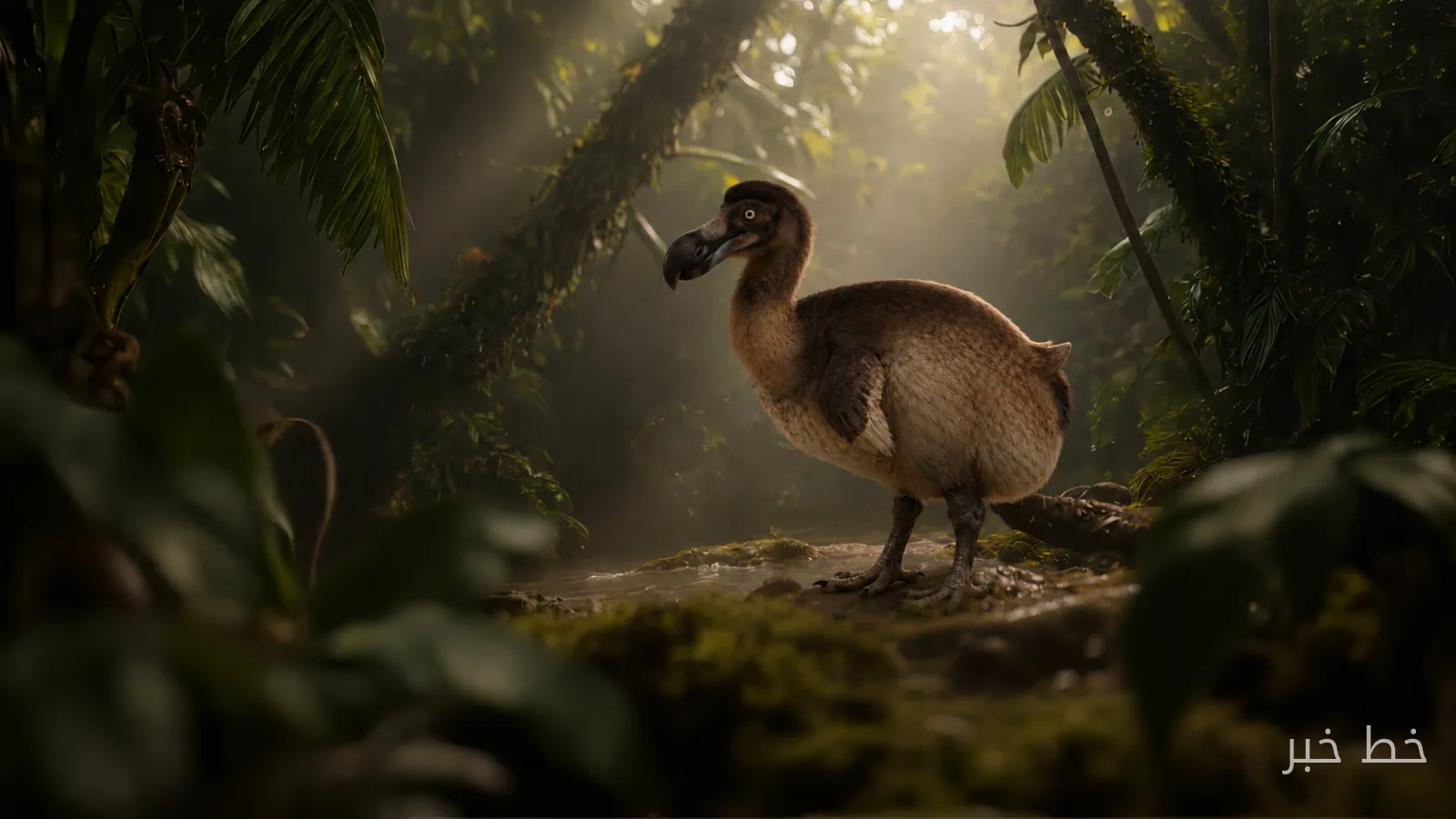
Researchers at Colossal Biosciences based in Dallas have announced that artificial intelligence may help revive the extinct dodo. This bird, which vanished from the world over 350 years ago, could return to Earth in the early 2030s.
Challenges of Reviving the Extinct Dodo
Given that only a few samples of ancient dodo DNA remain and those that exist have been degraded over centuries, the analytical and computational capabilities of artificial intelligence serve as an essential tool to fill genetic gaps. Ben Lamb, CEO and co-founder of Colossal, states: "Reviving species is as much a data problem as it is a biological one. [AI] learns how the regulatory DNA of living birds shapes them and then identifies genetic switches that may have contributed to the dodo's specific anatomy.
Read more: Japan Allocates $21 Billion for Chip Production Development in New York
Colossal demonstrated its credibility in species revival in 2025 by sequencing ancient DNA from extinct wolves. Using this DNA, they rewrote the genome of today's gray wolves and were able to bring back the extinct wolf that vanished over 10,000 years ago. Currently, the extinct dodo, with its unique features including a wobbly walk and large eyes, is one of the company's major projects.
Process of Reviving the Extinct Dodo
Reviving a bird, which undergoes an external gestation process, is more complex than reviving mammals. Researchers first extract primordial germ cells (PGCs) from the Nicobar pigeon, the closest living relative of the dodo. These cells are then rewritten to acquire dodo traits. The cells are then injected into a small pigeon embryo through the eggshell of a domestic hen. These cells migrate to the embryo's gonads and settle there. When the edited female chick lays eggs, they will produce dodos.
Anna Kate, the bird species director at Colossal, explains that ideally, if there were hundreds of Nicobar pigeon eggs, this pigeon would be used as a substitute. However, Nicobar pigeons lay eggs seasonally and usually only lay two eggs at a time. In contrast, hen eggs are much more readily available.
Editing the PGCs will be challenging due to the large number of genetic sites in the extinct dodo that determine the species' traits. Especially for the specific shape of the dodo's beak, which involves over 650 regulatory elements related to beak size and nearly 1700 elements related to beak thickness and width. A new AI platform called Genomorph can help fill these gaps.
To develop Genomorph, Colossal scientists created a map of how genetic switches that control facial growth are activated in different birds. They then compared genomes and skull shapes from over 70 bird species. The result of this research is a list of about 2350 genetic switches that may help explain the dodo's unusual beak. This work is based on a separate achievement, namely a nearly complete dodo genome collected from a well-preserved specimen.
Given that the dodo's beak may be its most prominent feature, other traits are also encoded in the two billion letters that make up the dodo genome. For this reason, Colossal scientists ask everyone to wait five years for the dodo's return.
Read more: Cyberattacks Damaged Hundreds of French Supermarkets · Visionquest Marked the Predictable End of the WandaVision Trilogy