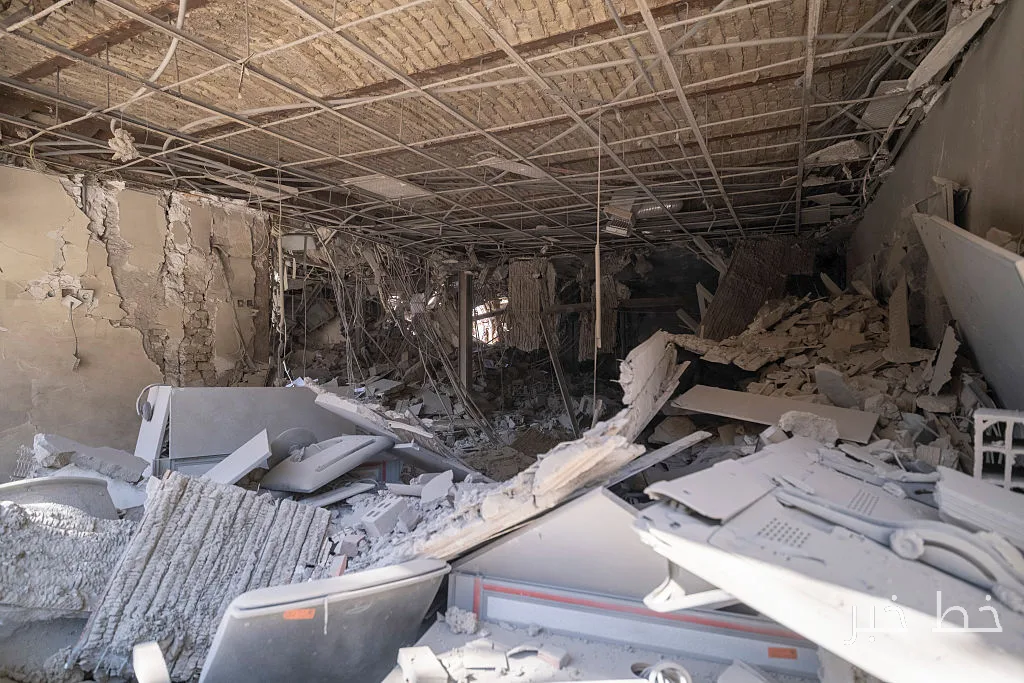
Attacks on data centers began following the United States and Israel's strikes on Iran earlier this year, prompting Tehran to retaliate by targeting energy infrastructure across the Gulf. This action caused a severe shock to global energy markets, the repercussions of which are still ongoing. Meanwhile, attacks on other infrastructures such as data centers have also emerged, albeit less prominently.
A New Front in Wars
Since then, similar attacks have occurred in Russia and Ukraine, where both sides have engaged in exchanges of attacks on data centers. Experts say these attacks represent a new front in wars, where facilities providing technology for many critical industries have become military targets.
Read more: MindFrames allows children to create wearable shapes
The boom in artificial intelligence has led to increased demand for computing power, data storage, and cloud services, making data centers that provide these services a critical part of modern infrastructure. Currently, the construction of data centers in the United States is on the rise, with technology companies investing hundreds of billions of dollars annually to meet AI demand. Telecommunications companies, banks, hospitals, and energy providers rely on these centers.
The Role of Data Centers in Modern Warfare
Kirk Cameron, director of the Advanced Computing Institute at Virginia Tech, says, "Data centers are now on the critical path of modern digital infrastructure. Losing key data centers could lead to economic collapse, disruption of public and private transportation due to loss of GPS, and impact essential government services for health, emergency services, and energy networks."
The military use of artificial intelligence for targeting and processing information has made data centers a vital component in wars. Ukraine is using AI for various battlefield tasks such as targeting drones, battle planning, and analyzing Russian missile attacks. U.S. technology companies like Palantir are now closely collaborating with the Ukrainian military to develop new AI-based weapons and take advantage of the opportunity to test their technologies in the battlefield.
Cameron states, "Data centers act as competitive advantages in wars. Destroying capabilities may disrupt military operations for the enemy. This is also a form of economic warfare and can lead to long-term competitive challenges for the target."
The first wave of attacks on data centers occurred in March of this year when Iran attacked two major Amazon facilities in the United Arab Emirates, and another facility in Bahrain was damaged by a drone strike. These facilities have since been largely inaccessible, and Amazon announced that it was unable to restore access to resources and data in these two regions by September 15.
Russia's attacks on Ukrainian data centers in late September disrupted broadcasting and internet access. The Russian Ministry of Defense stated that it was attacking these data centers due to their processing and transmission of information data for the Ukrainian armed forces. Ukraine's response began on October 8, and since then, drone attacks have been carried out on three data centers belonging to the tech giant Yandex, which is often referred to as the Russian version of Google.
This series of attacks over the past year has prompted technology companies to rethink how and where they build their data centers. Following the Iranian attacks, the United Arab Emirates is reconsidering its plans for a 5-gigawatt AI data center project. The initial plan was for a 10-square-mile campus in Abu Dhabi to be built in collaboration with American tech companies like Oracle, NVIDIA, and Cisco. Now, it appears that data centers will be spread across the United Arab Emirates.
Emily Harding, director of information programs, national security, and technology at the Center for Strategic and International Studies, believes that data centers have become a new frontline in wars and may require new strategies. She says, "If Russia attacks a Microsoft data center, is that an attack on Ukraine? Is it an attack on Microsoft? Is it an attack on an American company and consequently, the United States?"
The United States has largely followed a policy that does not consider attacks on American companies as an attack on the U.S., but Harding says the government may need to make decisions about a new approach that focuses not only on preserving life and health but also on protecting data.
While the threat to data centers in the United States is relatively low compared to the Gulf or Ukraine or Russia, technology companies also need to pay more attention to the security of their facilities when building, while striving to keep up with massive demand. Harding states, "The side effect is that companies owning data centers realize they cannot protect them, raising questions about the cloud model in general. They are forced to make significant changes. There may come a time in the future when Amazon loses business because Microsoft can better conceal the locations of its data centers."
Read more: Japan allocates $21 billion to develop chip production in New York · Starlink service slowdown for Ukrainian forces has serious consequences