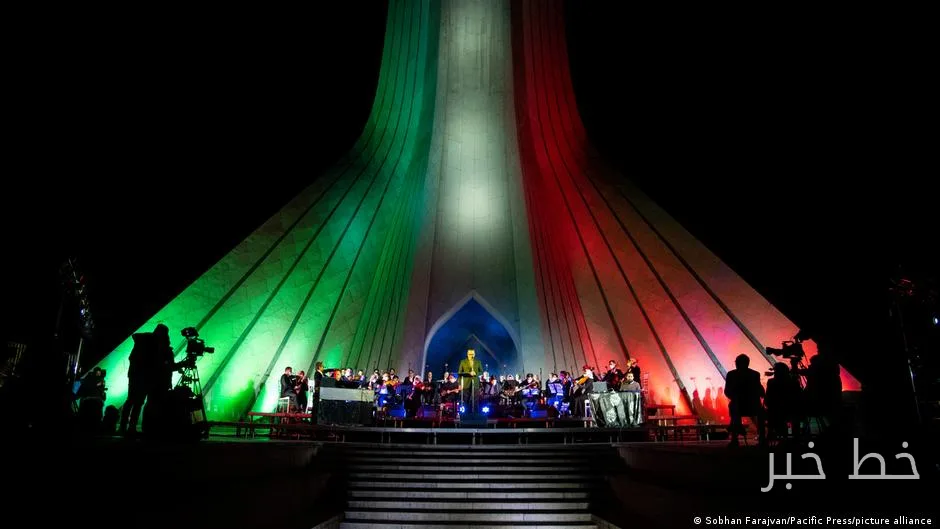
Bijan Mortazavi, the famous Iranian musician and composer, returned to his homeland at the end of September. He is one of the most prominent violinists, singers, and composers in Iran and performed with his famous white violin alongside the New York Philharmonic Orchestra at the closing ceremony of the 2026 World Cup in July.
Mohsen Namjoo and the Return to Homeland
Mohsen Namjoo, a singer known for his experimental Persian music, has also recently returned to Iran after about 20 years of exile. He is internationally recognized for blending traditional Persian singing and poetic lyrics with elements of blues, rock, jazz, and folk. Namjoo was sentenced to five years in prison in 2009 for insulting sacred places and mocking verses of the Quran.
In a video he released after returning to Iran, Namjoo stated that he has come back to spend more time with his family and friends.
Efforts for the Return of Artists
Abbas Salehi, Iran's Minister of Culture and Islamic Guidance, announced in an interview that his ministry has prepared a list of over 100 prominent Iranians living abroad. The aim of this initiative is to remove barriers for their travel or return to Iran, and Salehi emphasized that even critics of the Islamic Republic can return to the country at any time.
Sina Yousefi, a human rights lawyer, referred to Article 12 of the International Covenant on Civil and Political Rights, which Iran is also committed to. He stated that no one can be arbitrarily prevented from entering their own country.
Sepideh Raeesdad, a music researcher, discussed the history and development of Iranian music, stating that the 1979 revolution was against music, and music was considered one of the red lines. However, during the Iran-Iraq War, music returned in the form of revolutionary and religious songs.
In recent years, social media has become an important tool for youth and has a significant impact on their culture. With the emergence of these platforms, young girls now play guitar and perform in public without hijabs.
Raeesdad noted that at memorial ceremonies for the families of victims of nationwide protests, music has been used as a tool for protest, which itself is a contradiction to religious traditions.
Read more: The emotional ending of the series Four Hands, Two Sonatas at the World Music Congress · Charlie Kirk and his impact on the African American community: one year later