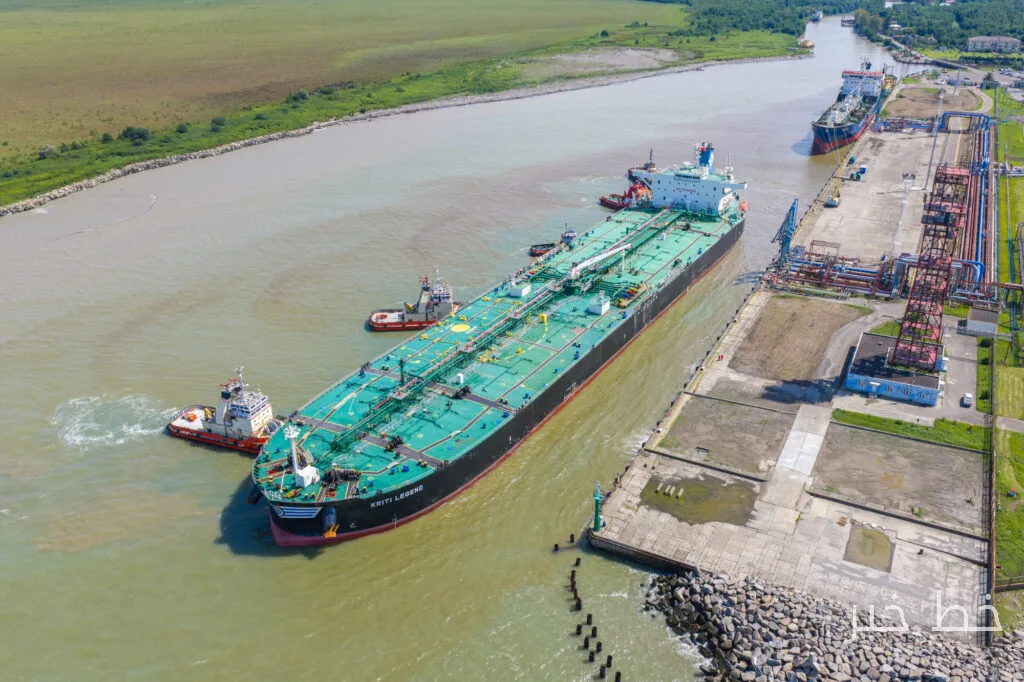
Black Sea Petroleum Company is assisting in supplying Europe's energy resources by delivering 90,000 tons of Libyan crude oil of the El Sharara type to the Kulevi refinery on the Black Sea coast of Georgia. This is the second time in less than a month that Libyan oil has been transferred to this refinery, with the first shipment occurring in August.
Kulevi Refinery and Non-Russian Resource Supply
The Kulevi refinery, owned by Black Sea Petroleum, began operations in October 2025 and exclusively processes non-Russian crude oil. Deliveries of Libyan oil are part of the company's long-term supply agreement. This refinery is utilizing its current production capacity to supply European markets and has planned Euro 5 fuel production until 2029.
Read more: Mohammad Al-Bashir Called the Renovation of the Kirkuk-Banias Pipeline Necessary
New Opportunities for European Markets
Europe continues to import fuel for transportation and industry. According to Eurostat statistics, the EU's net imports in 2024 reached 15.7 million tons equivalent of oil for diesel and 11 million tons for jet fuel. These figures are included in the development plans for the Kulevi refinery. This refinery acts as an opportunity to supply the EU markets along with Georgia, Armenia, and Azerbaijan, leveraging non-Russian crude oil and maritime connections in the Black Sea.
The European Commission's assessment on September 8, 2026, indicated that increased production from EU refineries and alternative international sources helps meet demand for diesel and jet fuel. While sufficient reserves remain, developments in the Middle East and seasonal demand could lead to market bottlenecks in the coming weeks and months.
Increasing refining capacity related to maritime trade could provide more of these fuels to Europe. For Kulevi, the opportunity to supply EU markets alongside Georgia, Armenia, and Azerbaijan is available, potentially creating another route for international crude oil to Europe as refined products.
The Kulevi refinery is connected to its nearby port and terminal by four pipelines, each three kilometers long, transporting crude oil, naphtha, diesel, and fuel oil. Crude oil arriving by sea or rail can reach the refinery via the terminal. Refined products also move towards the port for shipment. The two Libyan shipments represent the use of this infrastructure, bringing North African crude oil for processing to the Black Sea.
Black Sea Petroleum has invested 200 million euros in the Kulevi refinery to date and plans to invest an additional 650 million euros by 2029 to increase refining capacity and introduce new fuel production units. Supply contracts, certificates of origin, and transport records document deliveries and identify the origin of crude oil, recording its movements from the supplier to the refinery in Georgia.
This pipeline connection allows the refinery to utilize the terminal for both incoming crude oil and outgoing products. Therefore, development can be based on the existing inventory route to international markets. Increased refining capacity will handle larger volumes through that route, while new production units will expand the types of fuels.
The company plans to increase annual refining capacity from 1.2 to 1.5 million tons to 4.5 to 5 million tons by 2028. Plans also include launching Euro 5 fuel production units by 2029. The range of planned products includes gasoline, diesel, jet fuel, liquefied petroleum gas, marine fuel, and asphalt, which will supply road transport, aviation, shipping, and construction services.
Diesel and jet fuel also position the developed refinery in markets where the EU acts as a net importer. The investment program is designed to support these exports as well as meet demand in neighboring countries. Honeywell technology and licensed processes will support the planned development, along with automation and modular processing units.
Engineering and construction for the next phases have continued since the opening of the first phase in October 2025. Black Sea Petroleum has completed 40,000 cubic meters of new storage capacity and is completing another 40,000 cubic meters. This storage will support larger quantities of crude oil and growing production of products. Additional processing units will be brought into service as soon as construction and commissioning are completed.
Led by David Potskhveria, one of the founders and CEO, Black Sea Petroleum is establishing a Belgian company and preparing to open an office in Brussels. This office will provide a permanent point of contact for EU institutions and European business partners to discuss the refinery and its investment plans.
The European Advisory Council of BSP and the company's strategic advisors have experience in European and international affairs, assisting it in engaging with EU institutions, national authorities, and businesses across member countries. They support establishing direct relationships between the company's team in Georgia and their European counterparts.
Black Sea Petroleum invites interested partners to visit the Kulevi refinery, observe production up close, and meet with those responsible for its operations and development. The second delivery of Libyan oil last week provides a clear starting point for these discussions. The refinery is operational, non-Russian supplies are arriving, and investment is ongoing. Its development could provide additional fuel resources through an existing Black Sea route to Europe, and the company is seeking sustainable partnerships in Europe.
Read more: Oil Prices Rise After New Attacks on Saudi Infrastructure