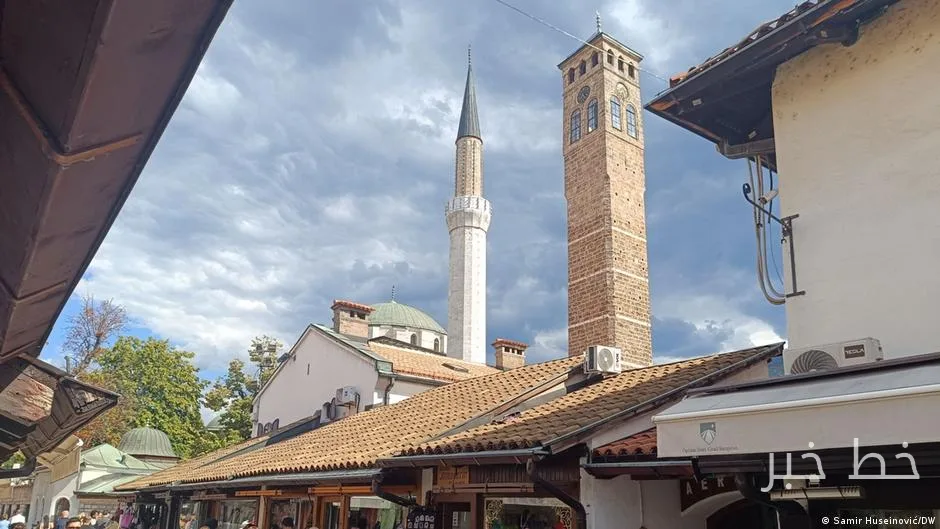
Bosnia and Herzegovina will soon have a new Grand Mufti. The Grand Mufti, or Reis-ul-Ulema, is the head of the Islamic community in this country, representing the interests of Muslims before the government and commenting on political, ethical, and social issues. He also defends the independence of the Islamic community of Bosnia and Herzegovina against foreign influence.
Choosing Kavazović's Successor
Husein Kavazović, the current Grand Mufti, is no longer eligible for nomination after two seven-year terms. Three candidates are competing to succeed him: Salem Dedović, Mufti of Mostar; Nedažad Grapus, Mufti of Sarajevo; and Mansur Malkić, head of the Religious Affairs Department of the Islamic Community of Bosnia and Herzegovina and representative of the Grand Mufti.
Read more: Sherrod Brown Leads by 6 Points Over John Husted in Ohio Senate Poll
Malkić focuses on strengthening the Islamic community in religious and institutional dimensions, while Dedović aims to turn this position into a political arena and be more active in social discussions. Grapus, who has more international experience and has previously been the Grand Mufti of Slovenia, wants to strengthen the Islamic community in the era of globalization and secularism.
The Importance of Electing a Grand Mufti
Imam Benjamin Idriz, head of the Islamic community in the city of Penzberg, Germany, considers the importance of this election to extend beyond Bosnia and Herzegovina, stating that no Islamic figure in Europe holds a position similar to that of Reis-ul-Ulema in Sarajevo. Zenahir Maraković, head of the Bosniak Islamic community in Germany, also mentions that this election is significant for them as they have a close historical and institutional connection with the Islamic community of Bosnia and Herzegovina.
Muslims have been living in Bosnia and Herzegovina for centuries, and Islam was introduced to the region during the expansion of the Ottoman Empire. The organizational structure of Islamic communities was established after the Berlin Conference in 1878, and the Islamic Scholars Council was founded in 1882.
Today, the Islamic community of Bosnia and Herzegovina is independent from the government and is financed through donations, membership fees, and zakat. This community has its own parliament, known as the Sabor, and a Constitutional Court that ensures the community's actions comply with the constitution of the country where it operates.
Challenges Facing the New Grand Mufti
The new Grand Mufti arrives at a challenging time. The state of Bosnia and Herzegovina remains fragile, and foreign actors are seeking more influence. According to Bejgić, the influence is not only from Ankara or Riyadh, but other players such as Washington, Berlin, and Brussels are also trying to exert influence over the Reis-ul-Ulema.
In Europe, anti-Islam racism and Islamophobia have reached levels that are concerning for Muslims. Far-right and extremist parties are on the rise and gaining more support that denies Muslims' rights to participate in society.
For this reason, the new Grand Mufti must leverage his democratic and historical legitimacy to actively participate in discussions regarding Islam in Europe. Idriz also believes that the new Grand Mufti can gain more trust not only from Bosniaks but from all European Muslims, showing majority communities that Islam is part of Europe and endorses values such as the rule of law, gender equality, and freedom of expression.
Read more: Rodrigo Duterte Ready for Trial at the International Criminal Court · Democrats Have a Good Chance of Taking the House in Midterm Elections