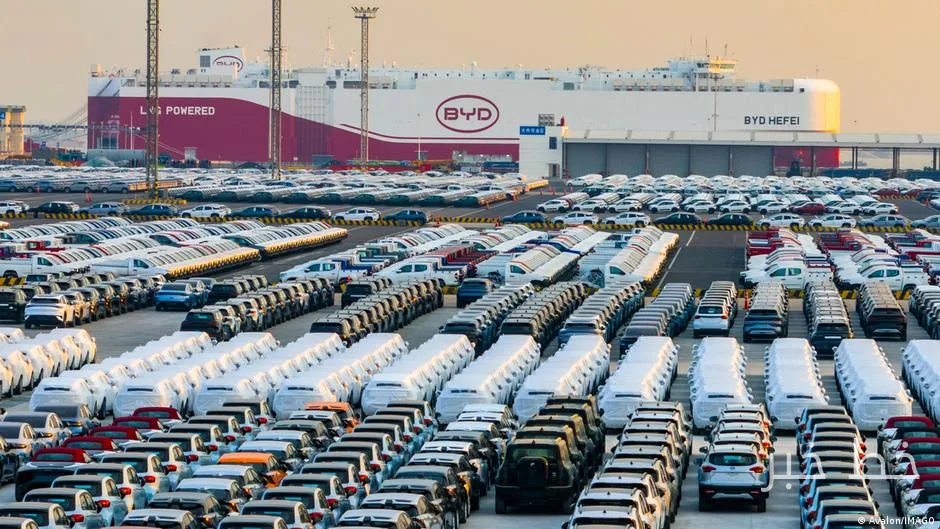
China and the European Union have reached an agreement that could reduce China's hybrid car exports to the EU to more than half of the current amount. This news was announced by Maroš Šefčovič, the EU Trade Commissioner, on Friday, following two days of negotiations in Beijing. These talks were aimed at reducing the EU's growing trade deficit with China.
Details of the Agreement
Šefčovič emphasized that this agreement means "regulating" the exports of hybrid and plug-in hybrid cars to the EU. He predicted that this agreement could lead to a reduction of more than half of China's exports in this area over the next four years. He also stated: "With this action, we are effectively preventing the export of several million cars from China to the EU."
Read more: EU finance ministers have reached an agreement to strengthen market oversight bodies
Further Agreements
In addition to export restrictions, the two sides reached an agreement to reduce China's import duties on EU exports worth €4 billion ($4.5 billion), including car parts, olive oil, and shoes. Additionally, an agreement was reached to simplify the export licensing process for rare minerals and permanent magnets in China.
However, the details regarding the implementation of this agreement have not yet been precisely defined. Šefčovič expressed hope that the two sides have reached a good outcome, and this agreement requires the approval of the leaders of all 27 EU countries. These leaders are set to discuss this outcome at the start of their summit in Brussels on Thursday.
A Look at China-EU Trade
According to UN Comtrade data, China's exports to the EU reached $560 billion (€500 billion) last year, up from $517 billion in 2023. Exports to major economies such as Germany, Italy, Spain, and Poland each increased by about 10% compared to the previous year. Additionally, exports to Hungary increased by 43%.
In contrast, China imported $268.3 billion (€240 billion) worth of goods from Europe last year, a decrease from $269.4 billion the previous year. Purchases from Denmark, Ireland, and France have been leading in this regard.
Last month, Ursula von der Leyen, President of the European Commission, warned Members of the European Parliament that the trade deficit has reached a critical point and that the EU will use all available tools to balance this relationship.
Read more: Possible Democratic victory in midterm elections could impact markets · UK government moves to announce ban on non-compete clauses in employment contracts