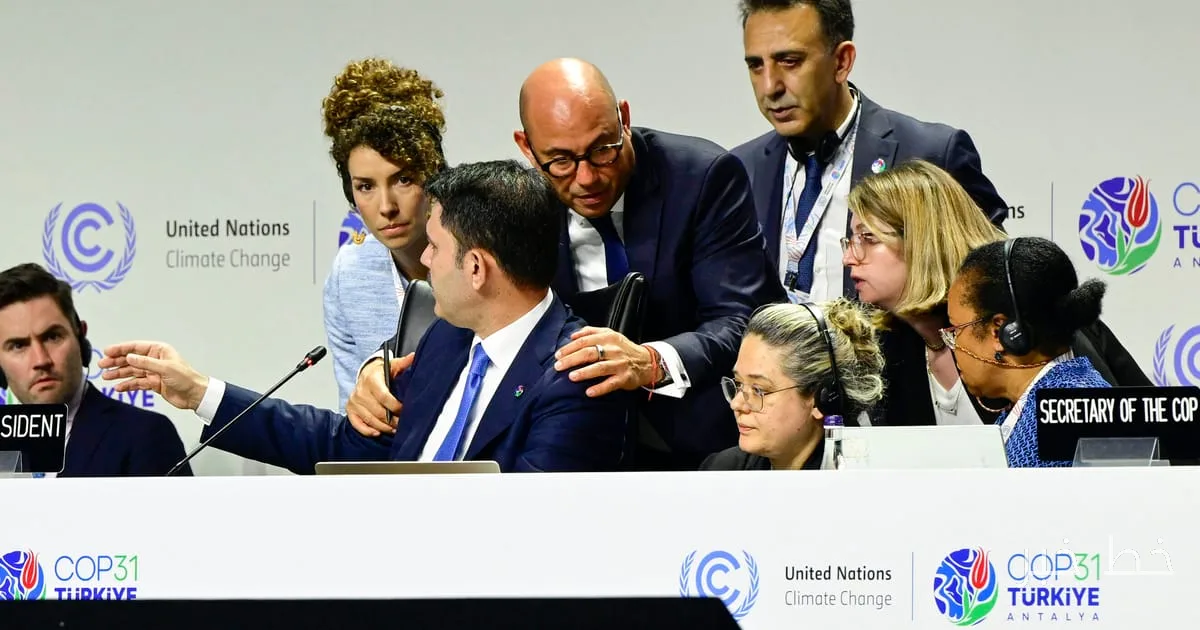
Countries did not manage to reach a final agreement in the UN climate negotiations in Antalya after two weeks of tense discussions. The negotiations ended with the rejection of a draft agreement that made no mention of fossil fuels, leading to negative reactions from many countries.
Disputes Over Fossil Fuels
The European Union, Panama, and several other countries, including small island nations, opposed the agreement proposed by the COP31 presidency. COP31 President, Murad Korum, stated that due to the lack of agreement, necessary decisions were not made. Nearly 200 countries were involved in intense discussions regarding energy transition and the failure to achieve the main climate goal of limiting global warming to 1.5 degrees Celsius.
Read more: Countries Present at COP31 Failed to Reach a Final Agreement
International Reactions
The Irish Climate Minister, Dara O'Brien, representing the European Union, announced that there was no mention of fossil fuels in the agreement and therefore, the Union strongly opposes this text. Panama deemed this agreement a "weak point" and the Marshall Islands stated that accepting this agreement would be a betrayal of their future. Kathy Jetnil-Kijiner, the negotiator for these islands, said: "We will not accept an outcome that undermines our security."
The UK Energy Minister, Miata Fahnbulleh, who led the UK delegation, expressed disappointment that they could not achieve an agreement. She said: "This moment required bold ambition, and we continuously tried to build consensus." The inability to reach an agreement on a text that was highly contentious reflects the intensity of tensions in the negotiations.
Challenges Ahead
The COP31 agreement was the first climate summit held after the UN warned that the world would soon exceed the 1.5 degrees Celsius target. The final draft text also called for a global electrification increase to 35 percent by 2035. However, this draft did not specify that this electrification must be "clean." Additionally, there was no mention of fossil fuels in this text, three years after countries first agreed to reduce their reliance on coal, oil, and natural gas.
At the end of these negotiations, major energy-producing countries like China, the United States, and Russia agreed to increase oil production. The negotiations also faced other challenges, such as financing to assist poorer countries in dealing with global warming.
Read more: COP31 Climate Conference in Antalya Ends Without Agreement · No Mention of Fossil Fuels in COP31 Final Draft



