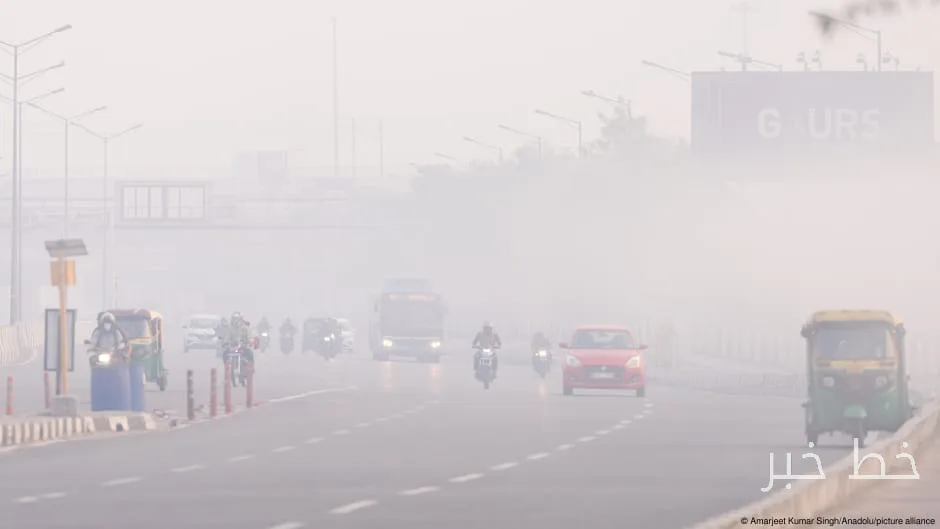
The Central Pollution Control Board (CPCB) of India issued a statement in response to concerns about discrepancies in Delhi's air pollution data. These concerns arose after official data indicated a lower Air Quality Index (AQI) compared to private platforms on Diwali night, and some pollution monitoring stations were turned off that night.
Severe Pollution on Diwali Night
The Hindu festival of Diwali brought thick and toxic smoke to Delhi and its surrounding areas on Sunday. On this night, many people ignored the ban on firecrackers, exacerbating the seasonal pollution problems in the region.
As smoke and particulate matter from fireworks spread into the air, a significant difference in air pollution figures was observed between official data and numbers available on private websites and applications. The CPCB app reported an AQI of 400 on Diwali night, while private data exceeded 2000.
CPCB's Explanation
CPCB stated in its announcement that the difference in AQI figures is due to methodological differences and the measurement of pollutant concentrations, and does not indicate a lack of reporting. The agency also added that analyzers under the National Air Quality Index (NAQI) reporting method are calibrated only to measure particulate matter levels up to 1000 micrograms per cubic meter.
Media reports indicated that several pollution monitoring stations, from 59 to 60, were turned off during the festival night. The Delhi Pollution Control Committee (DPCC) subsequently released the missing data, showing that one area of the city reached a PM 2.5 concentration of 3744 micrograms per cubic meter in the late hours of Diwali night.
This level of pollution was 60 times the national average, but CPCB stated that these readings were not used to calculate AQI because "the system designed for automatic data validation considers hourly readings above the calibrated range as out of range."
CPCB concluded by stating that it is reviewing its existing methodology and is paying attention to advancements in monitoring technology and international practices. The agency announced that internal consultations regarding data processing beyond the system's design range are ongoing.