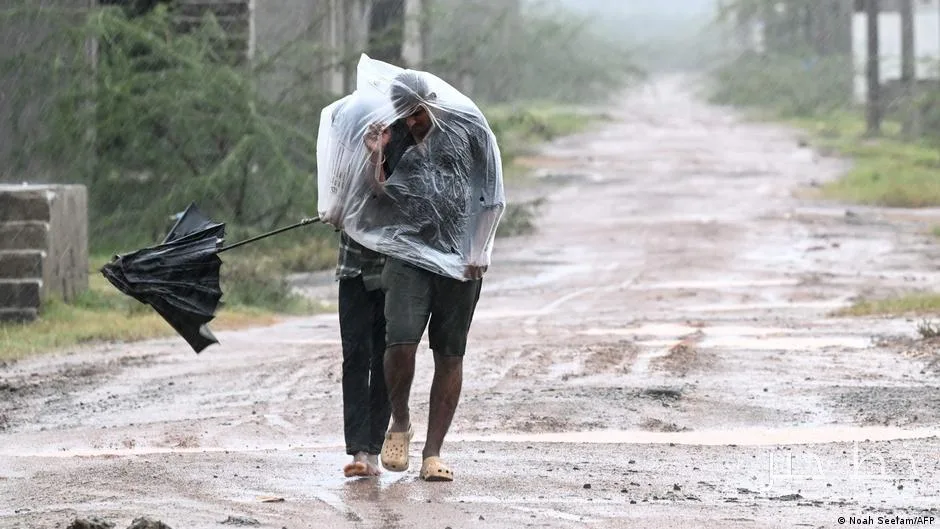
Cyclone Arnab (طوفان آرناب) has claimed at least three lives in the state of Andhra Pradesh, India, after making landfall. Local officials reported that the cyclone is moving inland at a speed of less than four kilometers per hour.
Casualties and Damage from Cyclone Arnab
According to officials, Cyclone Arnab has caused extensive damage in Andhra Pradesh. Many trees have been uprooted, and 31 houses have been completely damaged. Additionally, reports indicate three fatalities. Officials stated that the impact of the cyclone in the neighboring state of Odisha has not been as severe.
Read more: Stanton and the Prime Minister of Norway Contacted Putin
Impact of the Cyclone and Crisis Management
The National Disaster Response Force (NDRF) has dispatched nearly 40 teams to the coastal areas of India to assist with crisis management and the effects of the cyclone. Officials have predicted further risks for northern Andhra Pradesh and southern Odisha. In these areas, strong winds and heavy rainfall continue, and the cyclone is expected to keep moving inland.
Cyclone Arnab was classified as a "very severe" cyclone, with wind speeds exceeding 125 kilometers per hour and severe storms, ranking at level three out of five levels of cyclones. The center of the cyclone is currently over the sea, but it is expected to weaken significantly in the coming hours and become a "tropical storm."
Economic and Social Consequences
In addition to the loss of life, Cyclone Arnab will have economic and social impacts. Heavy rainfall and strong winds have disrupted air and rail services, and many local residents are reporting power outages and damage to infrastructure. While local officials are working to assess the damage accurately, concerns about the long-term effects of this cyclone on people's daily lives have increased.
Read more: The United States is Building a Naval Training Center in Ecuador · The French Government is Seeking to Cut Costs Amid Student Protests