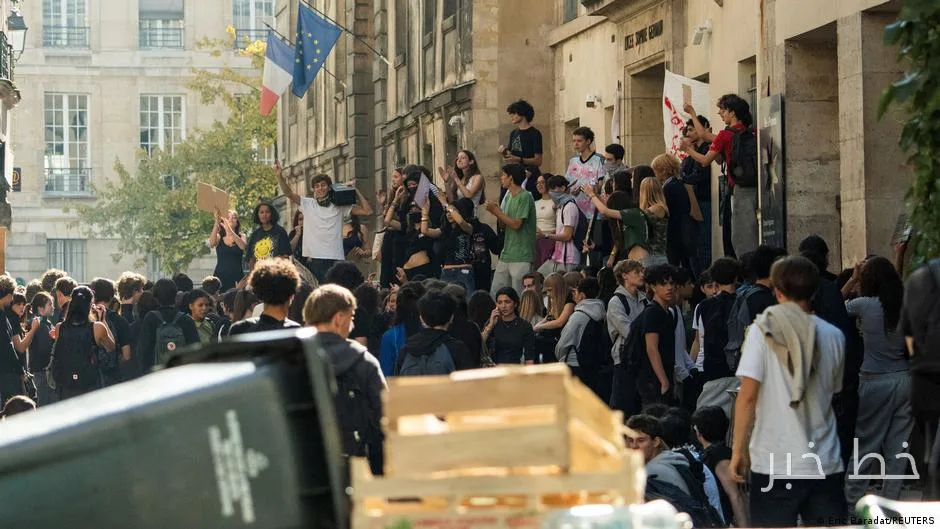
The French government, led by Prime Minister Édouard Philippe, is in a difficult situation. Widespread student protests due to class cancellations, overcrowded classrooms, and poor conditions of educational buildings have continued for nearly two weeks in the country, leading to serious clashes with the police.
Efforts to Reduce Tensions
The Minister of Education, Jean-Michel Blanquer, met with student representatives in an attempt to ease the situation, but these efforts were unsuccessful. On Tuesday, a nationwide day of protest was held in France, indicating the severity of the discontent.
Prime Minister Philippe has requested specific proposals from several ministers in a letter. He emphasized that issues of class cancellations must be addressed quickly, educational buildings need to be updated to cope with hotter summers, and the university admission system "Parcoursup" must be made clearer.
Financial and Political Challenges
The French government is preparing its 2027 budget, which is expected to reduce its deficit from 5.4 percent of GDP this year to 5 percent by 2027. To compensate for this deficit, the government has plans to cut costs by billions of euros. The government is also under pressure from EU regulations to reduce the deficit to below 3 percent.
However, Philippe faces a bigger challenge: he must promise young people more support from the government while the government is implementing an austerity budget across the country. For example, savings in pension costs are expected to reach around 5.5 billion euros, and further cuts in the health sector are also planned.
Will this budget be approved in its current form? Philippe's government does not have a parliamentary majority and needs votes from the opposition for approval. With the presidential elections approaching next spring, an austerity budget will be even less attractive to the opposition.
Educational and Social Challenges
The issue of education clearly shows that France's problem is not limited to cost-cutting. While the education budget is set to increase by about 1.2 billion euros in 2027, it is expected that there will be about 1.7 million fewer students by 2035.
This contradiction indicates that money is only part of the problem. Public dissatisfaction is related to what is called "priorities" and the fundamental direction of the education system. These contradictions occur while financial markets are also severely affected. In the past, France could easily finance its debts at low-interest rates, but that time has come to an end.
Ultimately, France's future faces serious financial and social challenges. The government must find a way to cut costs while still responding to the demands of young people. This will significantly impact the country's economic and social policies.
Read more: The French Government Changes Its Strategy in Response to Protests