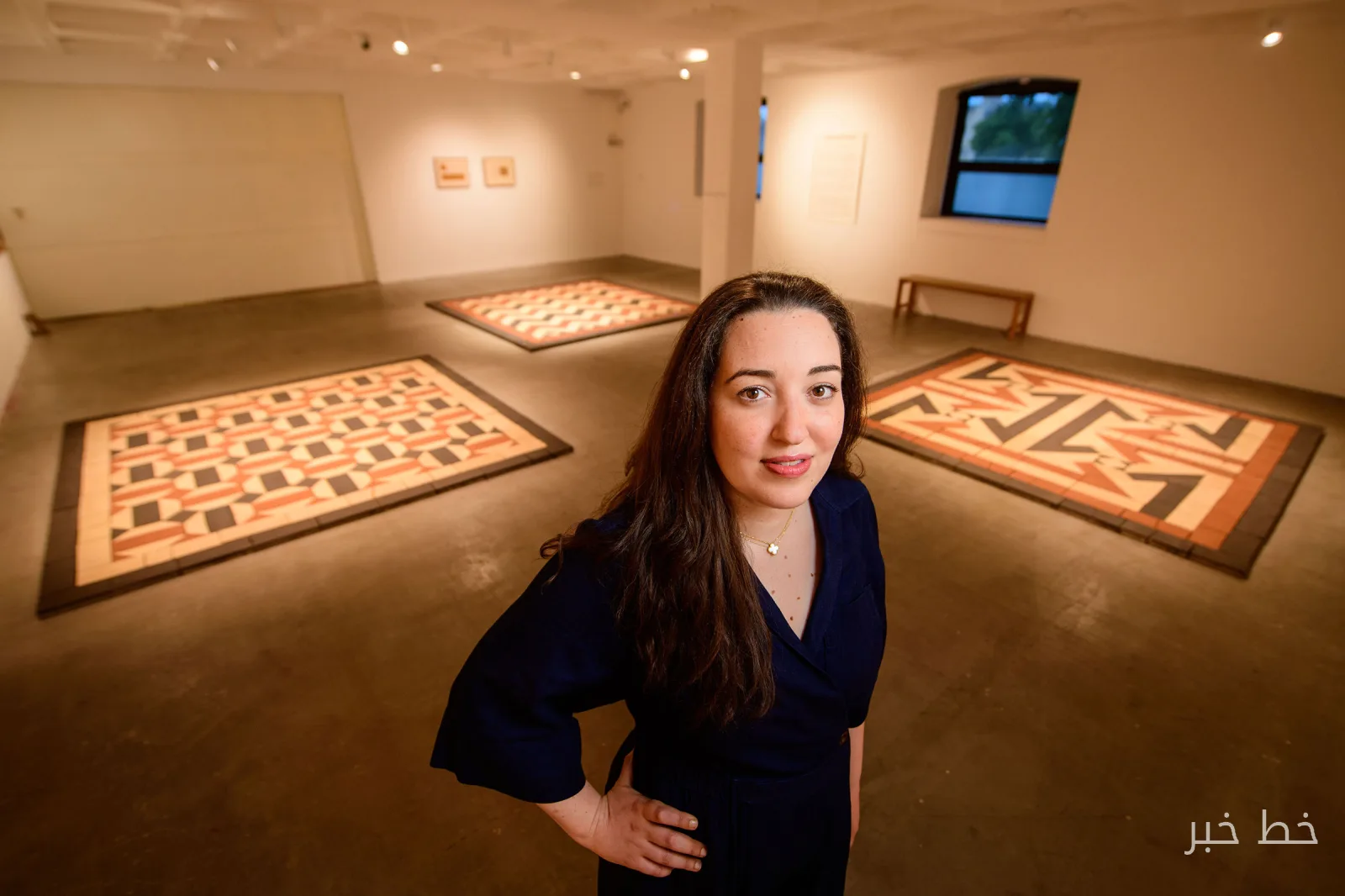
Dana Awartani, a 39-year-old Saudi artist, explores the concept of whether art can serve as a model for healing cultural wounds in her works. By creating artistic installations from silk panels that are made with tears and 'repairs', she produces new works that evoke places destroyed by war and conflict.
Art Installations and Memorials
Awartani collaborates with experts in ancient traditional fields to create installations that act as memorials for places destroyed by conflict. At this year's Venice Biennale, she covered the floor of the Saudi pavilion with 29,000 clay bricks made by 32 master artists. This installation refers to 23 war-damaged sites in the Levant.
Read more: Maria Stan considers the role of a private detective in the series Negili appropriate
Entering this installation provides visitors with an experience akin to being present at an archaeological excavation. The bricks are stacked without the use of adhesive materials, and the floor design is such that it is intended to crack over the duration of the exhibition. This symbolizes the fragility of cultural heritage and the violence stemming from forgetfulness and cultural cleansing.
Awartani and Her Background
Awartani, who has been trained in Islamic artistic traditions, will hold solo exhibitions at the Lisson Gallery in London and the Stavanger Art Museum in Norway next November. Through her works, she seeks to draw public attention to the damages caused by war and the destruction of cultural heritage, demonstrating that art can serve as a tool for repair and healing.
Ultimately, Awartani sends a strong message through her works about the importance of preserving and remembering cultures and histories. As an artist, she shows how art can be used to commemorate and remember lost places and cultures.
Read more: The film Ghosts: The Possession of Button House is being released in cinemas · The Kennedy Center may close on Tuesday due to a financial crisis