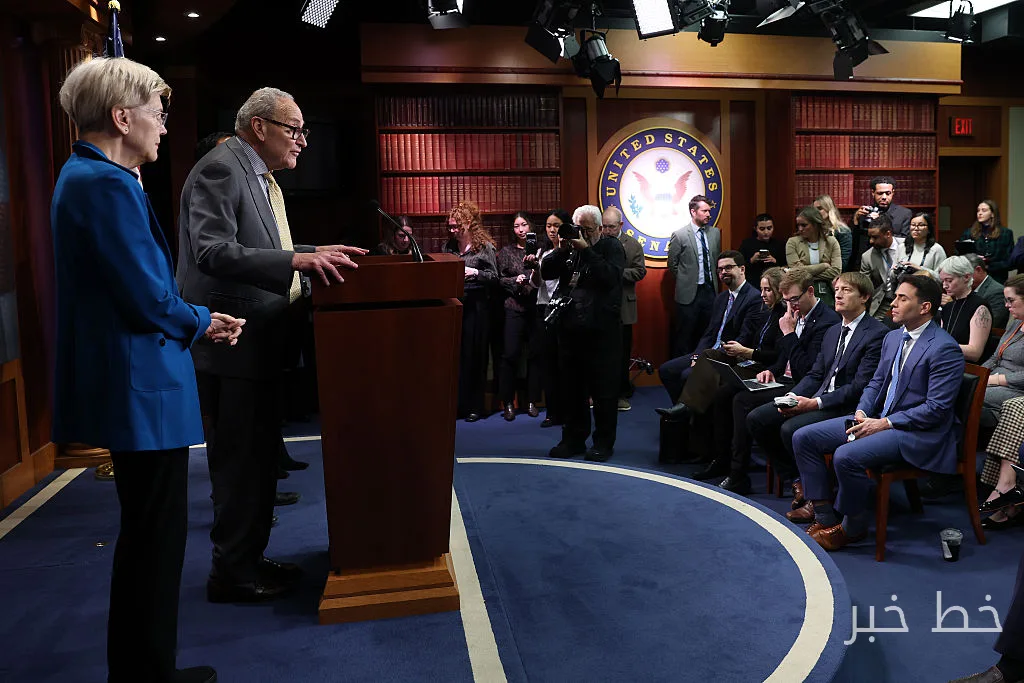
Senator John Husted (Republican, Ohio) and Senator Martin Heinrich (Democrat, New Mexico) appeared in the Senate last week with a similar message: AI labs should bear the energy costs associated with expanding their data centers, not ordinary people.
Disagreement on Consumer Protection Legislation
However, when Husted called for the swift passage of consumer protection legislation—a law that would require states to compel energy-intensive companies to pay their related costs—Heinrich blocked the request. He stated that the law is insufficient as it relies on voluntary commitments from states and proposed his own plan as an alternative.
Read more: Schools Approach the Use of Artificial Intelligence with Caution
There were several other reasons for blocking Husted's request: the consumer protection law, which passed the House earlier this month with a vote of 417-3, could have been a victory for the Ohio senator amid a tough election campaign. Husted is facing significant negative advertising regarding his role as lieutenant governor in expanding data centers in the state.
Partisan Tensions and the Future of AI Legislation
Heinrich stated, "The consumer protection law may please many politicians, but it will do nothing to force data centers to pay their fair share." He also added that Democrats are ready for a real solution and believes that Americans want the same. Husted accused Democrats of giving a "free pass" to big tech companies while Americans' electricity bills continue to rise.
Such partisan struggles are likely just a prelude to larger battles if Congress becomes serious about passing AI legislation.
Democrats and some Republicans have proposed hundreds of AI-related bills as public concerns about the negative impacts of AI companies on the job market, rising energy costs, and even potential threats to humanity are increasing. Following the resignation of Jacob Coxon, a former researcher at Anthropic, in July, the rhetoric of lawmakers in Washington reached new heights. Coxon wrote on social media platform X that AI labs are "gambling with our lives."
OpenAI CEO Sam Altman and Anthropic CEO Dario Amodei responded to calls for slowing down industry progress and government intervention to coordinate global safety standards.
With less than two months until the midterm elections, some members of Congress are aggressively introducing more AI bills.
Some lawmakers are calling for the swift pursuit of existing bills, while Democrats are looking to raise the issue of AI safety with Chinese President Xi Jinping.
Sukesh Venkatasubramanian, director of the Technology Accountability Center at Brown University, said, "The current state in Congress is very reactive, and this reaction does not necessarily mean good policy." He added, "They are trying to pass laws that seem to respond to an issue stemming from public narrative, but this does not necessarily lead to good policy."
Read more: Jacob Coxon Warned That the Development of Superintelligent AI Should Be Banned