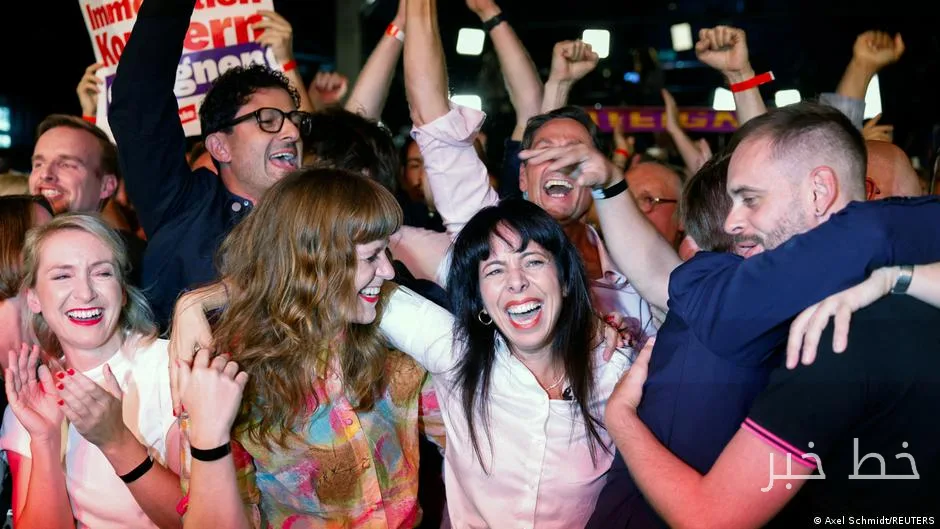
The Left Party faced a decisive victory among young people in the recent Berlin state election. This election, held on Sunday, allowed for the first time a reduction in the voting age from 18 to 16 years. This change contributed to the addition of about 55,000 voters to the 2.5 million voter population in Berlin, which had a significant impact on youth participation.
Factors Influencing Youth Voting
Cecilia, a 17-year-old voter, said: "We talk about politics in school and among our friends, and we are heavily engaged in political issues. We attend many protests." This spirit of protest is clearly reflected in the voting habits of young Berliners. While official polling statistics from infratest-dimap do not detail those under 18, age group analysis shows that about 43 percent of voters aged 16 to 24 voted for the Left Party, marking a 25 percent increase compared to the previous state election.
Read more: How America Can Rebuild After Trump
Key Issues for Young People
Laiska, another voter, believes that the Left Party has attracted young people due to social issues such as lowering prices and access to rental housing. Rents in Berlin are rising sharply, having increased by about 7 percent over the past two years. This issue is particularly challenging for new tenants. According to polls, 37 percent of Berlin voters believe the Left Party will be more successful in creating affordable housing.
Cecilia also emphasized that rents and the Berlin conservative government's plans to cut educational budgets are major concerns for her friends. She said: "We have reached an age where we want to become independent, but this is almost impossible in Berlin. Issues like school and education are also among our main concerns."
Analysis of Youth Voting Behavior
Kathrin Fesse from the German Children and Youth Foundation (DKJS) stated that personal issues greatly influence young people's political decisions. She added: "Young people need to be taken seriously and asked questions. The Left Party was one of the parties that attracted many informal voters, not only young people but also those who had previously been overlooked by politicians."
During the election campaign, the Left Party was portrayed as dangerous radicals by the Christian Democratic Union (CDU), but this does not seem to have deterred youth voting. Some believe that young people are more likely to lean towards radical views. Cecilia confirmed this view, saying: "It seems that young people generally have much more extreme opinions than older generations." However, evidence suggests that this is a stereotype.
Research shows that the largest age group for the Left Party is voters aged 25 to 34, and only 12 percent of voters aged 16 to 24 voted for far-right parties. According to Givjon Auf, a political scientist, while young people generally have "more radical" views than older generations, statistical evidence shows that middle-aged men are more likely to vote for anti-democratic parties than young people.