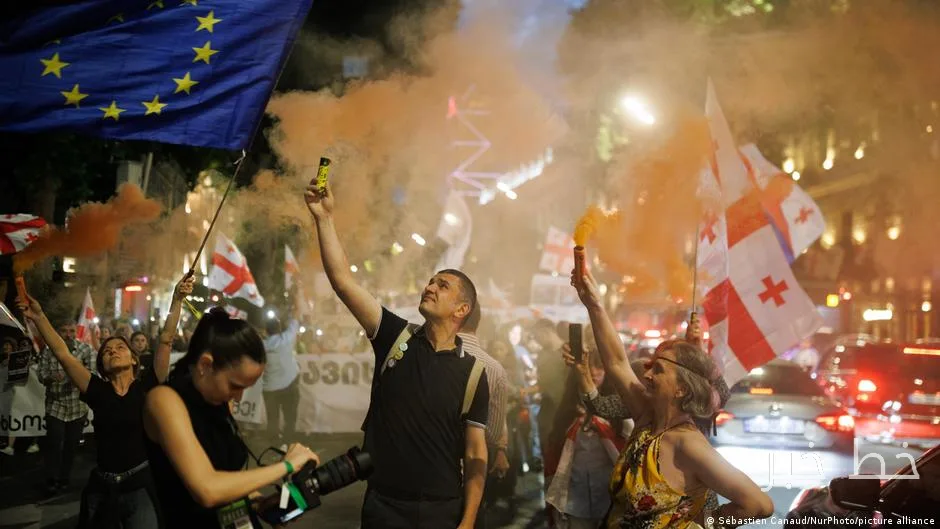
Georgia is currently facing serious challenges regarding media freedom and human rights. Nino Rubakidze, a media activist and press freedom advocate, spoke at the DW panel titled "Democracy Under Pressure? The Professional Situation of Cultural and Media Professionals in Georgia" held on Thursday at the James Simon Gallery in Berlin about her feelings of insecurity as a citizen and independent journalist.
Challenges for Georgian Journalists
Rubakidze stated, "As a citizen in my country, I do not feel safe, and this is due to my activities in independent media." She mentioned the physical, digital, and psychological threats that Georgian journalists face, adding, "There is also financial and legal pressure on media organizations."
Read more: Christopher Nolan says watching movies in IMAX is not essential
The situation is so difficult that many Georgians are reluctant to participate in public activities and media discussions. Marika Lapaouri-Burk, a musician and journalist, said, "We all fear intimidation" and added that the government has increasingly found arbitrary reasons to detain critics.
Shift Towards Authoritarianism
Georgia, once recognized as one of the leading democracies in the Caucasus, has rapidly moved towards authoritarianism under the control of the Georgian Dream Party since 2012. This party, which won a significant majority in the October 2024 parliamentary elections, has strengthened its ties with Russia. One of the party's controversial actions was the suspension of EU accession negotiations until 2028, which led to widespread protests across the country.
Rubakidze stated that pressure on independent media and professional journalists has increased since the onset of the war in Ukraine. She also referred to the anti-Western propaganda that began after this attack and considered its impact on the media environment in Georgia significant.
In recent years, anti-government protests in Georgia peaked, especially in 2023 and 2024. Protesters demanded the repeal of new laws requiring registration for organizations receiving foreign funding, modeled after Russian legislation. These laws have been heavily criticized and are seen as tools for suppressing dissent.
Additionally, the anti-LGBTQ law in Georgia has also faced severe criticism. This law is officially titled "Family Values and Protection of Minors" and prohibits the promotion of same-sex relationships and non-binary identities in media and public spaces. These laws force cultural creators to choose between self-censorship or facing severe government repercussions.
Juri Reshto, a journalist and head of the DW office in Riga, said, "The situation is becoming increasingly difficult for critical thinkers, especially for artists. Many of these individuals are in artistic circles and are affected." He cited an example of a small gallery in Gori that is closing due to displaying protest slogans.
This year, Georgia is at the center of the Beethovenfest cultural exchange project developed in collaboration with DW. Barbara Massing, the General Director of DW, said at the panel's opening, "Music forgets borders and language barriers and brings people closer together."