The election of Thomas Rauh as the President of the Saxony-Anhalt parliament on Tuesday has sparked heated discussions about potential collaborations between the Christian Democratic Union (CDU) and the far-right Alternative for Germany (AfD). Rauh, elected as a representative from a right-wing party, is the first person to achieve this position since the end of World War II.
Controversy in Parliament
In the first session of parliament in Magdeburg, following AfD's electoral victory on September 6, Rauh was elected with the support of his party and the Social Justice and Economic Rationality Coalition (BSW). Although this was expected, the four additional votes obtained through secret ballot raised significant concerns. Many observers believe these votes could only have come from CDU's right-wing representatives.
Read more: Andris Kulbergs remains in power with a historic victory in the Latvian elections
Reactions and Protests
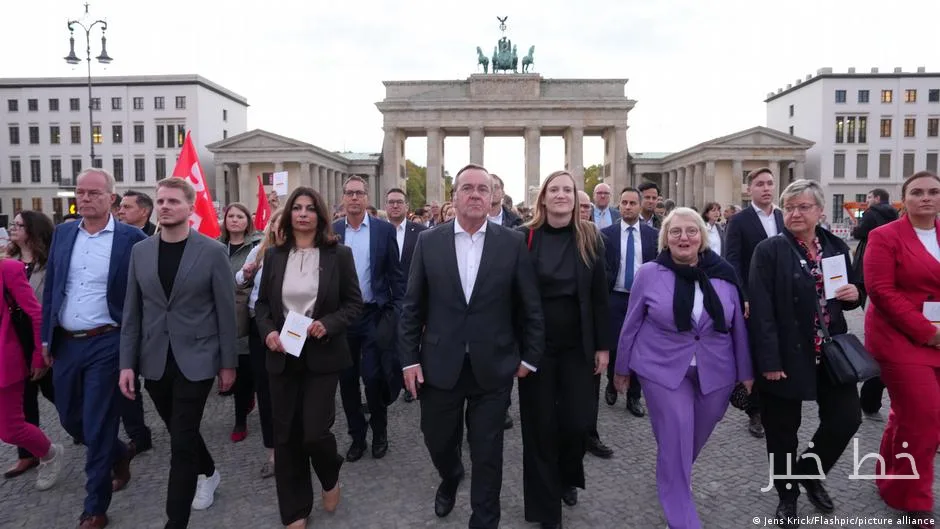
Immediately following this election, prominent members of the Social Democratic Party (SPD) in Berlin took to the streets, holding a demonstration to express their opposition to this election. During the protest, Boris Pistorius, the federal SPD Minister of Defense, invited the crowd to sing the German national anthem, and many participants displayed copies of the German constitution.
Lars Klingbeil, the Minister of Finance and Deputy Chancellor, stated: "The election of extremists to such a position has broken a taboo. Both BSW and CDU must immediately explain how this was possible." This election has also cast a shadow over the existing governing coalition.
Future Collaborations
The leader of the CDU parliamentary group, Thorsten Frei, responded to the situation by saying: "This is a secret ballot, so of course, in principle, anyone is suspicious." However, he also noted that "this is a very concerning event and warrants reflection." Rauh's election in the Saxony-Anhalt parliament only provides a glimpse into the intense discussions ahead regarding how to deal with AfD.
The AfD secured 44 percent of the votes in the election but still does not hold a parliamentary majority. The regional branch of this party has been recognized as a "confirmed extremist right-wing" by the Office for the Protection of the Constitution. The debate about the "firewall" is being raised again; a term that refers to the stance of democratic parties in rejecting any collaboration with AfD.
Concerns About the Future
Political analysts believe that the "firewall" has not been beneficial for CDU, and collaboration with AfD is seen as a slippery slope. Jörg Meyer, the SPD Minister of the Interior in Thuringia, warned that continuing down this path could lead to the downfall of CDU. On the other hand, Fabio De Masi, co-leader of BSW, emphasized the need to pull AfD from behind the firewall, stating: "We must pull AfD out from behind the wall. Until now, this party has had no need to prove anything and has been able to hide its internal contradictions."
The future of BSW's collaborations with AfD remains shrouded in uncertainty, and it remains to be seen whether this coalition can achieve further successes.
Read more: The Spanish parliament rejected the housing law while protests continue · The Frakshik organization supports candidates in 32 electoral districts