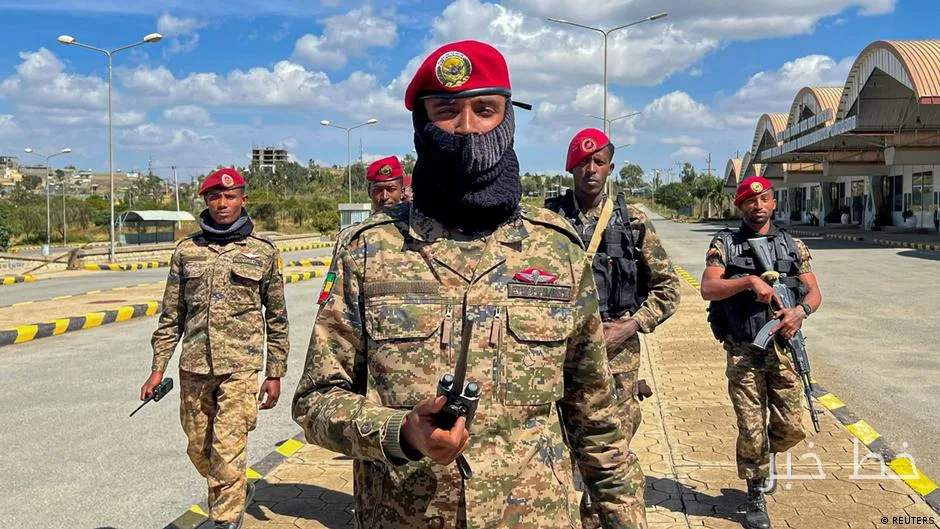
The presence of Eritrean armed forces in Ethiopia has intensified concerns about the outbreak of a regional war. Reports indicate that 5,000 to 8,000 Eritrean troops are stationed in the Tigray region of Ethiopia. This situation has been accompanied by an increase in verbal tensions between the two countries.
Ethiopia's Request for the Withdrawal of Eritrean Forces
The Ethiopian government has requested the immediate withdrawal of Eritrean forces from its territory in a letter to the United Nations Security Council. In this letter, dated October 8, Gedion Timotheos, Ethiopia's Foreign Minister, stated that the presence of Eritrean forces allows Ethiopia to focus solely on self-defense.
Read more: French police in Paris fired tear gas at protesters during school protests
Eritrea's Accusations Against Ethiopia
Yemen Meskel, Eritrea's Minister of Information, referred to Ethiopia's accusations of instigating war in a post on social media platform X, stating: "The Eritrean government is committed to blood and law." These remarks reflect the critical and escalating tensions between the two countries.
These tensions have intensified as recent weeks have seen a significant increase in conflicts in Ethiopia. Some experts believe that Ethiopia has deliberately exacerbated these tensions. For example, last week, Ethiopia expelled Eritrean and Egyptian diplomats, leading to a complete severance of diplomatic relations between Eritrea and Ethiopia.
Emphasis on the Priority of Access to the Sea
On Monday, as Abiy Ahmed, Ethiopia's Prime Minister, was sworn in for another five years, he emphasized the priority of access to the sea. These statements raised concerns about Ethiopia's potential attempts to seize Eritrea's strategic port, Assab, and provoked strong reactions from Eritreans.
The Ethiopian National Defense Forces (ENDF), with the help of the Tigray Peace Militia, have made significant advances, particularly retaking the capital of the Tigray region, Mekelle. However, the Ethiopian opposition has found new formats for collaboration, one of which is the Tsimbdo movement.
The Tsimbdo Movement and Its Implications
The Tsimbdo movement, meaning "interaction," initially formed through cross-border peace initiatives with activists and religious figures in the border villages of Tigray and Eritrea in 2025. This movement now includes diverse groups in Ethiopia, primarily defined along ethnic lines, with historical grievances against the federal government.
Recently, the Coalition of Ethiopian People's Forces for Survival, announced in September, has emerged from this movement, aiming to remove the current government and initiate legal dialogue. This coalition reflects a long history of unresolved conflicts in Ethiopia.
Analysts believe that the coalition's success largely depends on their support from foreign actors. Neighboring countries such as Sudan, Egypt, Eritrea, and Somalia each have their specific issues with Abiy Ahmed's government and feel threatened by Ethiopia, which they believe must be collectively addressed.
Overall, the ongoing tensions between Ethiopia and Eritrea and the increase in military activities in the region have heightened concerns about the outbreak of a larger war and jeopardized regional stability.
Read more: New York Mayor condemned the shooting of a man in the presence of a child · Russian airstrikes in Ukraine claimed the lives of 20 people