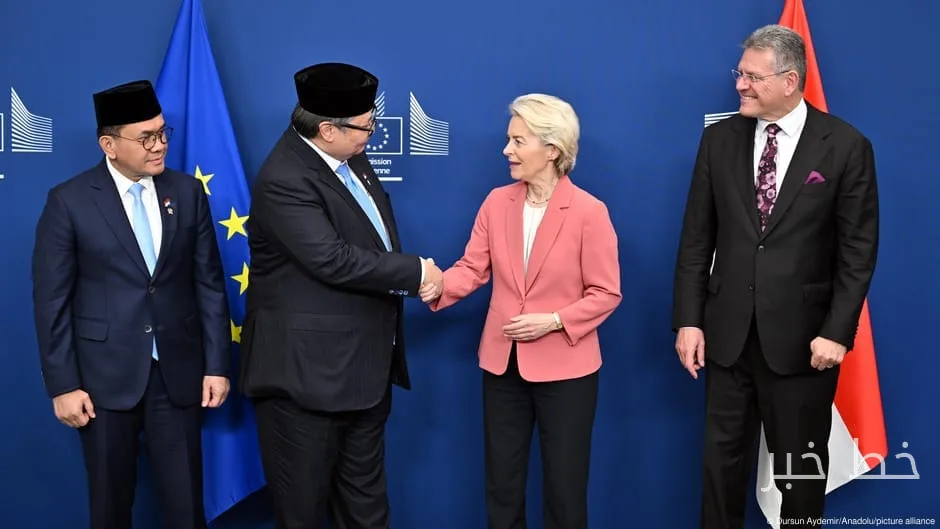
The European Union has identified Indonesia as an important partner in its efforts to expand its presence in Asia and diversify trade relations. At the signing ceremony of the trade agreement last week in Brussels, Ursula von der Leyen, President of the European Commission, described this agreement as one of the "most important agreements" in the region, connecting markets with 730 million people.
Details of the Trade Agreement
This agreement, the result of nearly a decade of negotiations, reflects the EU's efforts to diversify trade partnerships, secure access to critical raw materials, and reduce strategic dependencies on China. For Indonesia, this agreement provides opportunities to attract investment, expand exports, and strengthen its position in global supply chains.
The agreement gradually eliminates tariffs on over 98 percent of product categories, covering nearly all the value of bilateral trade over 15 years.
Opportunities and Challenges
For the EU, gaining better access to critical raw materials, especially nickel, and diversifying supply chains are key priorities for cooperation. Nickel is particularly important as a key material for batteries and electric vehicles. Additionally, the new agreement creates opportunities for European investment in strategic sectors such as electric vehicles, electronics, and pharmaceuticals.
However, the Indonesian government is also pursuing its industrial goals and wants to move beyond exporting raw materials. The country aims to develop domestic processing industries and derive more value from its natural resources. This creates a challenge for the EU to align its raw material supply interests with Indonesia's industrial development goals.
According to Yusuf Rizal Damuri, an economist at the Center for Strategic and International Studies, the center's estimates suggest that Indonesia's exports may increase by about 60 percent in the coming years. This agreement not only allows Indonesia to boost its exports to Europe but could also connect the country more strongly to the global supply chains of European companies.
However, there are also challenges. Access to the European market does not automatically mean increased exports. Yusuf emphasizes three priorities for Indonesia: raising awareness of the agreement among domestic businesses, strengthening production capacity, and improving the country's business environment.
Creating job opportunities and encouraging European investment could lead to increased environmental commitments, especially regarding nickel mining and palm oil production. Analysts like Elaine Blout from the European Environmental Policy Institute warn against increased production without stronger environmental regulations.