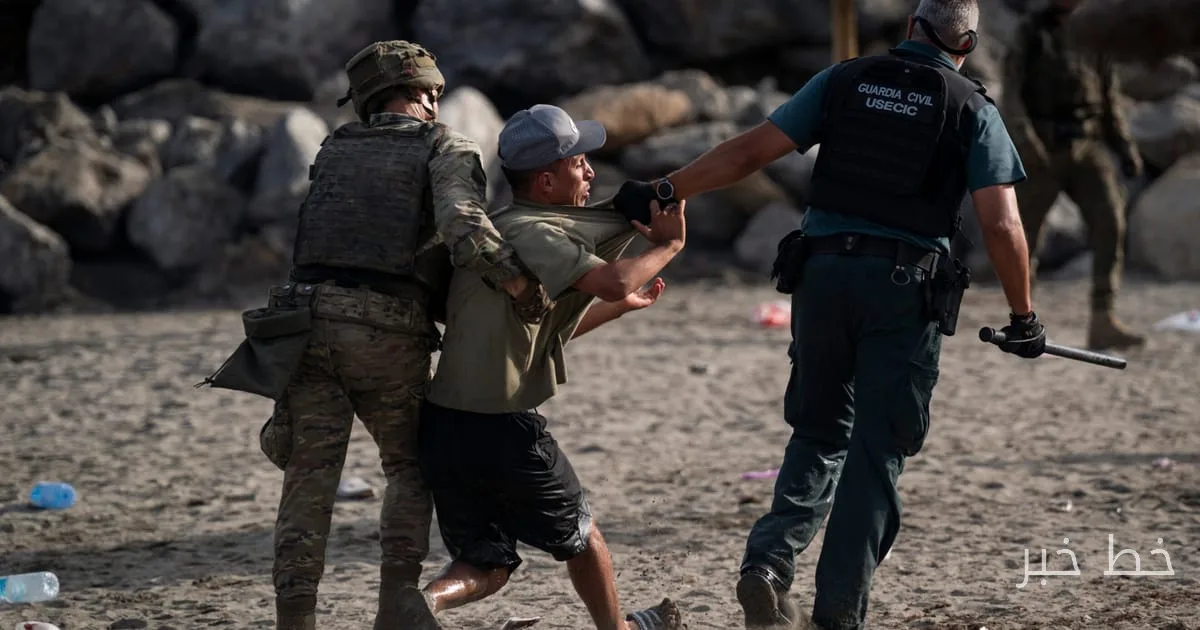
EU ministers have been discussing new measures to manage the migration crisis in a meeting. The sudden arrival of over 70,000 migrants in Ceuta last summer has made this topic one of the most important discussions on the ministers' agenda.
Emergency Situation at the Borders
In July, the unprecedented influx of migrants into Ceuta, which is part of Spain in North Africa, caused chaos. This crisis occurred while the EU was implementing extensive reforms to strengthen its external borders. Some countries believe that in times of crisis, asylum requests should be able to be temporarily suspended.
Read more: The European Commission has asked member states to reduce energy consumption
Gerhard Karner, Austria's Interior Minister, stated: "If 70,000 people, mostly young people, arrive in one day in an area, this clearly has nothing to do with the right to asylum. In this case, existing laws are insufficient."
Migration Commission Proposals
Magnus Brunner, the EU Migration Commissioner, presented proposals earlier this week to prevent and address the sudden arrival of large populations at the EU's borders. These proposals include strengthening the role of the Frontex border agency and establishing a European emergency response framework, which was also mentioned in the speech of Commission President Ursula von der Leyen last month.
Brunner announced at this meeting that "we must be able to respond quickly to such crises" and added that EU leaders will continue to discuss this issue at a meeting scheduled for later this month.
Some countries, including Greece, have proposed temporarily suspending asylum requests in emergencies, which is also supported by the ministers of Germany and Austria. Diplomats and ministers from three other countries stated that they would wait for the Commission's proposal before taking a position.
However, concerns have been raised about the implications of suspending asylum requests. This could mean large-scale forced returns, which are prohibited under international law and may impact individuals' fundamental rights.
An EU diplomat who wished to remain anonymous said: "There is a tension between the right to asylum and 80,000 people present at the Ceuta border. The EU must discuss what can be done in emergencies without violating individuals' rights."
John Forssell, Sweden's Minister for Migration, said: "The need for such emergency tools is quite clear to us. The discussion is whether this should be at the EU level or more at the national level." He noted that if there is a European mechanism, it is essential that this mechanism does not create problems for countries like Finland and Poland, which already have protective measures in place.
This discussion is steering EU migration policies in a new direction that is likely to create controversy. Ministers have also approved a controversial amendment allowing member states to send unsuccessful asylum seekers to deportation centers outside the Union. A group consisting of Austria, Germany, Denmark, Italy, and Greece is regularly holding meetings to establish the necessary infrastructure for these centers.
Spain was the only country to vote against this amendment, and Belgium abstained from voting. Ireland and Denmark also did not participate in this vote for their own reasons.
Read more: The port of Bremerhaven is being updated to strengthen Germany and NATO's defense · The U.S. Congress is on recess until November